Blog / Article
NCAA Eligibility Ruling Explained: Why NFL Players Are Not Walking Back Into College Football
NCAA Eligibility Ruling Explained: Why NFL Players Are Not Walking Back Into College Football
C
CFB Team
August 4, 2026
Sponsored by

For roughly 48 hours, college football lived inside a group chat fever dream. Fall camp was days away, rosters were locked, budgets were spent, and then a federal judge in Denver dropped an order that made every general manager in the sport reach for a spreadsheet and a burner list of former players. By Saturday morning, agents were fielding calls. By Saturday night, people were seriously asking whether a guy currently getting yelled at by an NFL position coach could be back in a college locker room by Labor Day.
By Sunday, the answer arrived, and it was the least fun one available. No.
Let's walk through how a sleepy end-of-July court filing turned into the most chaotic weekend of the college football offseason, and why the graphics flooding your timeline oversold the drama by roughly a mile.
Friday night: the order that broke the group chats
U.S. District Judge Charlotte Sweeney, ruling in the Wisne v. NCAA case out of Colorado, granted a class-wide preliminary injunction declaring that every athlete from the high school class of 2022 who burned through four seasons of eligibility this past spring is eligible to play again. Sweeney wrote that the players would suffer irreparable harm without the injunction.
The scale is what made this different. Previous eligibility fights had been individual guys with individual lawyers winning individual carve-outs. This one granted class certification, which meant it applied to every Division I athlete who started college in the 2022-23 school year, not a curated list of plaintiffs. In football terms, that is hundreds and possibly thousands of FBS bodies.
The ruling also took a chainsaw to the NCAA's own recent reform. The association's "five for five" model, five seasons inside a five-year window, was scheduled to kick in with athletes enrolling in the fall of 2027. The class of 2022 was the group left standing when the music stopped, watching both older and younger classes collect extra years they never got. They sued. They won, at least for a weekend.
Saturday: the sport does what the sport always does
Which is to say, everyone immediately started shopping.
Compliance offices were still reading the fine print while personnel departments were already building lists and calling former players. Agents were on the phone Friday night asking schools whether their clients fit the criteria. Former Arizona State safety Myles Rowser, ex-Florida State quarterback Thomas Castellanos, and former Virginia defensive end Cazeem Moore were among the names who signaled interest in coming back.
One Power Four general manager put it in the flattest possible terms: "There will be players that are rosterable."
That is the sound of a sport that has fully abandoned the pretense. There is no romance in that sentence. There is only inventory.
And then the conversation drifted where you knew it would drift. NFL training camps were already open while college programs were still a week out, and front office staffers started asking the obvious question: could you talk a guy off an NFL camp roster and into a college uniform? Agents were skeptical it made sense for most players, though they conceded the math changes for an undrafted free agent staring down long odds of making a 53. One Power Four GM noted that if the NFL dream is already dead, the revenue-share money on campus beats a camp check.
Somewhere in there, Rams undrafted rookie Jaxson King Taua Moi, a former Tennessee defender and a class of 2022 guy who had already fought and lost an eligibility battle earlier in the year, tweeted a single word: "interesting…" Vol fans lost their minds. Reasonably so.
Sunday: the turning point nobody wanted
Then came the clarification, and this is the actual news event, not the Friday ruling.
Responding to an NCAA request for clarity, Sweeney confirmed her decision still stands but explained it does not touch any other NCAA rule, including the long-standing prohibition on athletes who sign professional contracts returning to college. She also specified no exceptions to transfer portal timing and no impact on the House settlement provisions that govern roster limits and how much schools can pay.
Translation: the ruling gives you a fifth year. It does not give you a time machine.
Media outlets had spent the weekend assembling lists of NFL and CFL players who seemed open to a return, and all of that evaporated in a single paragraph. The NCAA filed its intent to appeal later that Sunday night.
The stat line that matters
Here is the part that deflates the fantasy even further, and it has nothing to do with the judge.
CBS Sports surveyed more than a dozen front office staffers in the immediate aftermath, and most of them identified three or fewer former players who even qualified under the ruling. None of those players had been drafted.
Three or fewer. Per school. And that is before you account for the practical problems. Many of these guys have been away from a college strength program for nine months. A good number of them have started actual careers. Most schools have already spent their 2026 allocations, so the money is not exactly falling out of the ceiling. And if the 105-player hard cap holds, multiple sources said adding anyone means cutting someone, which realistically means walk-ons getting removed from the roster weeks before the season.
So the actual population of impacted players was always smaller and less glamorous than the discourse suggested. It was never Fernando Mendoza, the reigning Heisman winner and first overall pick who just delivered Indiana a 16-0 national title before the Raiders took him at the top of the draft. It was never Jeremiyah Love, the Doak Walker winner the Cardinals grabbed third overall, who is a 2023 recruit and therefore not part of this class at all. Those faces make for a great carousel post. They were never the story.
Why schools were hesitant anyway
Even before Sunday, nobody was sprinting.
Multiple sources pointed to the Charles Bediako situation as the cautionary tale. Bediako returned to college basketball in January of 2026 after two professional seasons, played five games under a temporary restraining order, then had his preliminary injunction denied and was done for the year. NCAA bylaw 12.9.4.2 allows for vacating wins if a program competes with an ineligible player and the court order is later overturned, though Alabama escaped penalty in that case. cbssportscbssports
That is the risk calculus. You could add a fifth-year edge rusher, get eight games out of him, lose the appeal at the Tenth Circuit, and watch your win total get erased retroactively. Nobody is trading a College Football Playoff résumé for depth at nickel.
What it actually means
The NCAA got the outcome it needed on the narrow question and is still losing the war on the broad one. Charlie Baker's response to Friday's ruling was to call it chaos-inducing and to push Congress on the Protect College Sports Act, a bill that would hand the association litigation protection over exactly these eligibility rules. The NCAA's statement warned that without federal intervention, "failed professionals will continue to use college sports as a fallback option," crowding out incoming scholarship athletes.
You can find that framing self-serving and still recognize the underlying problem. The line between amateur and professional has been redrawn so many times that nobody can locate it without a lawyer. Tennessee linebacker Arion Carter is serving a two-game suspension this season because he declared for the draft, hired an agent, and accepted a $427 plane ticket before an injury pushed him back toward school. Four hundred and twenty-seven dollars. Meanwhile, revenue sharing means his teammates are being paid openly and legally by the athletic department.
That is not a rulebook. That is a haunted house.
Closing take
The weekend ended roughly where it started, minus a lot of screenshots. The class of 2022 has a fifth year, pending appeal. Players who signed pro contracts do not get to un-sign them. The portal is closed, with an August 3-10 window carved out strictly for basketball players tied to a separate lawsuit. Schools are making quiet calls, not splashy ones.
What we witnessed was less a rule change than a stress test, and college football failed it in real time. A single district court order, issued on a Friday night in Denver, was enough to make the entire personnel infrastructure of the sport start dialing former players before anyone had read the full injunction. The guardrails held this time only because a judge went back and clarified what she meant.
The next one might not come with a footnote.
For roughly 48 hours, college football lived inside a group chat fever dream. Fall camp was days away, rosters were locked, budgets were spent, and then a federal judge in Denver dropped an order that made every general manager in the sport reach for a spreadsheet and a burner list of former players. By Saturday morning, agents were fielding calls. By Saturday night, people were seriously asking whether a guy currently getting yelled at by an NFL position coach could be back in a college locker room by Labor Day.
By Sunday, the answer arrived, and it was the least fun one available. No.
Let's walk through how a sleepy end-of-July court filing turned into the most chaotic weekend of the college football offseason, and why the graphics flooding your timeline oversold the drama by roughly a mile.
Friday night: the order that broke the group chats
U.S. District Judge Charlotte Sweeney, ruling in the Wisne v. NCAA case out of Colorado, granted a class-wide preliminary injunction declaring that every athlete from the high school class of 2022 who burned through four seasons of eligibility this past spring is eligible to play again. Sweeney wrote that the players would suffer irreparable harm without the injunction.
The scale is what made this different. Previous eligibility fights had been individual guys with individual lawyers winning individual carve-outs. This one granted class certification, which meant it applied to every Division I athlete who started college in the 2022-23 school year, not a curated list of plaintiffs. In football terms, that is hundreds and possibly thousands of FBS bodies.
The ruling also took a chainsaw to the NCAA's own recent reform. The association's "five for five" model, five seasons inside a five-year window, was scheduled to kick in with athletes enrolling in the fall of 2027. The class of 2022 was the group left standing when the music stopped, watching both older and younger classes collect extra years they never got. They sued. They won, at least for a weekend.
Saturday: the sport does what the sport always does
Which is to say, everyone immediately started shopping.
Compliance offices were still reading the fine print while personnel departments were already building lists and calling former players. Agents were on the phone Friday night asking schools whether their clients fit the criteria. Former Arizona State safety Myles Rowser, ex-Florida State quarterback Thomas Castellanos, and former Virginia defensive end Cazeem Moore were among the names who signaled interest in coming back.
One Power Four general manager put it in the flattest possible terms: "There will be players that are rosterable."
That is the sound of a sport that has fully abandoned the pretense. There is no romance in that sentence. There is only inventory.
And then the conversation drifted where you knew it would drift. NFL training camps were already open while college programs were still a week out, and front office staffers started asking the obvious question: could you talk a guy off an NFL camp roster and into a college uniform? Agents were skeptical it made sense for most players, though they conceded the math changes for an undrafted free agent staring down long odds of making a 53. One Power Four GM noted that if the NFL dream is already dead, the revenue-share money on campus beats a camp check.
Somewhere in there, Rams undrafted rookie Jaxson King Taua Moi, a former Tennessee defender and a class of 2022 guy who had already fought and lost an eligibility battle earlier in the year, tweeted a single word: "interesting…" Vol fans lost their minds. Reasonably so.
Sunday: the turning point nobody wanted
Then came the clarification, and this is the actual news event, not the Friday ruling.
Responding to an NCAA request for clarity, Sweeney confirmed her decision still stands but explained it does not touch any other NCAA rule, including the long-standing prohibition on athletes who sign professional contracts returning to college. She also specified no exceptions to transfer portal timing and no impact on the House settlement provisions that govern roster limits and how much schools can pay.
Translation: the ruling gives you a fifth year. It does not give you a time machine.
Media outlets had spent the weekend assembling lists of NFL and CFL players who seemed open to a return, and all of that evaporated in a single paragraph. The NCAA filed its intent to appeal later that Sunday night.
The stat line that matters
Here is the part that deflates the fantasy even further, and it has nothing to do with the judge.
CBS Sports surveyed more than a dozen front office staffers in the immediate aftermath, and most of them identified three or fewer former players who even qualified under the ruling. None of those players had been drafted.
Three or fewer. Per school. And that is before you account for the practical problems. Many of these guys have been away from a college strength program for nine months. A good number of them have started actual careers. Most schools have already spent their 2026 allocations, so the money is not exactly falling out of the ceiling. And if the 105-player hard cap holds, multiple sources said adding anyone means cutting someone, which realistically means walk-ons getting removed from the roster weeks before the season.
So the actual population of impacted players was always smaller and less glamorous than the discourse suggested. It was never Fernando Mendoza, the reigning Heisman winner and first overall pick who just delivered Indiana a 16-0 national title before the Raiders took him at the top of the draft. It was never Jeremiyah Love, the Doak Walker winner the Cardinals grabbed third overall, who is a 2023 recruit and therefore not part of this class at all. Those faces make for a great carousel post. They were never the story.
Why schools were hesitant anyway
Even before Sunday, nobody was sprinting.
Multiple sources pointed to the Charles Bediako situation as the cautionary tale. Bediako returned to college basketball in January of 2026 after two professional seasons, played five games under a temporary restraining order, then had his preliminary injunction denied and was done for the year. NCAA bylaw 12.9.4.2 allows for vacating wins if a program competes with an ineligible player and the court order is later overturned, though Alabama escaped penalty in that case. cbssportscbssports
That is the risk calculus. You could add a fifth-year edge rusher, get eight games out of him, lose the appeal at the Tenth Circuit, and watch your win total get erased retroactively. Nobody is trading a College Football Playoff résumé for depth at nickel.
What it actually means
The NCAA got the outcome it needed on the narrow question and is still losing the war on the broad one. Charlie Baker's response to Friday's ruling was to call it chaos-inducing and to push Congress on the Protect College Sports Act, a bill that would hand the association litigation protection over exactly these eligibility rules. The NCAA's statement warned that without federal intervention, "failed professionals will continue to use college sports as a fallback option," crowding out incoming scholarship athletes.
You can find that framing self-serving and still recognize the underlying problem. The line between amateur and professional has been redrawn so many times that nobody can locate it without a lawyer. Tennessee linebacker Arion Carter is serving a two-game suspension this season because he declared for the draft, hired an agent, and accepted a $427 plane ticket before an injury pushed him back toward school. Four hundred and twenty-seven dollars. Meanwhile, revenue sharing means his teammates are being paid openly and legally by the athletic department.
That is not a rulebook. That is a haunted house.
Closing take
The weekend ended roughly where it started, minus a lot of screenshots. The class of 2022 has a fifth year, pending appeal. Players who signed pro contracts do not get to un-sign them. The portal is closed, with an August 3-10 window carved out strictly for basketball players tied to a separate lawsuit. Schools are making quiet calls, not splashy ones.
What we witnessed was less a rule change than a stress test, and college football failed it in real time. A single district court order, issued on a Friday night in Denver, was enough to make the entire personnel infrastructure of the sport start dialing former players before anyone had read the full injunction. The guardrails held this time only because a judge went back and clarified what she meant.
The next one might not come with a footnote.
Share this story
C
CFB Team
CFB Team
The most trusted college football team.
The most trusted college football team.
More College Football Stories
More College Football Stories

CFB
September 23, 2026
Judge Frees Indiana's Stephen Daley and Kellan Wyatt, Cole Hutson Wins Again: College Football's Eligibility War Moves to County Courthouses
Judge Frees Indiana's Stephen Daley and Kellan Wyatt, Cole Hutson Wins Again: College Football's Eligibility War Moves to County Courthouses

CFB
September 21, 2026
Dave Doeren Owns NC State's Intentional Safety Disaster as the 1,046-1 Fumble at Vanderbilt Refuses to Fade
Dave Doeren Owns NC State's Intentional Safety Disaster as the 1,046-1 Fumble at Vanderbilt Refuses to Fade
CFB
September 19, 2026
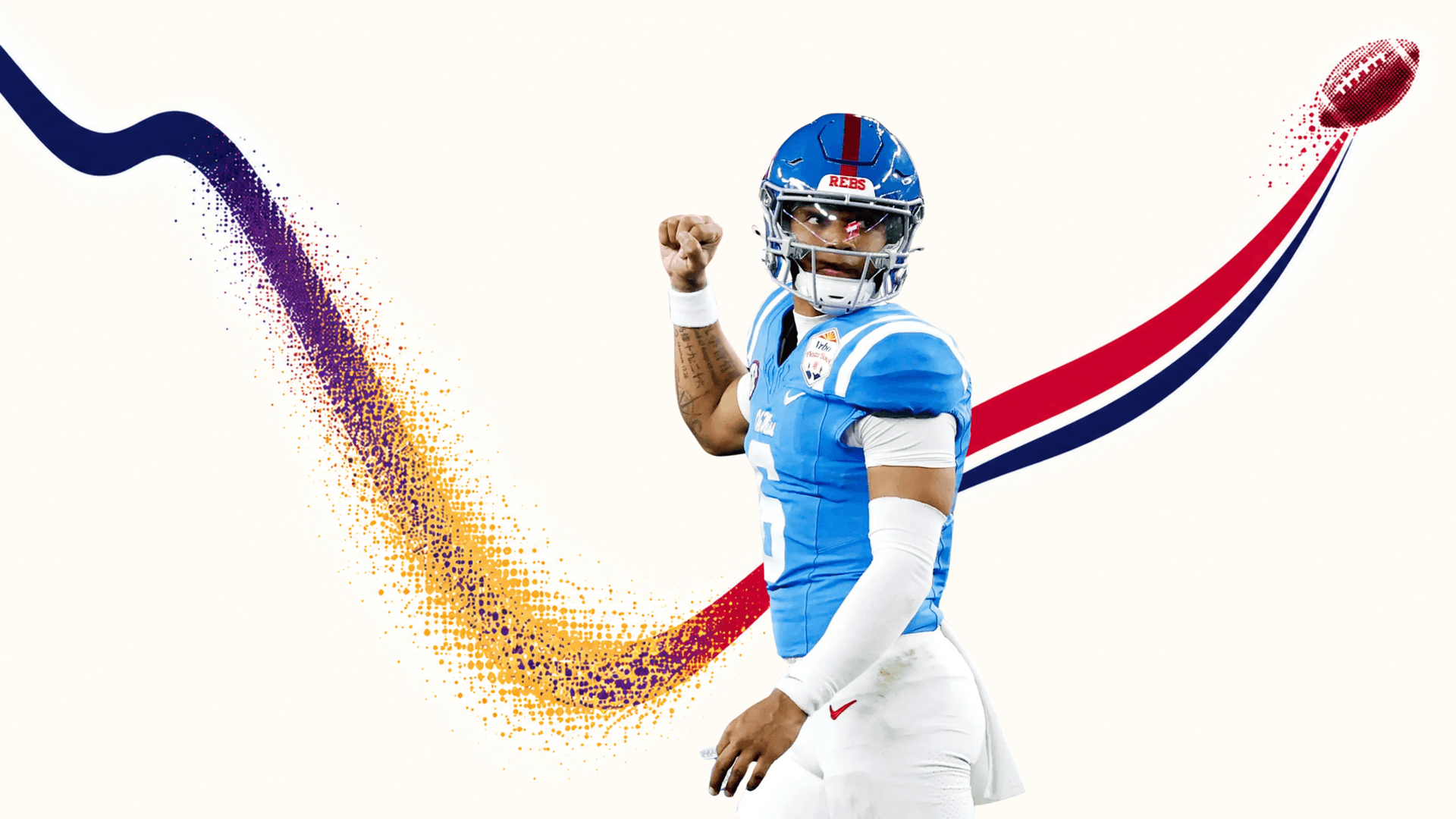
Trinidad Chambliss Spoils Lane Kiffin's Homecoming as No. 8 Ole Miss Holds Off No. 7 LSU 32-24
Trinidad Chambliss Spoils Lane Kiffin's Homecoming as No. 8 Ole Miss Holds Off No. 7 LSU 32-24
Keep Reading
Never Miss The Next Alert
Real-time college football news, NIL moves, and recruiting intel — delivered the moment it breaks.
Keep Reading
Never Miss The Next Alert
Real-time college football news, NIL moves, and recruiting intel — delivered the moment it breaks.
Coast To Coast
Trusted By Programs Across The Country


Coast To Coast
Trusted By Programs Across The Country

