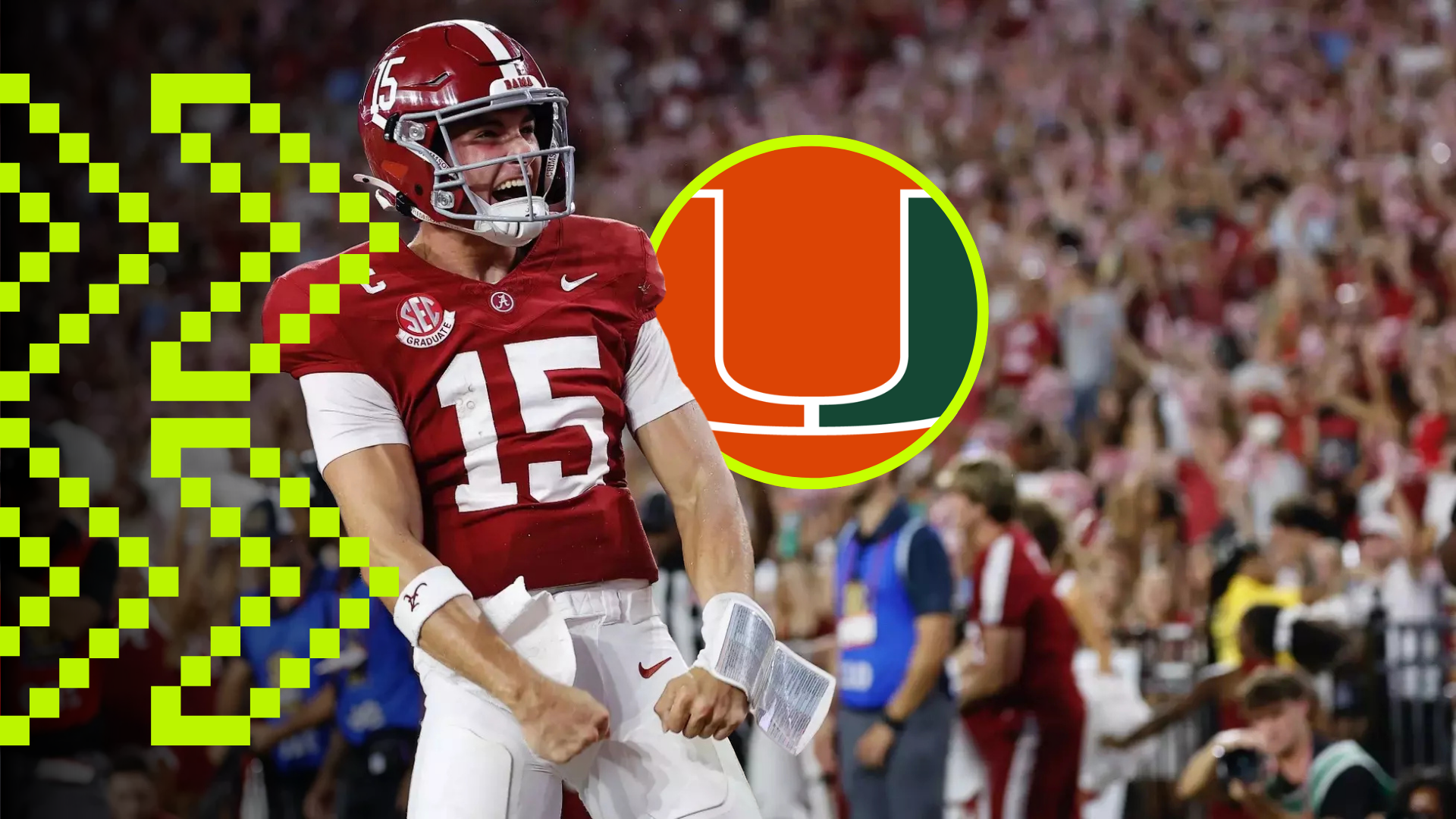
The most expensive 'no' in college football history came with some help from the most decorated coach in the sport
Six and a half million dollars. One year. All Ty Simpson had to do was put on a Miami Hurricanes uniform and become the highest-paid quarterback in college football history. He said no.
Let that sink in for a second. We live in a world where NIL has turned the transfer portal into a free-agent frenzy, where programs wave eight-figure bags to fill roster holes, and where the line between amateur athletics and professional sports gets thinner by the day. Miami dangled a number that would make some NFL starters blush, and the Alabama signal-caller said thanks, but no thanks. He is entering the NFL Draft instead.
What makes this story genuinely compelling is how Simpson arrived at that decision. He did not flip a coin. He did not just trust his gut. He called Nick Saban.
Did Saban Actually Have the Answer?
There is something poetic about Simpson picking up the phone and calling the retired coaching legend who built Alabama into the machine that gave Simpson his platform in the first place. Saban stepped away from coaching following the 2023 season, but apparently he is still very much in the business of shaping quarterbacks' futures.
By Simpson's own account, Saban did not tell him what to do. He did not say take the money or go pro. He stripped the decision down to its foundation. The question Saban posed was essentially this: if you remove the financial incentive and remove where your NFL draft stock might land, what do you actually want to do with the next year of your life? Do you want to play college football, or do you want to start your professional career?
It is the kind of clarity that sounds simple but is genuinely hard to access when you are staring at seven figures with commas in it. Saban's framework was not about the money. It was about identity and direction.
Simpson's Answer Was Immediate
When Simpson applied that framework, he said there was not a moment of hesitation. He told Saban he wanted to play professionally. And Saban's response was essentially: well, there is your answer.
That is it. No extended deliberation. No agonizing over what could have been. Simpson said the decision reflected something he had always dreamed of, the professional locker room, the next level of competition, the chance to lead a team in the NFL. Miami's offer, as record-breaking as it was, would have been a detour from that dream, not a stepping stone toward it.
To be clear: there is nothing wrong with a player choosing NIL money over the draft. That is a completely rational calculation, especially for players whose professional ceiling is uncertain. But Simpson clearly felt his ceiling was worth chasing directly, and the advice he received reinforced that belief.
What $6.5M Actually Means in This Era
Let us put Miami's offer in context, because the number deserves it. The current landscape of quarterback NIL deals has ballooned at a pace nobody fully predicted. Schools are committing eight-figure totals to their rosters, and top signal-callers at blue-blood programs can command deals that rival mid-level NFL backup contracts.
Miami, under Mario Cristobal, has been among the most aggressive programs in leveraging NIL to recruit and retain talent. The Hurricanes are rebuilding toward College Football Playoff contention, and landing the highest-paid QB in the sport would have sent a statement about where the program is headed. For the right player, $6.5M for one year of college football is genuinely life-changing money, generational wealth secured before a single NFL snap is ever taken.
Simpson looked at all of that and chose the harder path. The one with no guaranteed payday. The one where his earning potential depends entirely on impressing NFL scouts and whoever selects him in the draft. That is not a naive decision. It is a conviction-driven one.
The Alabama Factor
It is worth considering what Simpson's Alabama tenure actually looked like. He arrived in Tuscaloosa as a five-star prospect, one of the top-rated quarterbacks in his class, and spent most of his collegiate career navigating a program in transition. He became a team captain and played in the Rose Bowl. He earned his SEC Graduate patch. He was the face of a program that has faced more scrutiny than usual in the post-Saban era.
That context matters for understanding why the NFL pull was so strong. Simpson has been chasing this since before he ever took a college snap. The Miami offer, as extraordinary as it was, likely felt like extending a chapter rather than starting the one he had always been working toward.
The Broader Implication
This story is going to get told in recruiting circles and front offices for years, and it should. It captures a genuine tension at the heart of modern college football: the sport has created financial infrastructure that can now compete directly with early-round NFL money, and players have to make real decisions about what matters more to them.
For some, the answer will be the bag, and there is nothing wrong with that. The window to earn in college is now legitimately significant, and not every player is a lock to make NFL money. But Simpson's decision, informed by Saban's unflinching question, suggests that clarity of purpose can override even a record-setting financial offer.
That is a kind of mental discipline that NFL teams actually care about. The guy who turned down $6.5 million because he knew exactly what he wanted? Scouts are going to bring that up in pre-draft interviews. And the answer is genuinely good.
What Comes Next
Simpson is now focused on proving himself in the draft process, workouts, pro days, interviews, everything it takes to make his case to 32 NFL franchises. The path from here is uncertain in the way all draft journeys are uncertain. But he enters that process having made a decision that says something about who he is.
Nick Saban asked him one question. Ty Simpson answered it without blinking. And somewhere in that exchange is the whole story of why some players make it at the next level and some do not, not because of arm talent or athleticism alone, but because they know exactly what they are after.
The money was real. The dream was realer. Simple as that.

Trusted By Programs Across The Country