College sports’ money era reaches the White House
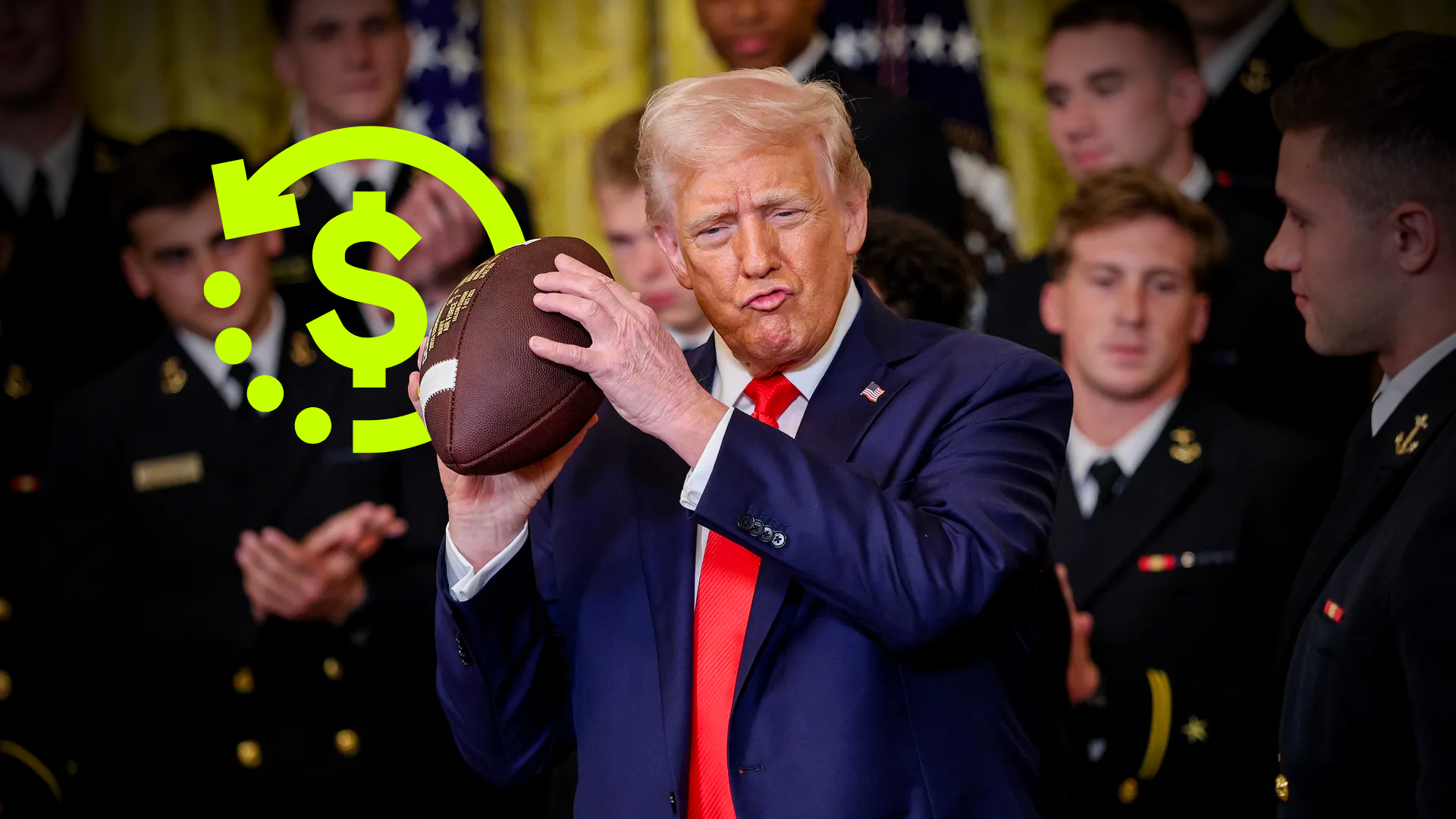
College athletics has officially reached the point where the sport’s biggest off-field drama isn’t happening in a locker room, boardroom, or booster meeting. It’s happening in the White House East Room.
On Friday, Donald Trump hosted a high-profile roundtable focused on the chaotic, rapidly evolving world of name, image, and likeness (NIL) and the broader structure of college sports. Sitting around the table were some of the most influential figures in the game: Charlie Baker, former Nick Saban, media personality Clay Travis, Randy Levine, and commissioners from the Power Four conferences.
The topic: whether the current NIL ecosystem has turned college athletics into an economic arms race that threatens the very structure of the NCAA.
Trump made it clear he believes the answer is yes.
“We have to save college sports,” Trump said as the meeting began.
And if Congress doesn’t move quickly to regulate NIL and college athlete compensation, he warned, the system could collapse under its own weight.
For a sports landscape already dealing with conference realignment chaos, multi-million dollar NIL deals, and athletes transferring like NBA free agents, the moment felt less like policy discussion and more like the latest chapter in the ongoing identity crisis of college athletics.
The NIL era has changed everything
To understand why this meeting happened at all, rewind a few years.
For decades, the NCAA’s model was simple. Athletes received scholarships and limited benefits while schools and conferences generated billions in revenue. Then the legal walls started collapsing.
In 2021, following a Supreme Court decision that undermined the NCAA’s amateurism rules, the organization allowed athletes to profit from their name, image, and likeness. Suddenly, boosters, brands, and collectives began pouring money into college athletics.
The result has been a financial boom for athletes and a structural earthquake for the sport.
Quarterbacks landing six- and seven-figure NIL deals is no longer rare. Star recruits often weigh NIL offers as heavily as championship opportunities. And players now routinely transfer schools chasing better opportunities, creating what critics say resembles a professional free agency market.
Trump hammered that point repeatedly during the discussion.
“The amount of money being spent and lost by otherwise very successful schools is astounding,” he said. “And it’s only going to get worse.”
He also pointed to unusual eligibility situations that have emerged since the pandemic and transfer portal changes. Some athletes now remain in college athletics into their mid-20s, occasionally playing six or seven seasons.
That reality has fueled arguments that college sports are drifting farther away from their traditional academic model.
The SCORE Act enters the spotlight
At the center of the discussion was a controversial piece of legislation: the Student Compensation and Opportunity through Rights and Endorsements Act, better known as the SCORE Act.
The bill attempts to impose a national framework on NIL deals and college athletics governance. Its key provisions include:
• Giving the NCAA a limited antitrust exemption
• Preventing college athletes from becoming university employees
• Banning schools from using student fees to fund NIL payments
• Creating a federal standard for NIL rules
Supporters argue it would bring order to a system that currently varies state by state. Critics say it would consolidate power among the richest conferences and potentially weaken protections for athletes.
The debate around the bill has already been messy on Capitol Hill.
The White House has endorsed the legislation, but when it was expected to reach a vote in December, the measure stalled after a bipartisan coalition blocked it from moving forward.
Some Democrats raised concerns about its impact on women’s athletics and Title IX protections.
Representative Lori Trahan warned that the current version of the bill could harm women’s sports and further concentrate money within the SEC and Big Ten.
Republican leadership countered that women’s programs would remain protected.
Meanwhile, conference commissioners and administrators made it clear the financial pressure on college athletics is real.
Coaches want structure. Lots of it.
If anyone embodied the old guard of college football during the roundtable, it was Saban.
The former Alabama dynasty builder, who spent years navigating recruiting wars and booster politics, described a system where money increasingly drives athlete decisions.
According to Saban, the current NIL structure makes it difficult to focus on long-term development for players.
Instead of choosing programs that best prepare them for the NFL or life after football, athletes now frequently evaluate which school offers the most lucrative NIL opportunity.
Saban didn’t argue that athletes shouldn’t earn money. But he did call for a system that balances compensation with educational and developmental priorities.
He also suggested that revenue-sharing models could offer a more stable structure for athlete compensation.
Translation: college sports needs guardrails.
The transfer era’s growing controversy
Another hot topic during the discussion was the modern transfer portal.
In today’s landscape, players can move schools with unprecedented freedom. Critics argue that some athletes transfer multiple times in pursuit of bigger NIL deals.
House Majority Leader Steve Scalise floated one potential fix: limiting players to five playing seasons with just a single transfer.
Supporters say that type of rule could restore stability to college rosters, which currently turn over at a pace that sometimes resembles professional leagues.
But any rule limiting athlete mobility would almost certainly face legal challenges.
And that’s the recurring theme across the entire NIL debate.
Every attempted reform risks ending up in court.
Trump’s next move: another executive order
If Congress doesn’t act soon, Trump signaled he’s ready to step in again.
The president already issued an executive order last summer targeting certain third-party recruiting payments tied to NIL deals. That order attempted to curb pay-for-play arrangements while protecting funding for non-revenue sports like track, swimming, and gymnastics.
But Trump said a new directive is coming within days.
And this one, according to him, will be more comprehensive.
He also acknowledged the obvious reality: it might not survive legal scrutiny.
“We’ll see if we can get it through the court system,” Trump said.
In other words, the next major battle over college athletics could unfold in federal courtrooms rather than stadiums.
What’s really at stake
The NIL revolution has created life-changing financial opportunities for athletes who once generated billions in revenue without direct compensation.
But it has also forced universities to rethink their budgets, athletic departments, and even the viability of certain sports programs.
Some schools worry escalating NIL costs could lead to the elimination of Olympic sports that feed the U.S. pipeline for global competitions.
Others fear college football and basketball could effectively split from the NCAA entirely.
At the same time, many athletes and advocates argue the system is simply correcting decades of economic imbalance.
The tension between those two realities is what makes the NIL debate so volatile.
Everyone agrees the system is broken.
Nobody agrees on how to fix it.
The future of college sports is being written now
What happened in Washington on Friday wasn’t just another political meeting.
It was a signal that college athletics has become too big, too complicated, and too financially powerful to operate without federal attention.
For more than a century, the NCAA largely governed itself.
Now the future of college sports may depend on Congress, federal courts, and presidential executive orders.
That’s a massive shift for a system built on the idea of amateur competition.
And if the conversations at the White House are any indication, the next era of college athletics will be decided as much in Washington as it is on Saturdays in Tuscaloosa, Columbus, and Austin.
One thing is clear.
The NIL era isn’t going away.
The real question now is who gets to control it.

Trusted By Programs Across The Country