There are big games, there are rivalry games, and then there’s Army-Navy — the one Saturday every year where college football collectively pauses, stands up straight, and remembers this sport is bigger than playoff brackets and TV deals.
Now, that moment is getting federal protection.
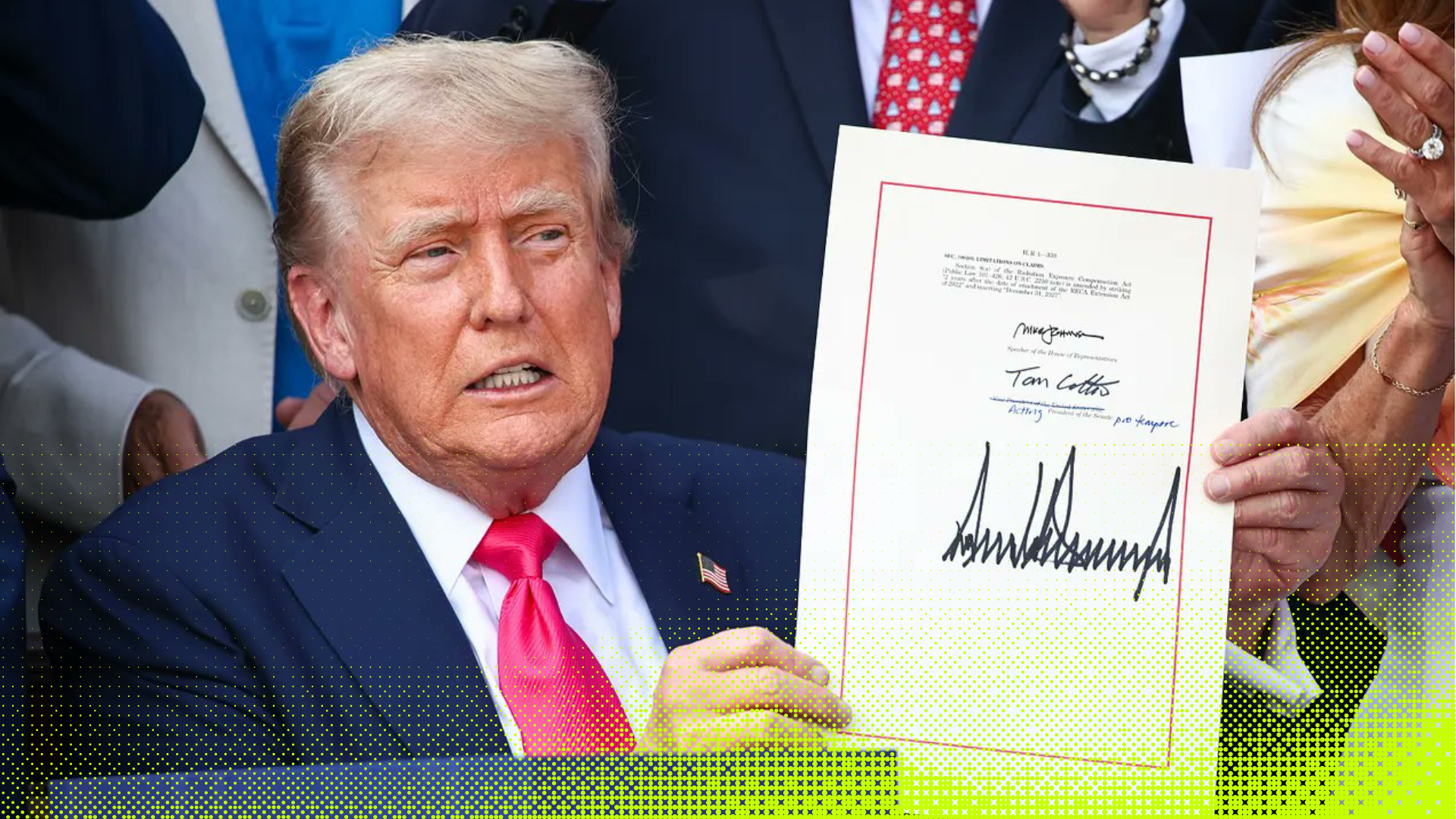
In a move that feels equal parts politics, patriotism, and power play, Donald Trump signed an executive order Friday that essentially tells the College Football Playoff, the NCAA, and every network with a billion-dollar TV contract to clear the stage. No postseason games. No CFP overlap. No distractions.
The second Saturday in December? That belongs to Army-Navy. Full stop.
A Collision Course With the Playoff Machine
Let’s be real — this wasn’t done in a vacuum. College football’s postseason is expanding like a streaming service content library, and not everyone’s thrilled about what that means for tradition.
The CFP’s new 12-team format already nudged the calendar around. Army-Navy had to move off its long-standing early-December slot back in 2009 because of conference championship weekend chaos. Now, with first-round playoff games landing the week after, things have stayed mostly clean — for now.
But looming expansion talk — 16 teams, maybe even 24 — is where the tension starts to boil. More teams means more games. More games means earlier start dates. And suddenly, the sport’s most unique rivalry risks getting swallowed by its own postseason monster.
That’s where this executive order draws a hard line.
Trump directed federal agencies, including the FCC and Department of Commerce, to work with stakeholders to guarantee Army-Navy an exclusive national broadcast window. Translation: if you’re the CFP, you don’t get to counter-program this game like it’s a random noon kickoff on ESPN2.
Why Army-Navy Isn’t Just “Another Game”
If you’re new here, understand this: Army-Navy isn’t competing with anything — it exists in its own lane.
No playoff implications. No NIL drama. No transfer portal storylines. Just 60 minutes of option football, pageantry, and a postgame moment that hits harder than anything else in the sport.
The phrase “sing second” isn’t just tradition — it’s identity. The losing team stands and honors the winner’s alma mater. Then the winner returns the favor. It’s mutual respect in a sport that usually runs on chaos and ego.
That’s part of why this game consistently pulls 7 to 8 million viewers despite having zero impact on the national title race. It’s not about rankings — it’s about meaning.
And the people in charge know it.
Army athletic director Tom Theodorakis and American Conference commissioner Tim Pernetti both praised the move, framing it as preservation, not interference. Pernetti called it a “meaningful step” in protecting one of the sport’s most cherished traditions.
The Real Stakes: Tradition vs. Expansion
This isn’t just about one Saturday. It’s about the ongoing tug-of-war between what college football has always been and what it’s rapidly becoming.
On one side, you’ve got tradition — rivalries, regional identity, moments that feel untouched by the sport’s corporate evolution.
On the other, you’ve got the CFP — a growing, billion-dollar enterprise that’s trying to make college football more like the NFL, one expansion at a time.
And let’s be honest: the CFP isn’t slowing down anytime soon.
A 24-team playoff would require at least another week of games. That means pushing deeper into December. That means more scheduling conflicts. That means something eventually has to give.
This executive order is essentially planting a flag and saying: not this game. Not ever.
A Rare Moment of Universal Agreement
In a sport where everyone argues about everything — targeting rules, playoff formats, conference realignment — this is one of those rare moments where most people nod along.
Because even the most diehard SEC fan or Big Ten loyalist understands: Army-Navy is different.
It’s one of the last true “national” games in college football. No conference affiliations. No playoff stakes. Just a shared spotlight.
And frankly, the idea of it competing with a first-round CFP game feels… wrong. Like trying to watch the Super Bowl while flipping over to a random Wild Card game.
You don’t split the screen for something like this.
The Timing Isn’t Accidental
Trump signed the order while hosting Navy at the White House after they secured the Commander-in-Chief’s Trophy. That timing matters.
This wasn’t just policy — it was messaging.
A reminder that, in a sport increasingly dominated by money and media deals, there are still moments tied to something bigger than football.
Trump has attended multiple Army-Navy games and has been vocal about its significance, previously stating that the second Saturday in December should belong “ONLY” to this matchup.
Now, that sentiment has actual teeth behind it.
What Happens Next?
In the short term, not much changes.
This year’s Army-Navy game is set for Dec. 12 at MetLife Stadium, with CFP first-round games scheduled the following weekend. Clean separation. No overlap.
But long term? This could get interesting.
Because if the playoff expands again — and it will — this order forces decision-makers to get creative. Either start earlier, adjust formats, or accept that one weekend each year is completely off-limits.
For a sport that’s been bending over backward to maximize inventory, that’s a pretty significant constraint.
Final Take: Some Traditions Don’t Need Tweaking
College football has spent the last decade reinventing itself — bigger playoffs, super conferences, TV deals that look like Powerball jackpots.
Some of that evolution has been necessary. Some of it has been… questionable.
But Army-Navy? That’s one thing nobody really wanted changed.
And now, it won’t be.
Because in a sport obsessed with crowning champions, there’s still one game that doesn’t need a trophy to matter.
It just needs the stage all to itself.

Trusted By Programs Across The Country