Somewhere between a 34-7 demolition of BYU in Arlington and a sellout crowd of 85,519 losing their minds in the Texas night, college football had to sit with an uncomfortable truth: Texas Tech is not a mid-major anymore. The Red Raiders just finished the greatest season in program history, and the way they did it made everything that came before it look like a warm-up act. Now, with a new quarterback, a reconstructed offense, and a bullseye on their back, 2026 is shaping up to be the most fascinating test this program has ever faced.
A season that rewrote the record books
The numbers alone are almost absurd. Texas Tech went 12-1 in the regular season, captured its first Big 12 title since 1994, and became just the fifth program in the AP era to win 12 games by 20 or more points in a single season, joining Nebraska in 1971, Florida in 2008, Florida State in 2013, and Alabama in 2018. Read that list again. That is not a list Texas Tech has ever appeared on. Until now.
The defense was the backbone of all of it. The Red Raiders surrendered just 11.8 points per game, third-best in the entire FBS, and led the nation with 31 total takeaways, forcing multiple turnovers in 10 different games. Linebacker Jacob Rodriguez was the engine of that unit, earning the Bednarik Award and Bronko Nagurski Trophy while finishing the year with 117 tackles, 11 tackles for loss, four interceptions, and an FBS-leading seven forced fumbles. That is a generational defensive season. Defensive end David Bailey anchored the line as a projected first-round NFL Draft pick, and the combination of those two gave Texas Tech arguably the most disruptive front in college football.
Offensively, the Red Raiders averaged 39.4 points per game and finished as one of the two most explosive offenses in the country by plays of 20-plus yards. Receiver Micah Hudson was the centerpiece of a passing game that kept defenses off-balance all season, while the entire unit fed off the steadiness of a quarterback who had been quietly one of the most underrated players in the sport.
Give Behren Morton his flowers
Here is an honest take that far too few people offered during the season: Behren Morton held this offense together through chaos, injury, and the weight of carrying a program into uncharted territory, and he never got enough credit for it.
Morton finished the year completing 66 percent of his passes for 2,780 yards with a 22-to-6 touchdown-to-interception ratio, but the raw numbers only tell part of the story. He navigated multiple injuries across the season, missed time, handed the keys to backup Will Hammond when his body forced the issue, and still returned to lead the Red Raiders when it mattered most. Texas Tech was 11-0 in games Morton started and finished in 2025. Eleven and zero. That is not a coincidence. That is a quarterback who understood how to manage a dominant team without over-extending himself, check down when the defense demanded it, and elevate the offense in critical moments.
He leaves Lubbock fourth on the program's all-time passing yardage list, with 26 wins as a starter trailing only Graham Harrell's 28 in the Big 12 era. For a kid from Eastland, Texas whose dad coached him in high school, Morton's journey through Lubbock, injuries, competition, and eventually a Big 12 title is the kind of arc that college football was built to tell. His final chapter in a Tech uniform ended in the Orange Bowl against Oregon, which was painful and uncharacteristic, but that game does not erase what he built over four years in Lubbock.
The architect: Joey McGuire deserves more than a passing mention
When Texas Tech hired Joey McGuire in November 2021, there were plenty of skeptics. His resume was stacked with high school state championships at Cedar Hill, where he went 141-42 and built one of the most dominant programs in Texas prep history, but college football has a history of chewing up high school coaches who could not make the translation. McGuire became the exception, and then some.
He arrived at a program that had not posted a winning conference record since 2009 and had been a combined 36-71 in conference play over the 12 years before his hire. In his first three seasons, he posted winning conference records in all three, became the only head coach in program history to do so, and kept Tech relevant through bowl appearances in each year. That laid the foundation. Then came the 2025 overhaul.
McGuire and his staff pulled together the No. 1-ranked transfer portal class in the country, invested over $25 million into the roster, and made the kinds of targeted evaluations that turned portal additions into seven All-Big 12 performers. But the skeptics kept pointing at the money. As if the money built the culture on its own.
It did not. Defensive coordinator Shiel Wood, brought in after McGuire made the difficult call to fire his previous defensive staff after the 2024 season, said it plainly: the environment McGuire creates every single day is what made all of it cohere. He organized weekly breakfasts between new and returning players in the offseason. He leaned into the father-figure approach that had made him so magnetic at Cedar Hill and so valuable to Matt Rhule at Baylor. His players will tell you the same thing. Defensive end Romello Height, one of the high-profile portal additions, was direct about it: the energy McGuire brings is why Texas Tech is where it is. Not the money. The man.
He is now signed through 2032 at over $7 million per year. That is a number that would have seemed laughable three years ago. Now it looks like a bargain.
The roster heading into 2026
The most important question of the offseason is who replaces Morton under center, and Texas Tech answered it by landing Brendan Sorsby out of Cincinnati via the transfer portal. Sorsby spent two seasons as the Bearcats' starter, giving him Power Four experience managing an offense and operating under pressure. He is a dual-threat player who gives new offensive coordinator Mack Leftwich, hired from Texas State, real flexibility in scheme design. The relationship between those two will define how quickly this offense hits its stride.
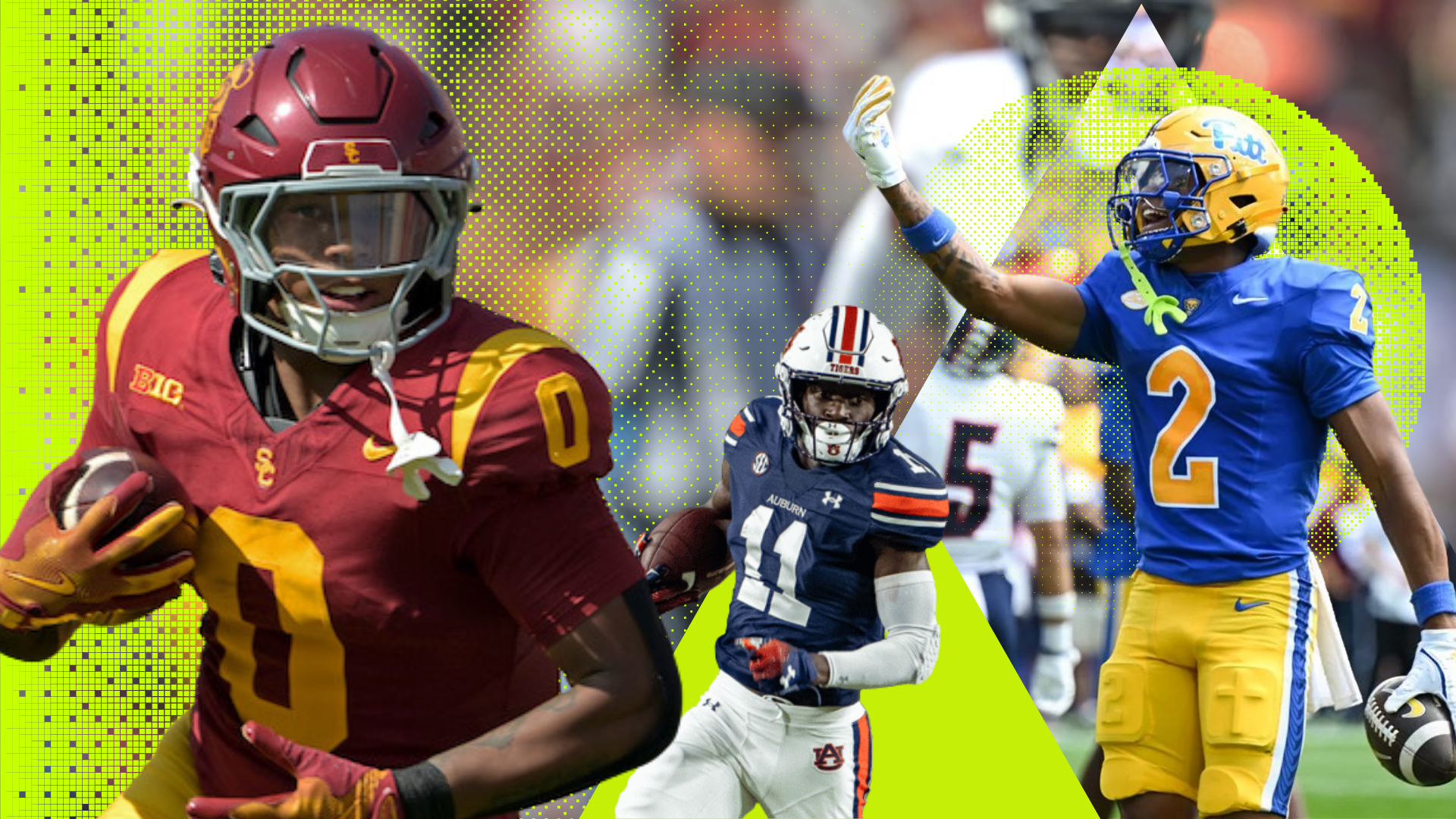
Behind Sorsby, the backfield has genuine depth. Cameron Dickey and J'Koby Williams return as known commodities in the system, while Quinten Joyner arrives from USC with the kind of big-play burst that can stretch a defense horizontally and create easy yards after contact. If that three-man committee stays healthy, the ground game could be one of the most balanced in the Big 12.
The receiver room went through a significant portal refresh. Coy Eakin and Micah Hudson return as the experienced anchors, with Hudson entering the season as one of the conference's premiere receiving threats. Surrounding them is a group that reflects Lubbock's continued pull in the portal: Donte Lee Jr. from Liberty brings size and contested-catch production at the X position; Malcolm Simmons arrives from Auburn with SEC-level experience at a position group that needed reinforcement; Kenny Johnson from Pittsburgh is a versatile route runner with proven production in a power conference; and Jalen Jones from Alabama State adds raw upside at the boundary. At tight end, Terrance Carter Jr. and Jett Carpenter give Leftwich move pieces that can create mismatches in two-TE sets, particularly in the red zone where Tech will need to replace efficiency lost in the transition.
The 2026 schedule: where it gets interesting
The schedule is manageable on paper and genuinely treacherous in spots. The Raiders open September 5 at home against Abilene Christian, head to Oregon State September 12, then open Big 12 play at home against Houston on September 19 before a final non-conference tune-up against Sam Houston State on September 26. October features road trips to Colorado (Oct. 3) and Cincinnati (Oct. 24), with home games against Arizona State (Oct. 17) and Arizona (Oct. 31) in between. November brings West Virginia to Lubbock (Nov. 7), then back-to-back road games at Oklahoma State (Nov. 14) and Baylor (Nov. 21), before closing at home against TCU on November 28 in the Battle for the Saddle.
The game to circle is October 17. Arizona State comes to Lubbock as the defending Big 12 co-champion, and that matchup could function as the de facto conference championship preview. It is the kind of game the Big 12 was built for. The Cincinnati trip on October 24 carries its own storyline with Sorsby returning to Nippert Stadium in his first season elsewhere. And those back-to-back November road games in Stillwater and Waco could expose any vulnerabilities in a transitioning offense before the regular season closes.
So, what do you actually think?
The bones of a championship program are still here. The defense loses Rodriguez and Bailey but returns a foundation that was genuinely elite. The portal additions give Leftwich and Sorsby real weapons to work with. And Joey McGuire has proven, as emphatically as any coach in the country can, that he knows how to build and hold a locker room together in the era of constant roster movement.
But this team is in uncharted territory. Defending a Big 12 title with a new offensive system and an unproven starting quarterback is not a small ask. History says it is hard. The 2025 Raiders said a lot of things were hard, then went and did them anyway.
Can this offense find its footing fast enough? Does Sorsby have what it takes to carry this program deeper into the season? And is McGuire the coach who turns one historic year into something that looks more like a dynasty? We want to hear from you. Drop your win total prediction below.

Trusted By Programs Across The Country