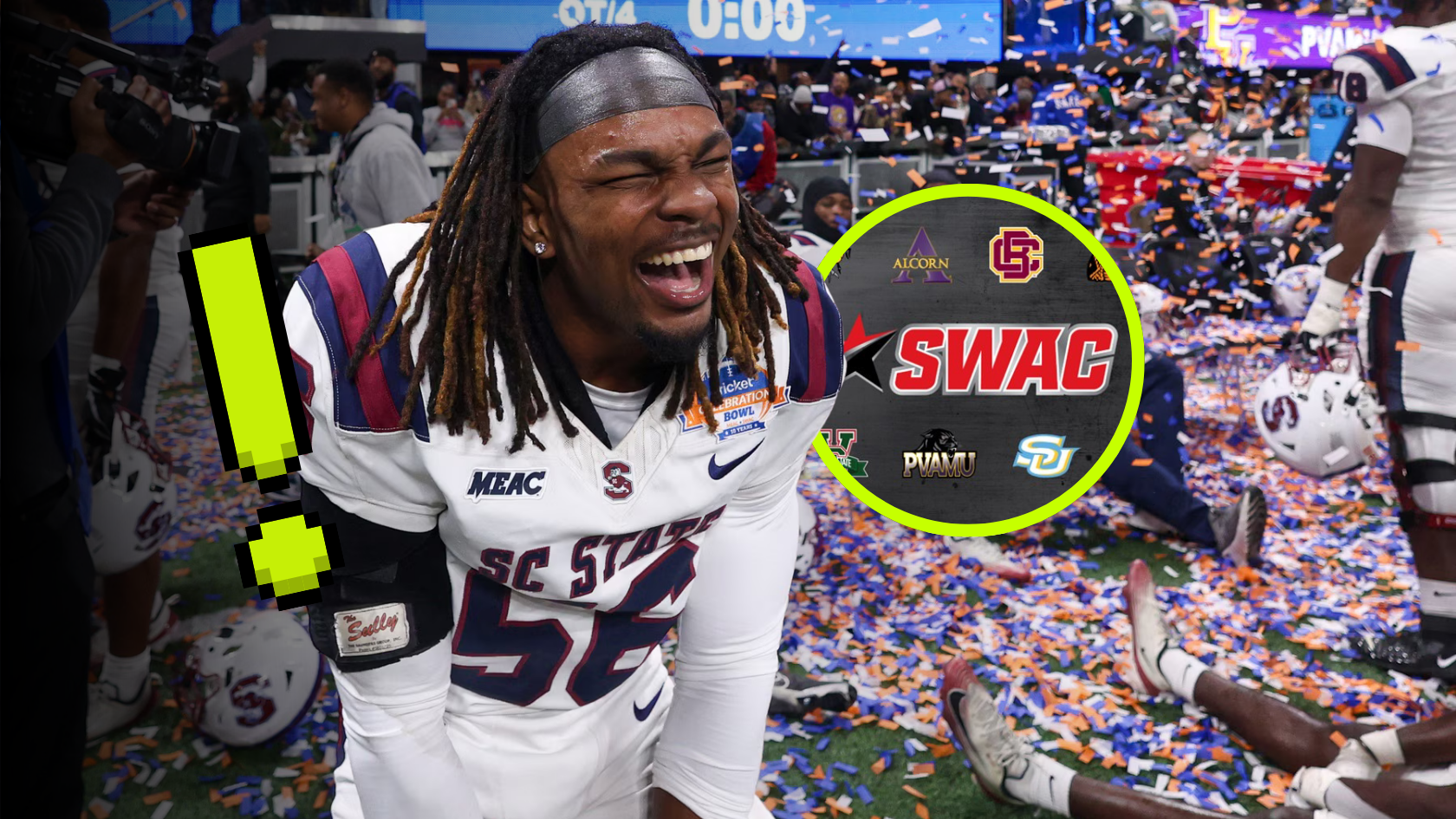
For years, the SWAC's early-September slate came with a footnote. You'd see Prairie View hanging 50-something on Lincoln (California), or Texas Southern putting up 61 on Virginia University of Lynchburg, and fans would squint at the box score trying to figure out whether it was a football game or a glorified seven-on-seven. Those days are officially on the clock.
Commissioner Charles McClelland confirmed this week that the league's 12 member institutions voted to eliminate nonconference football games against opponents outside NCAA Division I and Division II, starting with the 2027 season. No more NAIA homecoming snacks. No more non-affiliated independents wandering into a conference-title contender's stadium. If you're on a SWAC schedule going forward, you're at least a D-II program with skin in the game.
"No longer are we going to play games that don't count," McClelland said during a SWAC TV appearance at the conference's golf championships. It wasn't dressed up as a manifesto. It didn't need to be. One line did the work.
How we got here
The SWAC has always operated in a weird postseason pocket. Since 2015, the league's champion has skipped the FCS Playoffs to meet the MEAC winner in the Celebration Bowl in Atlanta, a matchup that has become one of the marquee cultural events on the HBCU calendar. That decision gave the conference its own national showcase, but it also meant that the regular season's value got measured less by playoff positioning and more by internal championship math and the Celebration Bowl chase.
And in that environment, scheduling a non-Division opponent became a shortcut. Want a guaranteed homecoming win? Book an NAIA program. Need an early-season tune-up before the Bayou Classic grind? Find a Christian college that'll travel. It was easy, it was cheap, and depending on the matchup, it was often brutal.
The 2025 receipts tell the story better than any press release could. Alcorn State, Mississippi Valley State, and Prairie View A&M all drew Lincoln (California) on their schedules and outscored the Oaklanders by a combined 129-0. Texas Southern dropped 61 on Virginia-Lynchburg. Grambling hung 55 on NAIA Langston. UAPB went 34-8 over Lincoln and then decided that wasn't enough, tacking on a 79-10 win against Westgate Christian of the independent New South Athletic Conference. None of it moved the needle on playoff resumes, recruiting conversations, or the conference's national perception. It was roster padding dressed up as football.
Why the math finally broke
Here's the quiet context nobody at the podium said out loud: the SWAC has been sitting on a structural disadvantage for a decade. The conference gave up its automatic FCS Playoff bid to play in the Celebration Bowl, but individual SWAC teams can still technically accept at-large bids if they're not otherwise committed. The problem is that the FCS Playoff Selection Committee weighs record against Division I opponents heavily, and per NCAA playoff guidance, programs with fewer than six Division I wins are already in jeopardy of being passed over.
Translation: beating an NAIA school 70-zip doesn't just fail to impress anyone. It actively eats a schedule slot that could have been a D-I win. Every cupcake on the calendar is a resume item working against you.
The last SWAC team to accept an at-large bid was Florida A&M in 2021. That's not a coincidence. It's a system problem, and the cupcake games were making it worse. McClelland's phrasing — "we're not going to be able to go play teams that are not within the structure of which it should be" — is conference-commissioner-speak for we're tired of punching down for no reason.
The competitive angle
Credit McClelland for framing this as a growth play rather than a punishment. He pitched the change as a chance to build something for fans, not just fix something for the committee. "It's going to allow our teams to have more competitive games," he said. "It's going to allow our fans to have more competitive games to go watch and support."
That part matters. The SWAC has led FCS in average home attendance basically every year since the subdivision has existed. It fell just 40,000 fans short of becoming the first non-FBS conference to hit a million in home attendance all the way back in 1994. This league sells tickets. This league brings bands. This league runs one of the most culturally resonant postseason events in American sports with the Celebration Bowl. The product on the field has to match the product in the stands, and "Alabama State versus a school your uncle had to Google" doesn't do that.
The FCS landscape more broadly tells you how normal the SWAC had drifted. FCS teams are scheduled to play 63 games against non-Division I opponents across the 2025 season. It's a thing. It happens league-wide. But very few of the FCS's contending conferences are leaning on it the way the SWAC has been.
The turning point
If you're looking for the moment this decision became inevitable, it probably wasn't a single bad loss or a controversial title game. It was the slow accumulation of late-August Saturdays where a conference with FBS-caliber attendance was playing sub-D-II football. McClelland said the league's athletic directors came to it together, which tracks. Athletic directors don't volunteer for harder schedules unless the easier ones are costing them something.
The 2026 season gives everyone one last lap. Three games are already on the books with non-NCAA opponents: Southern hosting Louisiana Christian, Bethune-Cookman hosting Virginia-Lynchburg, and Alcorn State hosting NAIA Arkansas Baptist. Two of those are homecoming games. The conference isn't blowing up existing contracts. It's just not signing new ones.
What it means
For the 12 member programs, this is a scheduling gut check. Finding an extra D-II opponent isn't hard. Finding an extra D-I opponent — especially one that will travel to Jackson or Baton Rouge or Grambling on reasonable terms — is the actual job. The SWAC already runs a demanding eight-game conference slate. Adding another Division I nonconference game means more buy-game opportunities against FBS programs (cha-ching), more FCS-vs-FCS crossovers, and, if the league plays its cards right, more marquee early-season games that actually draw TV attention.
For the Celebration Bowl race, the effect is subtler but real. When every win has to come against a legitimate program, the eventual champion carries more weight into Atlanta. Nobody's looking at the 2027 SWAC winner and seeing "yeah but they beat Lincoln 50-nothing."
For the FCS Playoff question that nobody wants to touch out loud, this is a necessary step if the league ever decides to revisit its relationship with the bracket. You can't be in the conversation for at-large bids when half the committee's eyes are glazing over at your September schedule.
Closing take
There's something on-brand about the SWAC making this call on a Wednesday, at a golf championship, via a casual on-stream comment. The league doesn't need a press conference to tell its members what to do. The AD meeting already happened. The vote already passed. The statement was just the receipt.
What comes next is the hard part — actually filling those schedule slots with real opponents, selling the harder season to fans who love a homecoming blowout, and trusting that the long game pays off. But the sentiment from the commissioner's chair is clear. The SWAC is done pretending these games count. For a conference that's been quietly demanding to be taken seriously for years, this is what taking yourself seriously looks like.

Trusted By Programs Across The Country