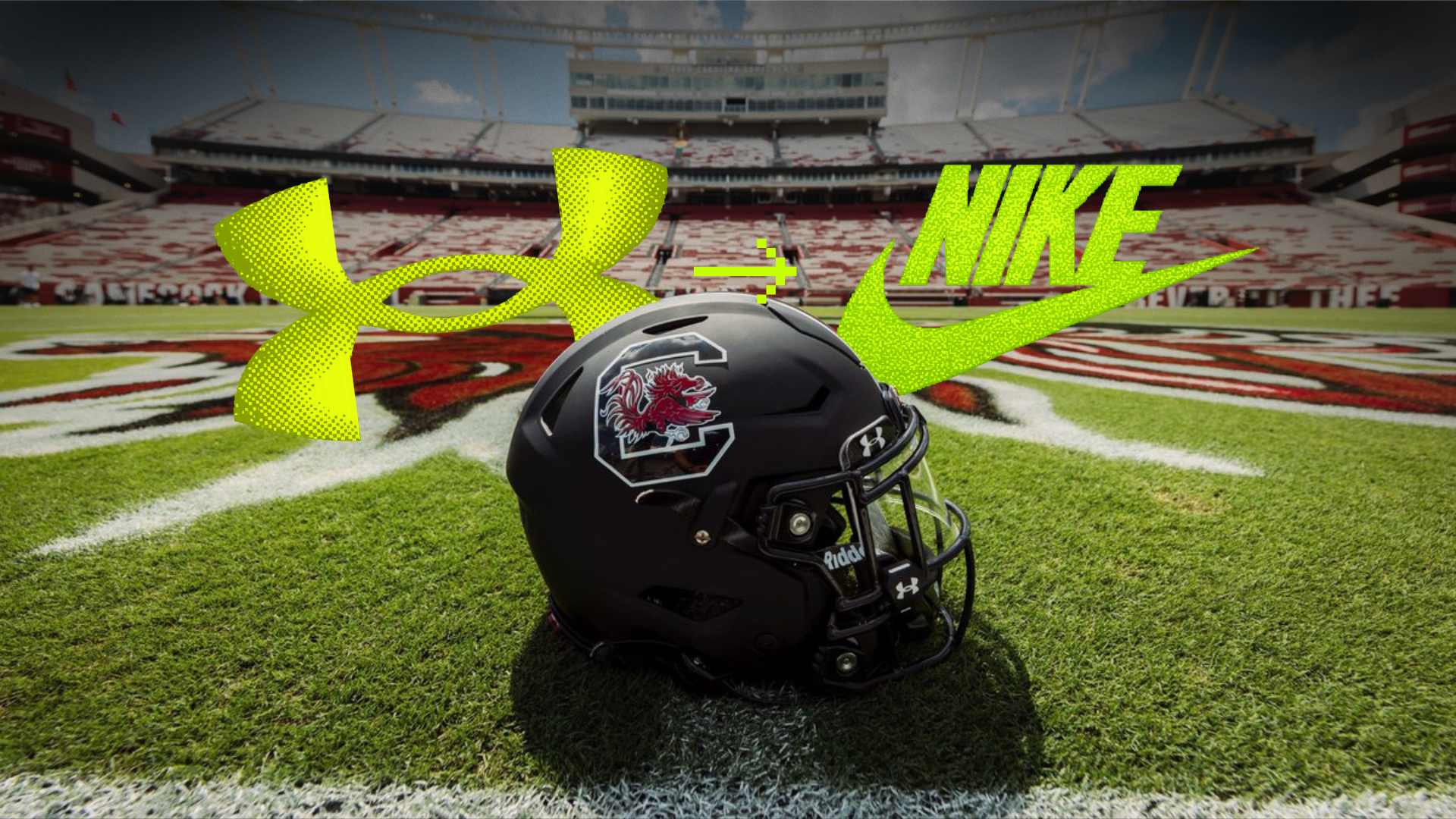
There's a moment in every long-term relationship where one side has to admit things just aren't working the same way they used to. For South Carolina athletics and Under Armour, that moment has been building for years. It just took a Swoosh to make it official.
The University of South Carolina confirmed in August 2025 that it is ending its nearly two-decade partnership with Under Armour and signing a 10-year deal with Nike, effective July 1, 2026. The Gamecocks — long the last holdout in the SEC flying the Under Armour banner — are done flying that particular flag. Columbia is going Swoosh, and honestly? The writing had been on the wall for a while.
How We Got Here: A Partnership That Started Strong
When South Carolina first linked up with Under Armour in 2007, it was a different era. Under Armour was the scrappy upstart challenger to Nike's throne — aggressive, ambitious, and willing to spend big to plant its flag in college athletics. The early Gamecocks deal, a six-year agreement worth $10.8 million, reflected that energy. By 2011, the deal had been renegotiated and restructured into a six-year, $19 million contract covering all USC athletic programs.
Then came 2016 and the big extension — a 10-year deal worth $71.5 million that, at the time of signing, was reportedly the second-most valuable apparel contract in the SEC and seventh-most valuable in the country. Under Armour was flush, ambitious, and paying a premium to lock down SEC presence. South Carolina was a willing partner, and both sides walked away from that table feeling like they'd won.
That deal expires June 30, 2026. And Under Armour, exercising its contractual right of first refusal, chose not to match Nike's offer. Let that sink in for a second.
The Numbers Behind the New Deal
Nike's winning bid is a 10-year arrangement worth $5 million in cash — paid out in $500,000 annual installments — plus $70 million in product over the life of the deal, with an additional $2.5 million in supplemental product on top of that. USC also locked in a 15% royalty rate on net sales of licensed merchandise. If any of the school's major programs — football, basketball — win a national championship, there's a performance bonus of up to $230,000 waiting on the other end.
On paper, the cash component of the Nike deal looks modest compared to what Nike pays its bluest of blue-chip partners. Ohio State, Michigan, and Texas reportedly pull in between $15 million and $17 million annually from Nike deals. Notre Dame's 10-year Under Armour extension from 2020 was worth roughly $90 million in combined cash and merchandise. South Carolina isn't in that conversation yet — but the product volume, royalty structure, and Nike's overall ecosystem offer value that transcends the check itself.
What South Carolina is really buying into isn't just new uniforms. It's distribution, cultural relevance, and alignment with the most dominant force in college sports apparel.
Under Armour's Slow Exit from College Football's Big Stage
To understand why this deal happened, you have to understand what's been happening to Under Armour over the last decade. The brand that once positioned itself as Nike's next serious rival — surpassing Adidas to become the second-largest sports apparel company in the U.S. by 2015 — has been in retreat mode for years.
The red flags started piling up fast. Under Armour backed out of a historic $280 million, 15-year deal with UCLA, citing a lack of marketing benefits — a move that reeked of a company cutting costs rather than investing in growth. Boston College got similar treatment. The brand also walked away from an MLB on-field jersey deal and exited its NFL partnership. At its peak in 2017, Under Armour had long-term sponsorship commitments totaling $1.36 billion. By the time South Carolina was shopping for a new deal, that number had cratered to around $432 million.
The Auburn situation may be the most telling data point. When Auburn signed a deal with Under Armour in 2015, part of the compensation package included $10 million worth of Under Armour stock — a bet on the company's continued ascent. Under Armour stock was trading north of $54 per share when that deal was inked. By the time Auburn walked out the door to sign with Nike ahead of the 2025 season, those shares had collapsed in value to the point where what was once a $10 million equity stake was worth a fraction of that. Auburn took the L on the stock, learned the lesson, and moved on. South Carolina was watching.
With Auburn's departure to Nike and South Carolina now following suit, Under Armour has officially lost its last two Power Four SEC footholds. The brand still has Notre Dame — and a national title game appearance in January 2025 gave them a meaningful moment in the spotlight — but the college football landscape is no longer Under Armour's playground. It's Nike's, and it has been for a while.
Nike's Stranglehold on the SEC and Beyond
Nike's dominance in college athletics isn't breaking news, but the scope of it is worth appreciating. The brand outfits more than 100 universities in some capacity. Forty-one of the 68 teams in the 2025 men's NCAA Tournament wore Nike or Jordan Brand. Eight of the 12 teams in the College Football Playoff were Nike schools. The Swoosh has been on the jersey of every recent national champion: Alabama, Clemson, Georgia, LSU, Michigan.
With South Carolina now in the fold, Nike has effectively completed a clean sweep of SEC membership — no small feat for a conference that sets the standard for college football prestige. For USC Athletics Director Jeremiah Donati, the pitch wasn't just about money or product. It was about elevating the brand in a way that aligns with where the program is headed under head coach Shane Beamer, who has quietly built one of the more competitive rosters in the SEC over the past few seasons.
Nike also sweetened the deal with a commitment to develop A'ja Wilson apparel for both the men's and women's basketball programs — a nod to the program's most celebrated alumna and a signal that this partnership intends to go beyond football.
What It Means in the NIL Era
Timing matters here, too. Nike's broader college sports strategy has shifted in a major way since NIL rules took effect in 2021. The brand isn't just signing schools anymore — it's signing athletes directly. Nike's recent 10-year extension with LSU included individual NIL deals with 10 Tigers athletes as part of the package, with plans to replicate that model across other major partners.
That's the play that should have South Carolina athletes paying close attention. The Nike pipeline — brand exposure, athlete marketing, apparel visibility — now runs directly to the players, not just through the athletic department. In a world where a Gamecock football or basketball star can leverage a Nike partnership for their own NIL portfolio, the institutional deal has downstream benefits that simply didn't exist five years ago.
Under Armour, for its part, has leaned into a focused strategy — Stephen Curry, Dwayne Johnson, Notre Dame — rather than the sprawling college portfolio it once maintained. That's a legitimate business decision. But it means schools like South Carolina had to find a new home, and Nike was ready with an open door.
The Transition and What Comes Next
The 2025-26 academic year will be the final run in Under Armour threads for the Gamecocks. USC AD Jeremiah Donati made a point of thanking Under Armour founder Kevin Plank personally in the official announcement, acknowledging the real history between the two organizations across 18 years and countless memorable athletic moments. This wasn't a bitter breakup — it was a contract expiring and a business decision being made. Plank's crew chose not to match. Nike wrote the better offer.
Come July 1, 2026, the Swoosh takes over all 21 South Carolina athletic programs. Fans will be able to buy officially licensed Nike Gamecock gear once the transition kicks in, and while early jersey reveals haven't strayed far from USC's classic aesthetic, Nike's design teams will have ample opportunity to put their imprint on the program as the years roll on.
One era ends, another begins. South Carolina spent nearly two decades building its identity with a brand that was, at one point, the most exciting challenger in the athletic apparel space. Now they're linking arms with the standard-setter — and in the SEC in 2026, that's exactly where you want to be.
The Swoosh doesn't always win. But in the college football apparel wars? It's got a pretty damn good record.

Trusted By Programs Across The Country