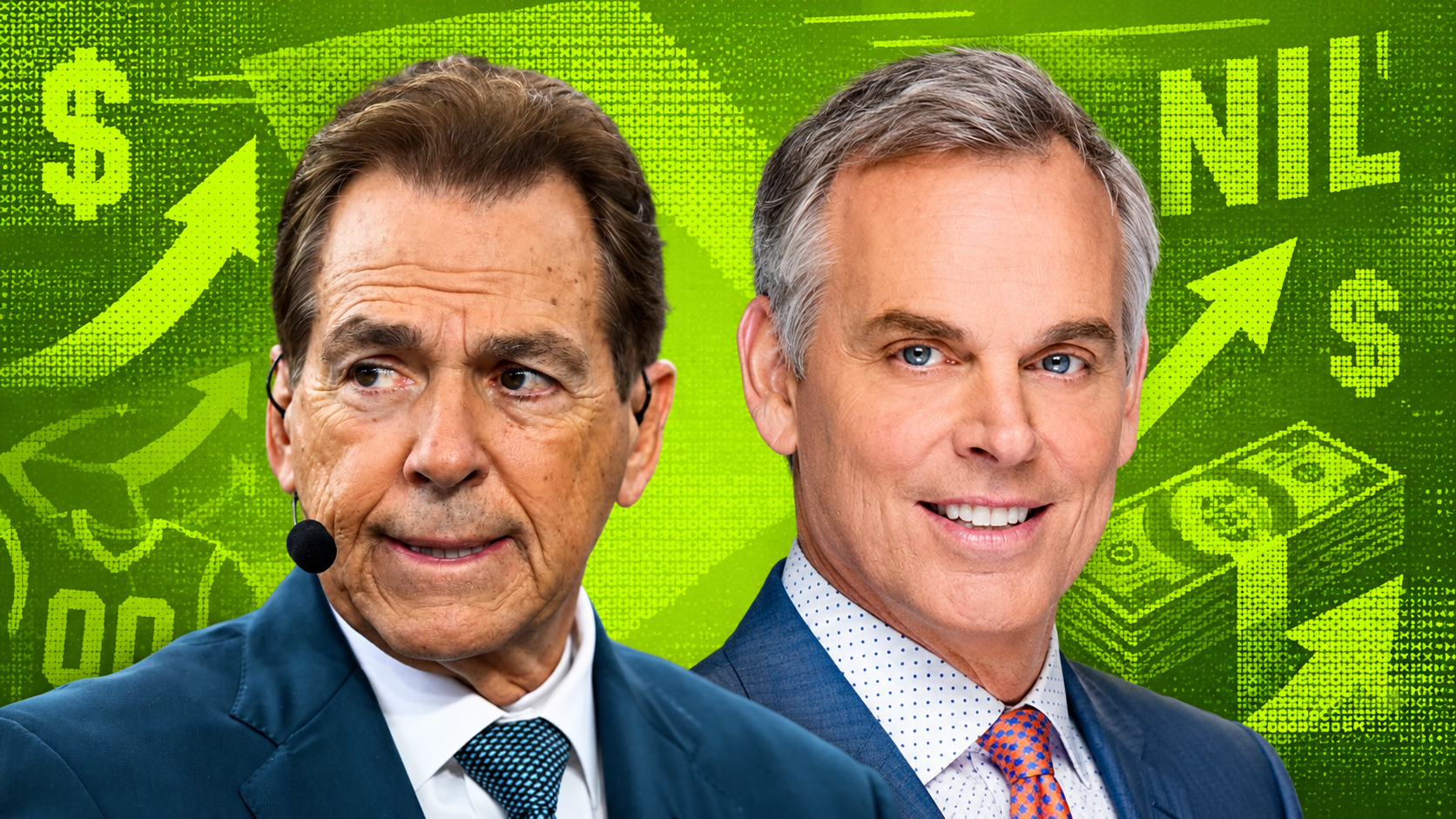
Nick Saban walked into a Senate hearing room on June 3rd with the kind of credibility no lobbyist can buy. Seven national championships, more NFL first-rounders than most teams ever draft, and a surname that became synonymous with dynasty. When he speaks, the room listens. But when he reached for a metaphor — college football as "the biggest, baddest Ferrari" hurtling toward the Grand Canyon at 150 miles per hour — the internet did not just nod along. It pulled up the receipts.
A Bill, a Hearing, and a Very Specific Metaphor
The hearing centered on the Protect College Sports Act, the bipartisan Cruz-Cantwell bill introduced by Sens. Ted Cruz (R-TX) and Maria Cantwell (D-WA) after months of back-channel negotiations. The bill proposes a sweeping overhaul of college athletics: a limited antitrust exemption to give the NCAA back some enforcement power, one unrestricted transfer per career — a sharp pullback from the current free-agency-style portal — stricter NIL regulations, caps on agent fees at 5%, and federal preemption of the patchwork of state NIL laws that have created a 50-state bidding war.
Saban came in as the bill's highest-profile advocate, not representing a conference or a program, but as the self-appointed conscience of a sport he helped define. He described Alabama's NIL collective spending climbing from $2.7 million his first year post-NIL to nearly $24 million, with some programs reportedly pushing toward $40 million rosters. His argument: the arms race threatens Olympic sports, distorts player development, and has turned booster collectives into an unregulated shadow free-agency system where tampering runs rampant and accountability is nonexistent.
He also flagged a specific incident that illustrated the tampering problem: "Clemson had a player that was on campus for a whole week, and they came and got him off the campus and took him someplace else." The transfer portal, without guardrails, has become less of a second-chance mechanism and more of an ongoing poaching operation. That part of Saban's testimony deserves serious consideration. But then came the Ferrari line — and Fox Sports' Colin Cowherd started revving his engine in the opposite direction.
Cowherd Calls the Bluff
On his show The Herd the following Saturday, Cowherd didn't just push back. He went full cross-examination.
"Nick Saban made over $100 million in the free market with college football and never talked much about budgets back then," Cowherd said. "If the Alabama athletic director would have said, 'You know, Nick, we got to make some cuts,' Nick would have turned to his agent, Jimmy Sexton, and said, 'Call Texas or find the money.'"
It's a direct shot, and it lands because it's accurate. Saban was the highest-paid coach in college football for much of his Alabama tenure — reportedly earning $10.7 million in 2023 alone. He wasn't tapping the brakes on his own salary, and nobody asked him to. Meanwhile, as Oregon poured hundreds of millions into the Hatfield-Dowlin Complex, Texas built palace-level facilities, and Alabama commissioned a $300 million football operations center, Saban was competing, winning, and collecting. The arms race was already underway. He was the guy in the driver's seat.
"Nick was never publicly tapping the brakes when he was the highest-paid coach or when there was a facilities-building war," Cowherd added. "For years and years, Oregon, Texas, and Bama were spending hundreds of millions on facilities, and now we're spending $1.2 million on a wide receiver who's going to be a first-round pick, and we got to tap the brakes?"
That's the core tension of this entire debate — and it's one Saban hasn't convincingly resolved. The alarm bells are ringing loudest now that money is going to the players. The brakes weren't even considered when it was all flowing to coaches and concrete.
The Olympic Sports Argument — And Why It Doesn't Quite Hold
Saban leaned heavily on the threat to non-revenue sports during his testimony, warning that unchecked NIL spending on football and basketball rosters would eventually cannibalize scholarships and roster spots for Olympic athletes. It's not an unreasonable concern on its face. But Cowherd pointed out the obvious: this is a structural problem that predates NIL by decades.
"I didn't hear Nick, and a lot of these coaches, worry about the Olympic sports. In college, athletic departments have been a house of cards forever. They're bloated and nonsensical," Cowherd said.
He's got a point. The model where football subsidizes everything else was always fragile. Schools have been cutting non-revenue sports since long before Zach Calzada signed an NIL deal. Framing the survival of women's rowing as contingent on capping what a quarterback earns is convenient — but it conveniently sidesteps how athletic departments choose to allocate the billions football already generates.
Craig Carton Goes Further — Much Further
Cowherd was measured by comparison to radio Hall of Famer Craig Carton, who decided subtlety was overrated.
"The Clown Prince Nick Saban was at it again," Carton said on his program. "It's always funny to me when the guys who are against the legal spending on talent did it illegally for so many years. Nick Saban is still of that era of successful, well-known coaches who got away with bloody murder by paying guys under the table when it was not legal to do it."
For the record: Saban has never been formally sanctioned for paying players illegally. Alabama's most notable NCAA compliance issues predate his arrival in Tuscaloosa, and there's no documented evidence supporting Carton's specific allegation. But the broader cultural point Carton is gesturing at is one that former coaches, including Ed Orgeron, have acknowledged openly — the under-the-table economy in college football recruiting was pervasive for generations, long before NIL gave it a legal framework. Calling out one coach without evidence crosses a line. But the cultural history Carton is referencing isn't fiction.
This isn't the first time Saban has faced this particular charge. In 2022, when he called out Texas A&M for allegedly buying the nation's top recruiting class through its NIL collective, then-Aggies head coach Jimbo Fisher called him a "narcissist" and implied Saban had done the same thing his entire career. The beef was loud, public, and unresolved. It's now the background music to every Saban appearance at a congressional hearing.
The Numbers Don't Lie — But They Don't Tell the Whole Story Either
A look at the actual figures puts the stakes in sharp relief. Saban earned north of $100 million coaching at Alabama and LSU combined. Alabama's new football operations complex carries a $300 million price tag. The Cruz-Cantwell bill would cap agent fees at 5% and restrict player transfers — but contains no salary cap on coaches, no limit on facilities spending, and no ceiling on what schools can pour into their football programs outside of NIL collectives.
In other words: the market for coaches and infrastructure stays open. The market for players gets regulated. When you frame it that way, "tapping the brakes" starts to sound a lot like pressing them on one side of the car.
None of that automatically makes the Protect College Sports Act bad policy. The tampering issues Saban described are real. An unregulated portal with no transfer limits has created chaos for programs trying to build rosters with any continuity. The absence of a federal standard on NIL has produced an uneven playing field where states with aggressive NIL laws hold structural recruiting advantages. There are legitimate problems here that deserve legislative attention.
The Voice That's Missing From This Entire Conversation
But here's where the whole debate — from Saban's congressional testimony to Cowherd's rebuttal to Carton's accusations — falls short of actually mattering: the players themselves have no seat at the table.
There was no student-athlete representation at the White House roundtable convened by President Trump earlier this year. The Cruz-Cantwell bill was designed, negotiated, and is being advocated for almost entirely by coaches, administrators, and politicians — the people who benefited most from the system that preceded NIL. Without a union, unlike every major professional sports league in America, college athletes have no formal mechanism to represent their interests in the rooms where decisions about their careers are made.
That's the real Ferrari in the room. Not NIL spending. Not the transfer portal. The fact that the people most affected by this legislation are the ones with the least power to shape it.
The Takeaway
Nick Saban's concern for college athletics is genuine. His expertise is unimpeachable. And some of what he said before Congress is worth taking seriously, particularly on tampering and the lack of structural accountability in the current system. But when the architect of one of the most financially dominant programs in college football history starts warning about runaway spending, the rest of us are allowed to ask: whose Ferrari was it? Who built the road? And who decided the only brakes worth hitting are the ones that slow down the players?
The Protect College Sports Act may eventually be the right framework. But it will be a lot more credible when it's built with the athletes — not just the coaches who got rich off them — in the driver's seat.

Trusted By Programs Across The Country