If you or someone you know is struggling, help is available 24/7 by calling or texting 988 to reach the Suicide and Crisis Lifeline.
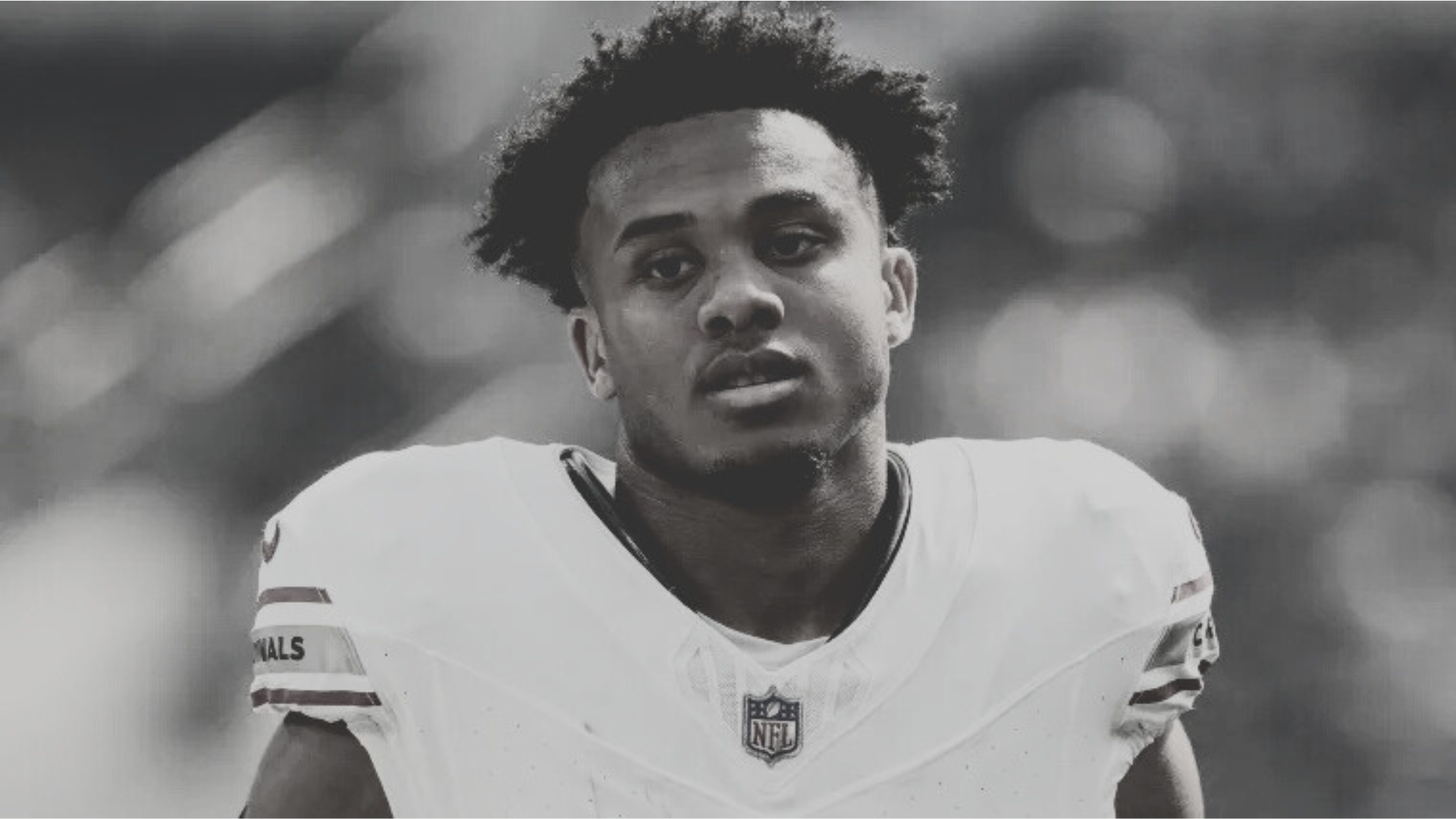
There are players who make you feel something every single time they touch the ball. Rondale Moore was that kind of player. Fast in a way that looked impossible for his frame, relentless in a way that made coaches and teammates marvel, and warm in a way that everyone who spent five minutes around him seemed to carry with them long after. On Saturday, February 21, 2026, Moore was found dead in his hometown of New Albany, Indiana. He was 25 years old. The football world is still trying to find the words.
A kid from New Albany who became something unforgettable
Rondale DaSean Moore grew up in New Albany, Indiana, the youngest of four children raised by his mother Quincy Ricketts. He was the kind of athlete who did not fit a mold, standing 5-foot-7 in a league that tends to overlook anyone under six feet, but playing with the kind of burst and vision that made every defensive back in the country look slow. He won a state basketball championship at New Albany High School in 2016, transferred to Trinity High School in Louisville to pursue football, and by 2017 had led the Shamrocks to a 15-0 season, a Kentucky Class 6A state title, and a Gatorade Kentucky Player of the Year award. His senior numbers at Trinity, 104 receptions for 1,461 yards and 16 touchdowns with another 537 rushing yards, were the kind of stat lines that look like a video game setting turned all the way up.
He chose Purdue over Texas, his initial commitment, and what happened next still does not feel entirely real when you look back at it.
The Purdue freshman who stopped the country in its tracks
College football has its freshman moments. Rare ones. The kind where you watch a player in their first season and understand, immediately and without reservation, that you are watching someone different. Rondale Moore's 2018 season at Purdue was one of those moments.
As a true freshman, Moore caught 114 passes for 1,258 yards and 12 touchdowns while adding 213 rushing yards and two more scores. His 2,215 all-purpose yards broke the program record. He became the first true freshman in Big Ten Conference history to earn consensus All-American honors, and he did it while logging a 3.71 GPA in the classroom. The Paul Hornung Award, given annually to the nation's most versatile player, went to an 18-year-old kid from New Albany who had just walked onto a Power Five campus for the first time.
The defining moment of that season, and arguably of his entire college career, came on October 20, 2018. Purdue, a 4-3 team with nothing to lose, hosted the second-ranked Ohio State Buckeyes at Ross-Ade Stadium. Moore had 12 catches for 170 yards and two touchdowns. The Boilermakers won 49-20 in one of the most stunning upsets college football has seen in the modern era. The call that night, when Moore refused to go down on what became a defining touchdown run, still echoes in Purdue lore. He was not just a freshman playing well. He was the best player on the field in a game that will be told for generations.
Injuries stole the rest of his college career. A hamstring injury limited him to four games as a sophomore. A COVID-altered 2020 season gave him only three starts before he declared for the draft. He left Purdue having appeared in just 20 games total, yet he still ranked ninth all-time in program receptions and 14th in receiving yards. That is what one healthy season and a relentless approach to the game did for his legacy in West Lafayette.
The NFL career that never got the runway it deserved
The Arizona Cardinals selected Moore with the 49th overall pick in the 2021 NFL Draft, and in his rookie season he showed exactly why. Fourteen games, 54 catches, 435 receiving yards, and the kind of after-the-catch ability that made Kliff Kingsbury's offense more dynamic just by having him in the building. He joined Anquan Boldin, Christian Kirk, and Larry Fitzgerald as one of just four Cardinals receivers since at least 1970 to reach 100 career receptions within their first 25 games. That is the company he was keeping.
But the injuries that had shadowed him at Purdue followed him to the professional level. He missed time in 2022 with a hamstring issue, finished the season on injured reserve, and spent 2023 as a full-season contributor before the Cardinals traded him to the Atlanta Falcons in March 2024. In Atlanta, a dislocated right knee in training camp ended his season before it started. He never played a down for the Falcons. He signed with the Minnesota Vikings ahead of the 2025 season, was expected to serve as their primary punt returner and a slot option in the offense, and then blew out his left knee while returning a punt in the first preseason game. Another full season on injured reserve. His last two NFL seasons amounted to two training camps, two devastating injuries, and two more chapters of a story that kept getting interrupted before it could find its stride.
In three NFL seasons across 39 games, Moore finished with 135 receptions for 1,201 yards and three receiving touchdowns, adding 249 rushing yards and a score. The numbers are respectable. They are not the numbers his talent was supposed to produce. The gap between what Rondale Moore was capable of and what circumstances allowed him to show the world is one of the more painful realities in recent NFL memory.
The tributes reflect who he was off the field
What stands out in the hours since the news broke is not just how many people are grieving, but the specific way they are describing him. Not as a football player. As a person.
Vikings head coach Kevin O'Connell, who knew Moore for less than a full year, spoke about him with a depth of feeling that transcended the professional relationship. He described Moore as humble, soft-spoken, and deeply proud of where he came from. He said the organization is heartbroken not just over the career Moore will not get to finish, but over the person they will not get to watch grow. Louisville head coach Jeff Brohm, who coached Moore at Purdue and shares the same Trinity High School alma mater, called him the ultimate competitor and spoke about his smile with the kind of specificity that only comes from actually knowing someone. Former Cardinals teammate J.J. Watt, one of the most respected voices in the sport, said publicly that he cannot begin to fathom or process it. The Tyler Trent Foundation, referencing the beloved Purdue student whose battle with cancer became intertwined with that 2018 Ohio State upset, shared that Moore and Trent had formed a friendship that season, exchanging game-day texts of encouragement. Former Purdue teammate Jackson Anthrop called Moore the most electrifying player he had ever been around, and said he was more than special.
These are not the words people reach for when they are describing a football player. They are the words people reach for when they are describing someone who mattered to them.
What the game lost, and what the conversation needs to include
The NFL is a league that asks enormous things of the people who play it. It demands physical sacrifice at a level most of us will never comprehend, ties identity to performance in ways that can become crushing when the performance is taken away, and offers very few roadmaps for what comes next when the career ends, or when injuries make it feel like the career may already be over before a player is ready to accept that reality. Moore had spent the last two full seasons unable to play the game he had devoted his entire life to. He was 25. He should have had years ahead of him.
This is not a moment to reduce Rondale Moore to a statistic or a cautionary tale. He was a human being with a family, a community, and a story that extended well beyond anything that happened on a football field. But it is also a moment to take seriously the responsibility the sport, and those of us who cover and consume it, have toward the people who play it. Player mental health is not a talking point. It is a life-or-death conversation, and it deserves to be treated that way at every level of the game.
Rondale Moore was 25. He had a first-game Purdue record of 313 all-purpose yards. He had a smile that everyone who knew him mentions by name. He had a mother and a community and a sport that loved him. He deserved more time. The least we can do is remember him fully, and make sure the conversation his passing demands does not fade quietly into the background the moment the news cycle moves on.
Rest easy, No. 4.
If you or someone you know is struggling, please reach out. Call or text 988 to connect with the Suicide and Crisis Lifeline, available 24 hours a day, 7 days a week.

Trusted By Programs Across The Country