The Shield Gets a Facelift — And So Does the Conference
Not long ago, the Pac-12 was a ghost. Ten of its twelve members had bolted for greener pastures — Oregon and Washington to the Big Ten, USC and UCLA to that same glitzy destination, and Arizona, Arizona State, Colorado and Utah heading to the Big 12. What was once the "Conference of Champions," a 100-year-old institution that had produced Heisman winners, NFL legends, and Olympic athletes by the dozen, had been reduced to a two-team rump conference that the internet gleefully dubbed the "Pac-2." The obituaries were written. The curtain was closing. College football had moved on.
It didn't close. It came back swinging — and now it's got a new logo to prove it.
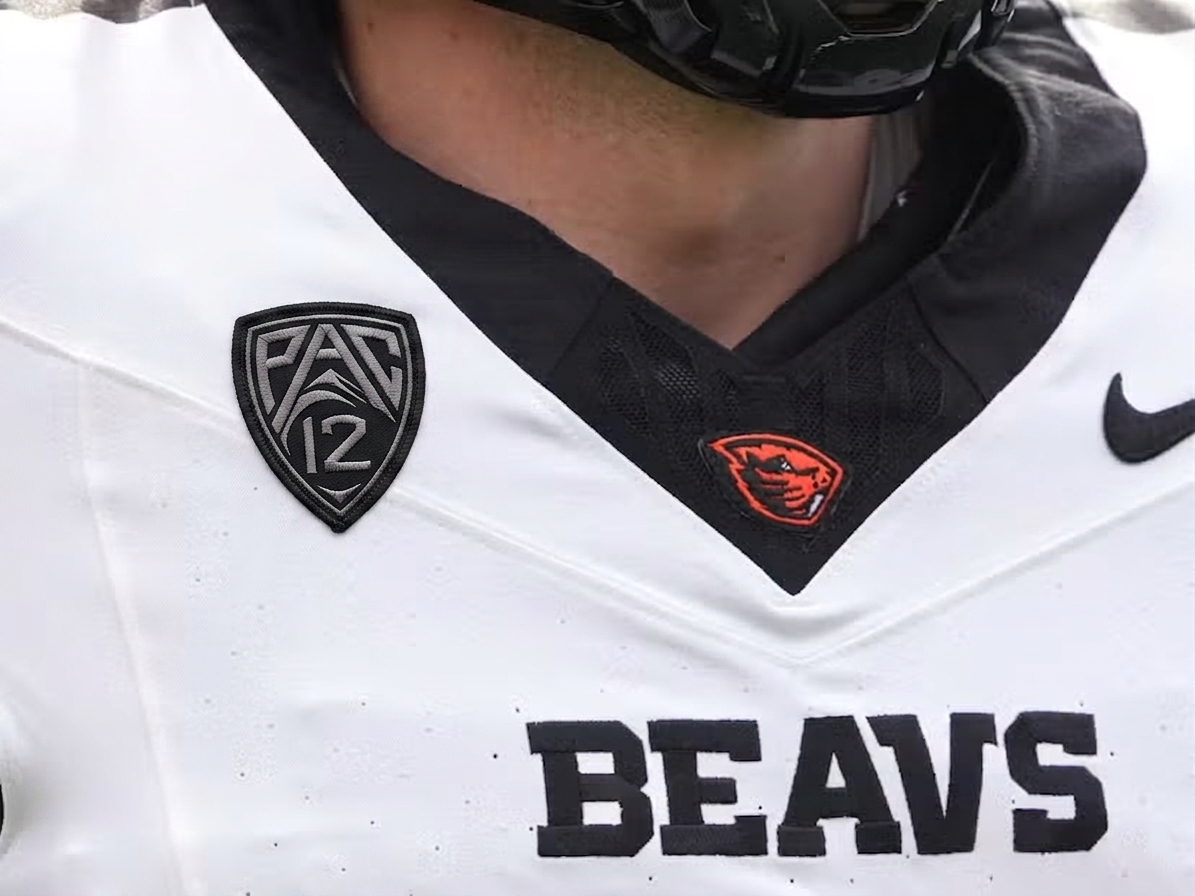
With the 2026 season approaching and eight football-playing programs set to compete under the Pac-12 banner for the first time since the implosion, the conference quietly dropped a redesigned logo that's generating real buzz in the college football world. The new mark is cleaner, bolder, and stripped of the navy-blue colorway that had defined the conference since 2011. In its place: a sharp black-and-white crest, retaining the familiar shield shape and iconic mountain imagery nestled beneath the letter 'A,' but modernized for a new era. The look is sleek. Some might even call it imposing.
Why the Rebrand? Because You Can't Rebuild Without Rebranding
Let's be honest — you can't emerge from a near-death experience and keep wearing the same outfit. The old Pac-12 logo carried the weight of everything that went wrong: the failed media rights negotiations, the exodus of flagship programs, the awkward years when Washington State and Oregon State held the castle while everyone else fled. Keeping that branding into 2026 would be like a band releasing a comeback album under the name their most famous members just quit. It just doesn't work.
The rebrand is strategic, not cosmetic. The Pac-12 is welcoming a wave of programs in 2026 — Boise State, Colorado State, Fresno State, San Diego State, Utah State, Texas State, and Gonzaga — joining the two loyalists, Oregon State and Washington State, to form a nine-member conference. These schools need to feel like they're joining something new, not inheriting the ruins of something old. A fresh logo says: this is a different league. Same name, new soul.
The design itself retains enough Pac-12 DNA to honor the legacy — the mountain motif, the shield crest, the "PAC 12" lettering — but the pivot to black and white strips away any allegiance to the past color scheme and positions the conference as a neutral, adaptable brand that can sit cleanly on merchandise, broadcast graphics, and helmet decals for programs from Boise to San Marcos, Texas. It's practical branding done with some actual visual intelligence.
Fan Reactions: Split, But Engaged — Which Is Honestly Perfect
The internet, naturally, had opinions. CFB Kings first surfaced the updated mark, and the responses ranged from genuine appreciation to the kind of sharp-edged sarcasm that only college football Twitter can deliver.
Supporters called it a clean, modern look that signals the conference is ready to move forward. A number of fans and designers appreciated the minimalist approach, noting that a black-and-white primary logo offers flexibility across different team colorways — which matters enormously when you're trying to build a cohesive conference identity across schools as visually distinct as Boise State (blue and orange) and Washington State (crimson and gray).
The critics, meanwhile, couldn't resist pointing out the elephant in the room: the conference is still called the Pac-12 despite having nine members for football. "Can they change the number to the correct number?" one fan asked, which is a fair question that doesn't have a clean answer. The Pac-12 name carries real brand value — it's recognizable, historic, and doesn't require a rebrand that might confuse casual fans or TV partners. Changing to "Pac-9" for a league that's actively recruiting its tenth member would be a lateral move at best.
One of the more entertaining responses called out the letter "A" in the logo, claiming it resembles a Starfleet badge from Star Trek. Which, honestly? If you're looking to signal that your conference is boldly going where no Group of Five has gone before, maybe that's not the worst association.
The Bigger Picture: This Logo Represents Something Real
It's easy to dismiss a logo reveal as marketing noise — a press release dressed up as news. But the Pac-12's rebrand matters precisely because of the context surrounding it. This conference shouldn't exist right now. It survived a legal battle, fought through an NCAA grace period, scraped together membership from a Mountain West Conference it's now locked in an antitrust dispute with, and assembled a lineup that, on paper, has genuine competitive teeth.
Boise State alone is a legitimate program — they're the most consistently excellent Group of Five school of the last two decades, having earned a College Football Playoff Top-4 seed in 2024. San Diego State reached the national championship game in basketball in 2023. Gonzaga is one of the premier basketball programs in the country, with multiple Elite Eight appearances and two national championship berths since 2015. Colorado State and Fresno State bring recruiting pipelines and fan bases that dwarf what most rebuilding conferences could claim.
Texas State, the final piece locked in as of June 2025, adds a recruiting foothold in one of the most talent-rich states in America. Positioned between Austin and San Antonio, the Bobcats ranked among the top 25 in both rushing and passing offense over the last two seasons combined — the only FBS program to do so. They're not a name-brand power yet, but they're exactly the kind of ascending program that can grow within a conference rather than just surviving in one.
The new Pac-12 isn't the old Pac-12. It doesn't have USC. It doesn't have Washington. It doesn't have Arizona or Oregon. It will never reclaim that exact version of itself, and it shouldn't try. What it has is a second chance — a genuinely rare thing in college athletics — and a logo that announces it's ready to do something with it.
What Comes Next
The conference is expected to continue pursuing additional football-playing members, with a realistic target of a tenth program by 2027. Conference USA programs have been floated as potential scheduling partners and affiliate options, helping Pac-12 teams build out full regular-season slates for 2026 while the league continues to grow. The conference also announced affiliate memberships in baseball (Dallas Baptist), women's gymnastics (Southern Utah), and men's wrestling (Northern Illinois), suggesting a broader multi-sport vision that extends well beyond football and basketball.
There's no confirmed designer or branding agency publicly credited for the new logo as of publication, and the Pac-12 has not made a formal announcement with the typical fanfare of a full rebrand campaign. It surfaced organically through social media — which might actually be the smartest possible rollout for a conference trying to rebuild credibility with a digitally-native fanbase.
The old Pac-12 launched its 2011 logo with a video and a press release. The new Pac-12 dropped its mark on social media, let the fans argue about it, and watched it spread on its own. That's how you build buzz in 2026.
Final Take
The Pac-12 new logo isn't just a design tweak — it's a declaration. After one of the most dramatic collapses in the history of American collegiate sports, two schools refused to let a century-old conference die. They fought in court. They rebuilt the roster. They recruited from the Mountain West's best cupboard. And now, ahead of the 2026 season, they're putting a new face on the whole operation.
The shield is back. The mountain is still there. And the Pac-12 — improbably, defiantly, with eight football programs and a Gonzaga basketball pedigree that most Power Four conferences would envy — is open for business again. Whether the new logo is a masterpiece or just a solid rebrand, what it represents is undeniable: the comeback is real, and it's got a crest to prove it.

Trusted By Programs Across The Country