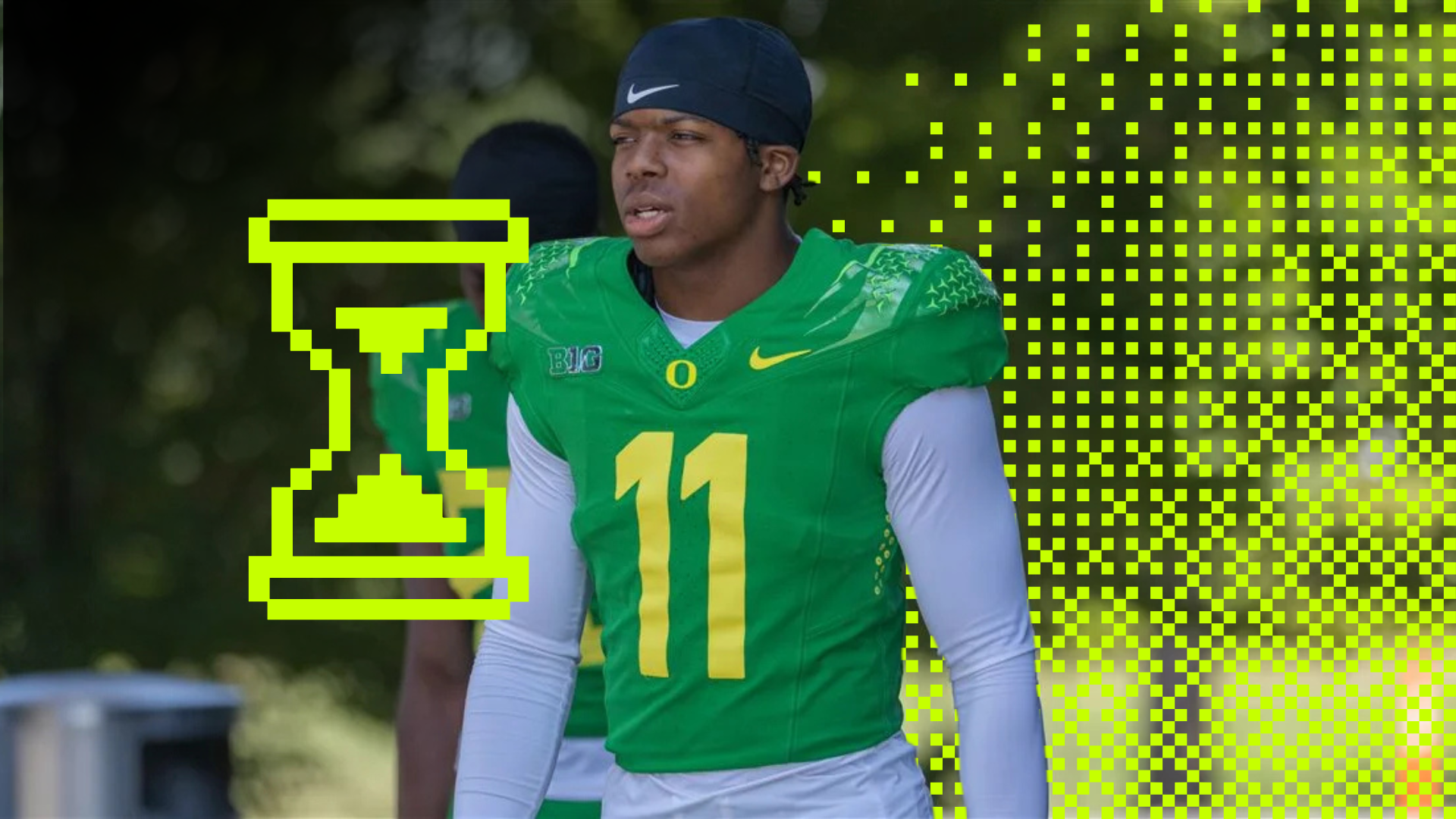
Most lawsuits in college football's contract era start with a quarterback, a billboard, or a buyout that has more zeros than a sophomore math class. Oregon's just started with a missed due date.
The University of Oregon filed suit against former defensive back Dakoda Fields on May 15 in Lane County Circuit Court, alleging breach of contract over an unpaid balance tied to a February settlement. The amount in dispute isn't the eye-popping seven-figure number that made the Cincinnati or Duke cases trend. It's $10,000 — a discount Fields was offered to clean things up quickly and, per the Ducks' complaint, never quite cashed in on.
And that's exactly what makes it the most quietly important contract story in the sport right now.
How a Discount Became a Lawsuit
Here's the actual mechanic, because the headline version flying around the internet is doing this story dirty.
Per the court filing first surfaced by the Daily Emerald and reported out by Ryan Clarke of The Oregonian, Fields and Oregon agreed in February to a settlement: Fields would pay the university $39,882.30 in exchange for a release from liability tied to what the documents only describe as an "underlying dispute." The two sides then layered in a kicker — if Fields paid a discounted $29,882.30 on or before April 20, 2026, Oregon would waive the remaining $10,000.
This was, in plain English, a settle-up-and-move-on deal. Pay the lower number on time and you're done. Miss the date and the full amount snaps back into place.
Fields paid the discounted $29,882.30. Just not by April 20.
That's the whole case. Oregon is now suing for the $10,000 that the discount was supposed to wipe away, plus 9% statutory interest accruing since April 21, plus attorney's fees. The complaint cites Section 7 of the contract for the fee-shifting and interest provisions. The university isn't trying to block Fields from suiting up for Oklahoma. They're not trying to invalidate anything. They're enforcing a deadline.
The lesson is small, sharp, and impossible to miss: in this version of college football, the calendar matters.
The Backstory: How Fields Got Here
To understand why a settlement existed at all, you have to back up to last fall.
Fields arrived in Eugene as one of the marquee names of Oregon's 2024 recruiting class. A 6-foot-2, 185-pound cornerback out of Junipero Serra High in Gardena, California, he was the No. 92 overall prospect in the country and the No. 6 corner in his cycle per 247Sports — a four-star kid with Ohio State, USC, Alabama, LSU, Texas, and Georgia all in the mix. He picked the Ducks.
Then the body started getting in the way. Fields tore his ACL heading into Week 1 of his true freshman season, an injury he disclosed himself at Oklahoma's Spring Media Day in early March.
"There's a lot of stuff behind closed doors personally that I can't really talk about," Fields said. "I tore my ACL my freshman year going into the first game week. (Lanning) was telling me I was about to start and things just didn't go my way after that."
He redshirted, rehabbed, and reappeared in 2025 — but the production never came with him. Three games, one tackle in the Ducks' 59-13 dismantling of Montana State on August 30, and a steadily shrinking role as Oregon's secondary continued to develop younger pieces around him.
By November 5, the floor dropped out. Reports broke that Fields was planning to enter the transfer portal in the middle of the season. Dan Lanning, at his weekly presser, delivered one of the more quotable mic drops of the cycle.
"He didn't come to work today," Lanning said. "We haven't talked to Dakoda, so I guess that's the way it goes nowadays."
Fields officially committed to Oklahoma on January 5. The February settlement followed shortly after. Reading between the lines of the "underlying dispute" language in the court documents, the most likely interpretation is straightforward: Oregon paid Fields revenue-sharing money in 2025, he didn't finish the season, and the parties agreed on a number to make everyone whole.
This Is Oregon's First NIL Lawsuit. It Won't Be the Last.
Filed quietly on a Friday in Lane County, this is the Ducks' first-ever NIL-era contract case. That detail matters more than the dollar amount.
Oregon doesn't *need* the ten grand. The Ducks just signed off on a transfer cycle, hosted spring practice, and watched Lanning continue to run one of the most well-resourced programs in the sport. This isn't a money grab. It's a precedent grab.
The message is layered. To future players: the contract you sign has terms, and the terms include deadlines. To agents and reps: do your job, calendar the dates, don't let your client be the one who got sued over a missed wire transfer. To other athletic departments: this is what enforcement looks like, even on small numbers, even against players already gone.
And Lanning, for his part, has built his Eugene operation on exactly this kind of clarity.
"I always feel like being honest and transparent is key to having success," Lanning told Amaranthus earlier this offseason. "Sometimes it's not always the message somebody wants to hear, but if they hear the truth and they know you're telling the truth, then they can lean in on that."
Honesty cuts both directions. Oregon was upfront about what Fields owed and the discount they'd extend. They're now equally upfront about what happens when the deadline passes.
The Bigger Picture: Schools Are Done Bluffing
This is the part where the Fields filing stops being a quirky local story and starts looking like another data point on a graph that's been steepening for months.
In January, Duke sued former quarterback Darian Mensah after he tried to bolt for Miami following the Blue Devils' first outright ACC title since 1962. A judge initially issued a temporary restraining order. The two sides settled, and Mensah will be a Hurricane in 2026.
In February, Cincinnati went after Brendan Sorsby in federal court for a $1 million liquidated-damages buyout after the quarterback transferred to Texas Tech on a reported $5 million package. The Bearcats specifically called out the Times Square billboard Texas Tech rolled out celebrating his commitment as a violation of NIL terms. That case is still active.
Georgia and former defensive end Damon Wilson are countersuing each other. Washington reportedly had a lawsuit ready against Demond Williams Jr. for a buyout reportedly approaching $4 million before he reversed course and stayed put. Florida QB Jaden Rashada settled his own long-running NIL case against Billy Napier earlier this year.
The throughline is unmistakable. Power conference schools have stopped treating revenue-sharing agreements like handshake deals and started treating them like what they actually are — commercial contracts, enforceable in court. The Mensah and Sorsby cases established that a school will sue a starting quarterback over a high-dollar buyout. The Fields case establishes the floor: a school will sue a backup defensive back over a missed payment deadline on a five-figure number.
Nobody is too small to be served papers anymore.
What's Next for Fields — and Everyone Behind Him
Football-wise, Fields is in a fine spot. Oklahoma cornerbacks coach LaMar Morgan praised him publicly this spring, pointing to his size, length, and athleticism while noting that Brent Venables' system will demand fast learning.
"I thought Dakoda has done a good job," Morgan said. "He's big and strong, just wanted an opportunity. Sometimes I think a change of scenery makes you better, challenges you. I would be very surprised if we don't get the best version of Dakoda."
He'll likely open the season behind a returning trio of Eli Bowen, Courtland Guillory, and veteran rotation piece Jacobe Johnson, with three years of eligibility still in front of him courtesy of the 2024 redshirt. The football reset is real. The legal one is what he'll spend the summer cleaning up.
For everyone watching, the takeaway is bigger than one cornerback in Norman. This was always the eventual shape of NIL-era college football: real contracts, real money, and — inevitably — real consequences when the terms get ignored. The era of "we'll figure it out later" is over. The wire transfer either lands by the deadline or it doesn't.
The Closing Take
The college football news cycle loves a villain and loves a number, and the internet has spent the last 48 hours rounding this off to "Oregon is suing a kid over $10,000." That framing misses what actually happened. Oregon offered Fields a way out for less money if he hit a date. He missed the date. The discount disappeared. The Ducks are now collecting on the original number, exactly as the contract says they're allowed to.
That's not a villain story. That's a contract story. And in 2026, every player, every parent, every agent, and every locker room has just gotten the same memo at the same time.
Sign the deal, read the deal, calendar the deal. Or Lane County will calendar it for you.

Trusted By Programs Across The Country