The NCAA has spent the better part of two years taking heat over its inability — or unwillingness — to police the transfer portal. Coaches at blue-blood programs openly talked about tampering like it was a rite of passage. Dabo Swinney practically filed a police report. The Big Ten sent a letter to Indianapolis questioning whether the rules could even be fairly enforced. And through most of it, the scoreboard for actual consequences read: Power Four, zero. Accountability, zero.
Then came North Dakota.
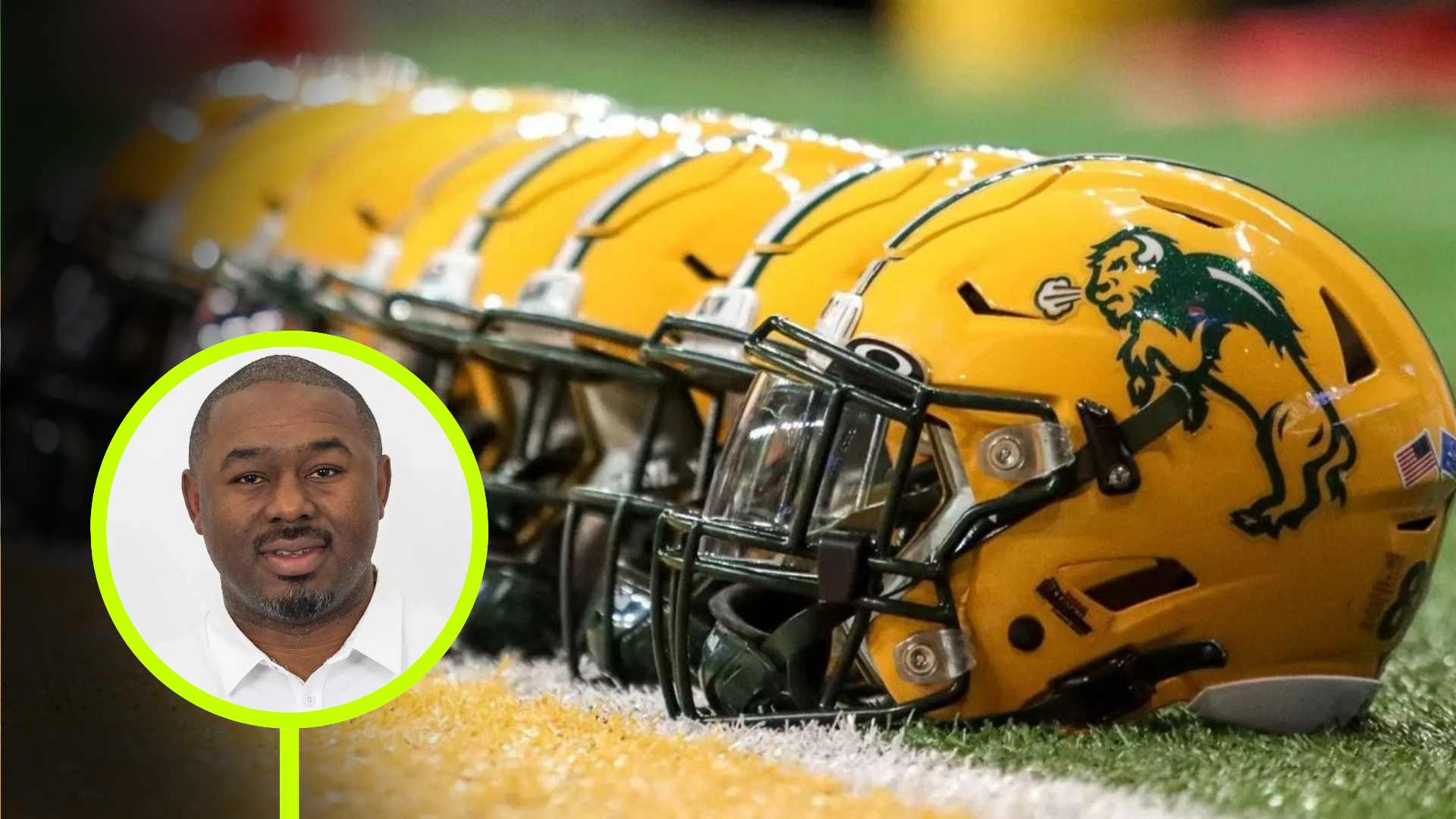
On Friday, June 5, the NCAA Division I Committee on Infractions officially penalized the University of North Dakota football program for tampering violations committed by assistant coach Travis Stepps — the Fighting Hawks' defensive backs coach — who held impermissible recruiting conversations with a student-athlete from another school who had not entered the transfer portal. The result: one year of probation, a $25,000 fine, a one-game suspension for Stepps, and a package of recruiting restrictions that will ripple into the 2026-27 academic year. Oh, and a one-year show-cause order that will follow Stepps wherever he works next.
What Actually Happened
The details here matter — and they're surprisingly human. According to the NCAA's findings, Stepps didn't cold-call a stranger. He reached out to a player he had recruited out of high school, someone he already had a relationship with, during the fall — before the notification-of-transfer window had even opened. The conversations centered on the player's interest in potentially transferring to UND, and the player offered to send Stepps practice film and his academic transcript as a show of good faith.
That transcript is where the story turns. Stepps forwarded it to UND's compliance department. The compliance staff immediately noticed the problem: the player was not in the transfer portal. They flagged it. And then — in a move that looks downright quaint against the backdrop of what happens at the big-money programs every winter — the university self-reported the violation to the NCAA.
Head coach Eric Schmidt, who was in his first season leading the Fighting Hawks in 2025 after taking over from Bubba Schweigert, was not personally involved and was not sanctioned. The NCAA noted that UND, its coaches, and enforcement staff all reached agreement on both the violations and the penalties. No one fought it. No lawyers showed up threatening antitrust suits. They took their medicine.
The Penalty Package
The sanctions the Committee on Infractions handed down are genuinely consequential for a mid-major FCS program, even if they'd barely register as background noise at a Power Four school. The penalties include one year of probation for the football program, a $25,000 fine, a one-game in-season suspension for Stepps during the 2026 season, and a one-week ban on recruiting communications during the January 2027 transfer notification window. The program also absorbs a three-percent reduction in official paid visits for the 2026-27 academic year and three separate one-week bans on football unofficial visits during the same period.
The show-cause order attached to Stepps is the piece with the longest reach. For one year, any school that employs him must restrict his ability to communicate with four-year transfer prospects during the January 2027 football notification-of-transfer window. It's not a death sentence for his career, but it's a mark that travels with him — and in a conference like the Missouri Valley, where recruiting margins are razor-thin, that kind of restriction can cost you a player.
The Elephant in the Room
Here's where the conversation gets uncomfortable. North Dakota finished the 2025 season at 8-6, made the FCS playoffs, and lost to Tarleton State in the second round. They're not a program pushing NIL packages north of seven figures or flying recruits in on charter flights. Travis Stepps reached out to a kid he'd already built a relationship with and made the mistake of not checking the portal first. He knew the rules. He broke them. That part isn't in dispute.
But the reaction from around college football said the quiet part loud. Social media lit up with coaches, reporters, and fans pointing out the obvious: Power Four programs run a far more sophisticated version of this operation every single cycle and face zero accountability for it. The NCAA's own enforcement team acknowledged in February 2026 that it processed roughly 90 impermissible contact cases in the prior year — including major infractions across multiple sports — yet high-profile cases against FBS programs remained almost nonexistent. Iowa's 2022 penalty for contacting Michigan quarterback Cade McNamara before he entered the portal stands as essentially the lone notable exception.
Dabo Swinney spent most of the 2025-26 offseason telling anyone who'd listen that the NCAA had to start issuing real consequences before the portal system completely collapsed. "We're never going to get this under control until we start having some consequences," Swinney said. He was right. He just didn't account for the fact that when the NCAA finally got around to it, they'd be making an example of a school from Grand Forks, North Dakota.
The Bigger Picture: An NCAA in Enforcement Transition
The timing of the North Dakota ruling lands in the middle of a genuine inflection point for how the NCAA handles transfer portal enforcement. In February 2026, NCAA Vice President of Enforcement Jon Duncan sent a memo to member schools putting them on notice that his office would pursue significant penalties for tampering — including contact through agents with players who hadn't entered the portal. Less than two months later, in April, the Division I Cabinet approved emergency legislation targeting what became known as "ghost transfers" — cases where players left one school and enrolled at another without ever formally entering the portal. The penalties attached to that legislation are severe: head coaches suspended for half a season, schools fined twenty percent of their football budget, and five roster spots stripped for the following year.
The North Dakota case predates that new framework, which means Stepps and the Fighting Hawks were operating under the old enforcement structure. The irony is that UND's transparency — their willingness to self-report and cooperate fully — probably kept the penalty from being significantly worse under the new rules. It also makes them an odd choice for a cautionary tale. They did exactly what an institution is supposed to do when a rules violation surfaces internally. The system worked here. The discomfort comes from the fact that the system seems to work most consistently against programs that don't have the legal firepower to push back.
What It Means for UND Going Forward
For the Fighting Hawks, the damage is real but manageable. Losing one week of recruiting communications during the January 2027 window — the only transfer window left after the NCAA eliminated the spring portal for Division I football — is a genuine competitive disadvantage in a conference where the margins between contenders are already tight. The Missouri Valley Football Conference is one of the most competitive leagues in FCS football, and one missed week of communication in a compressed two-week window can mean the difference between landing a portal addition and watching him sign elsewhere.
The three-percent reduction in official paid visits is a number that will require internal budget adjustments. The unofficial visit restrictions add another layer of friction to recruiting. None of it shuts down the program. But it accumulates at a moment when Schmidt is still building his staff culture and trying to establish UND as a consistent MVFC contender after the Schweigert era.
Stepps, for his part, will serve his one-game suspension early in the 2026 season and return. His show-cause designation will require his next employer — whether that's UND or elsewhere — to explicitly acknowledge the restriction and manage his communication accordingly during the January 2027 window. It's the kind of bureaucratic friction that doesn't end careers, but it does follow you around on your resume for a year.
The Closing Take
The North Dakota tampering case is a genuinely weird story — not because the violation was outrageous, but because of what it reveals about the NCAA's enforcement posture in 2026. A defensive backs coach from Grand Forks texts a former recruit before the portal opens, the university's compliance staff catches it, they turn themselves in, everyone agrees on the penalty, and the result is a penalty package that will travel with the program and the coach for a year. The process worked exactly as designed.
Meanwhile, somewhere in the SEC, an agent is texting a three-star linebacker on behalf of a program that can paper over any NCAA investigation with a law firm retainer. College football's tampering problem isn't a North Dakota problem. But North Dakota is the one holding the receipt. That's not justice — it's just how the enforcement math tends to shake out when smaller programs do the right thing and bigger ones hire people specifically not to.
Trusted By Programs Across The Country