Fifteen Years of Silence
There's a particular kind of hurt that comes not from catastrophic failure, but from slow, grinding irrelevance. Nebraska football fans know that hurt intimately. It lives in the gap between what the program used to be — a national championship machine that churned out first-round picks like Henry Ford churned out Model T's — and what it has quietly become: one of just three Power Four programs that hasn't produced a top-50 NFL Draft pick in 15 years.
The 2026 NFL Draft held in Pittsburgh delivered the latest chapter in this uncomfortable story. Running back Emmett Johnson, the program's lone All-American and undisputed best player, heard his name called in the fifth round — pick No. 161 — by the Kansas City Chiefs. Full stop. One pick. One Husker. That's it.
Johnson deserved better. The program deserved better. But deserving and receiving are two very different things in Lincoln these days.
The Last Time It Felt Like Nebraska
Wind the clock back to April 2011. Prince Amukamara, the cornerback out of Lincoln with the effortless technique and pro-ready awareness, walked across the stage after the New York Giants selected him 19th overall. It was the last time the Huskers put a player in the top 50 of any NFL Draft. The last time a GM looked at a Nebraska prospect and said, definitively, "That guy is a top-tier talent."
Everything since has been a slow fade. Lavonte David sneaked into the second round in 2012 at pick 58 — tantalizing, but not quite there. Cam Jurgens went 51st in 2022, missing the cutoff by one slot. Ameer Abdullah? Pick 54. Stanley Jean-Baptiste? Pick 58. A parade of near-misses, each one close enough to feel hopeful, each one reinforcing how long the drought has actually run.
For context: the longest first-round drought in program history before this current one was four years, spanning from 1975 to 1979. What Nebraska is living through now is in an entirely different ZIP code of bad.
Emmett Johnson Deserved Better From the Program Around Him
To be clear, what Emmett Johnson did in 2025 was extraordinary. The Minneapolis native put together a season that doesn't belong on a team with Nebraska's recent draft pedigree — 1,451 rushing yards on 251 carries with 12 touchdowns, a team-leading 46 receptions for 370 yards and three more scores. He led the entire nation in scrimmage yards per game at 151.8. He was the first Big Ten running back to combine 1,200 rushing yards and 40 receptions since 2017. He was, by every legitimate measure, one of the best players in college football last season.
And the Chiefs still got him at pick 161.
The market set his value, and that value reflected something beyond Johnson himself. NFL scouts look at a player's environment — the offensive line quality, the play-calling scheme, the caliber of competition faced and dominated. When the program around a player isn't producing comparable talent at other positions, it raises questions. Not always fair questions, but real ones.
Johnson now joins Patrick Mahomes' offense as the sixth running back taken in the 2026 class. Kansas City, which traded up from 169 with Pittsburgh to grab him, clearly saw enough to make the move. He's got a legitimate shot at becoming the RB2 in one of football's premier offensive systems. The kid lands in a great spot. But the draft slot he occupied was a reflection of what Nebraska has become, not what Emmett Johnson is.
The Development Report Card Has Been Failing for a Decade
Here's the thing that makes the drought genuinely damning rather than just unlucky: Nebraska's recruiting rankings haven't been terrible during this stretch. The Huskers have consistently pulled in Big Ten-level talent, ranking roughly sixth in the conference on the recruiting trail in recent cycles. The talent has been there. The finished product at the NFL level has not.
That gap — between the raw material coming in and the polished prospect going out — is where programs define themselves. Alabama doesn't just recruit better than everyone else; they develop better. Ohio State built an entire brand around turning solid recruits into first-round picks. Georgia has become a cornerback factory. Nebraska, meanwhile, is watching players arrive with four-star upside and leave as late-round afterthoughts or undrafted free agents.
It's a coaching and development problem, full stop. You can't consistently recruit sixth in a conference, produce one draftee in a given year, and claim it's a talent pipeline issue. Somewhere between signing day and draft day, something is breaking down. The scheme isn't maximizing players. The strength and conditioning gap is real. The competition level within the program isn't pushing players to their ceiling.
Nebraska is one of three Power Four programs to not have a top-50 pick since the 2011 draft. The others are Kansas and Virginia — programs nobody confuses with sustained Big Ten-level ambition. That's the company Nebraska is keeping. That should sting.
The Broader Picture: What the Draft Actually Measures
The NFL Draft is a mirror. It reflects everything — recruiting, player development, scheme fit, athletic training, coaching quality, and competitive environment. Programs can hide mediocrity on the field for stretches by playing weak schedules or getting hot during rivalry weeks. They cannot hide it on draft weekend. NFL teams spend months and millions evaluating talent. When they repeatedly pass on a program's players until day three, or skip them entirely, that is a verdict.
Nebraska's verdict has been consistent for 15 years: underdeveloped talent, late-round ceiling, program that takes good athletes and fails to make them great ones.
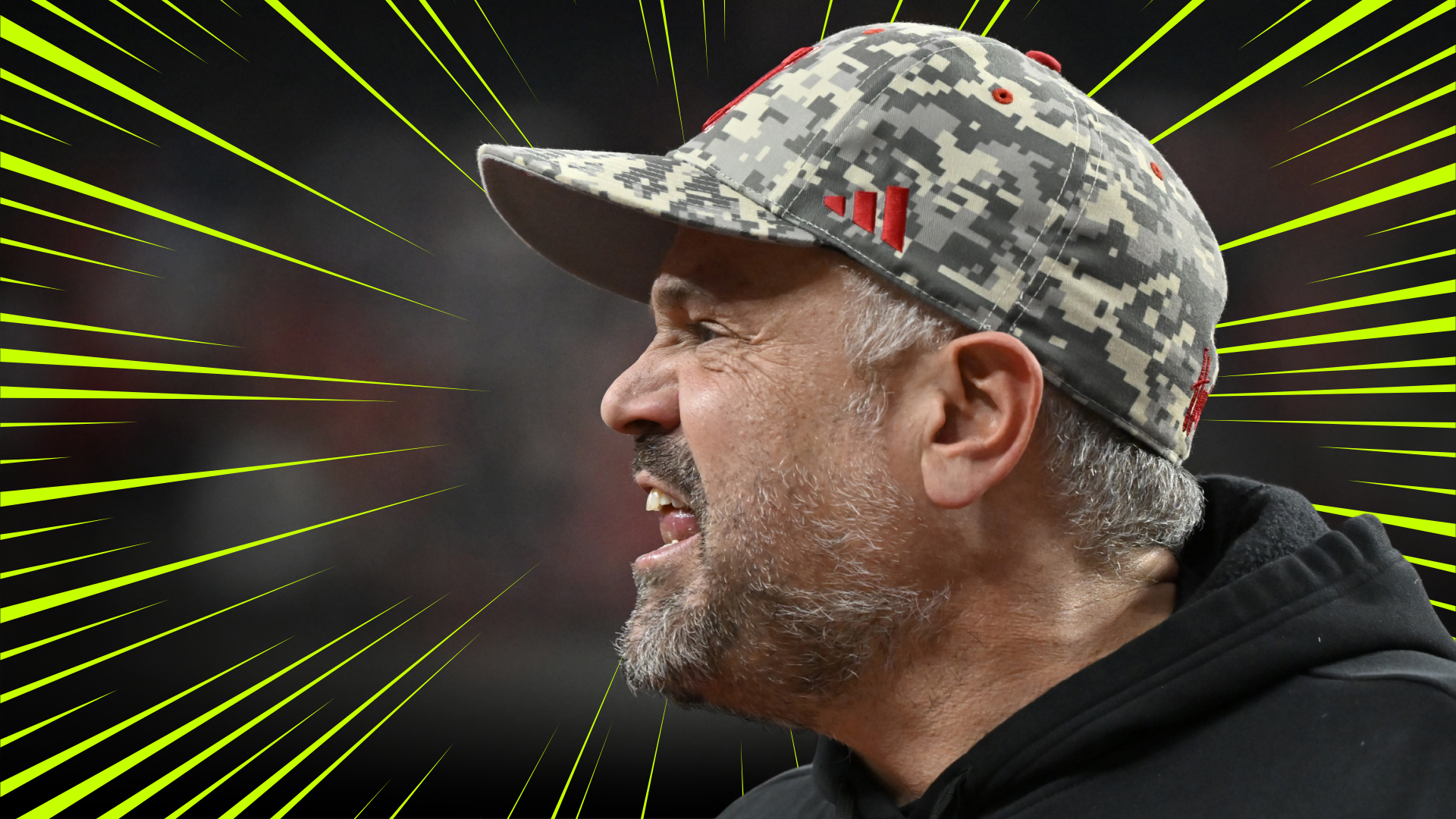
Matt Rhule is working to change that narrative. Transfer portal activity has been aggressive. The roster has been reshuffled with players like offensive tackle Elijah Pritchett, the Alabama transfer who could legitimately be Nebraska's first first-round pick since Amukamara if his 2025 development holds through 2026. The signs of structural improvement are there — barely, tentatively, conditionally.
But hope and history are different things. Nebraska's history right now is 15 years of top-50 futility, a stretch so anomalous for a program of its stature that it demands more than optimism as a response.
Closing Take
Emmett Johnson is going to be fine. He's a Kansas City Chief, which is basically the college football equivalent of getting drafted by the Golden State Warriors at the height of the dynasty. Smart organization, elite coaching, immediate opportunity to contribute. His story ends well.
The Huskers' story, though, is still being written. And right now, it reads less like a comeback arc and more like a cautionary tale about what happens when a blue-blood program loses the thread of what made it great. They used to develop legends. Now they're developing talking points about how long the drought has lasted.
Fifteen years. No top-50 pick. One of three Power Four programs still standing in this particular corner of irrelevance. That's not a slump. That's a structural problem wearing a football uniform. And until the draft board starts reflecting something different, Nebraska will keep getting the answer it has earned — whether it wants to look in that mirror or not.

Trusted By Programs Across The Country