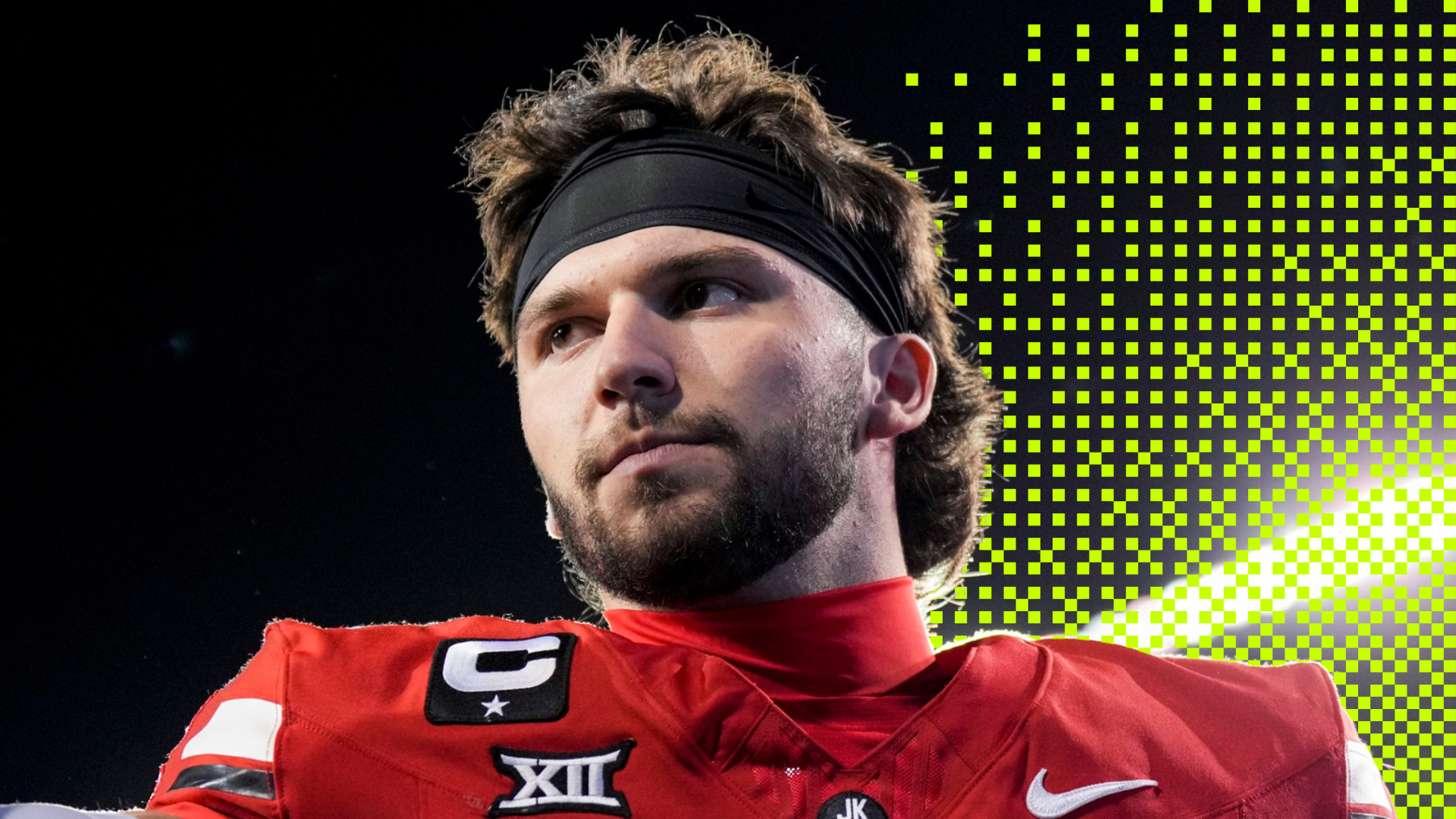
Brendan Sorsby did everything the system told him to do. He checked in. He opened up. He put his name on his struggle in public, in a sport where admitting vulnerability is about as normalized as a 3-4 defense in the Big 12. He completed 35 days of inpatient treatment at Algamus Recovery Services in Goodyear, Arizona, walked out on a Friday, and got handed a permanent ban by Monday.
That's the NCAA's idea of compassion in 2026.
On Tuesday, the governing body officially denied Sorsby's request for reinstatement, ruling the Texas Tech quarterback permanently ineligible to compete — a decision that Texas Tech president Lawrence Schovanec immediately announced the university would appeal. The NCAA's position is legally defensible. It is also, when you hold it up next to reality for more than five seconds, deeply uncomfortable.
The Backstory: How We Got Here
Sorsby arrived in Lubbock as one of the marquee transfers of the entire 2025-26 portal cycle. Coming off a season at Cincinnati in which he threw for 2,800 yards, 27 touchdowns, and just five interceptions, he ranked as the No. 2 overall transfer portal prospect. Texas Tech — the reigning Big 12 champions who lost in the CFP quarterfinals — reportedly handed him an NIL deal north of $4 million for what was supposed to be his curtain call in college football.
Instead, what unfolded was a public unraveling. This spring, Sorsby disclosed that he had been placing bets on sports compulsively throughout his college career — thousands of wagers, ranging from Indiana football games to Turkish basketball and Romanian soccer matches. The bets that crossed the NCAA's brightest line: as a redshirt freshman at Indiana in 2022, Sorsby wagered on Hoosiers games. Per his own affidavit, the bets were in support of Indiana winning, never against. But under NCAA rules, betting on your own team — even while on the bench, even in the lowest dollar amounts, even while you were functionally a backup — is the kind of violation that permanently revokes your eligibility.
There is no gray area written into the rulebook. Only a hammer.
The Case For Sorsby
His legal team, which includes prominent sports attorney Jeffrey Kessler — the same Jeffrey Kessler who has been a thorn in the NCAA's side for years — framed the case around a blunt contradiction: the NCAA profits from the gambling ecosystem it claims to protect the integrity of. Sportsbooks sponsor broadcasts. College football and sports betting have been inseparable in the cultural conversation since legalization swept through the states. And yet the organization enforces zero-tolerance eligibility rules on 19-year-old players who, in Sorsby's case, were reportedly placing $5-to-$50 bets on their own team to win.
On May 18th, Sorsby filed a lawsuit in Lubbock County District Court seeking an injunction that would allow him to play while the case proceeds. The filing used the kind of language that tends to make headlines: it called the NCAA's position "deeply hypocritical" and argued the organization had "weaponized" Sorsby's clinically diagnosed gambling disorder — recognized by the DSM — to "shore up a facade of competitive integrity."
The NCAA's response was terse and pointed: the rules are clear, they apply to everyone, and integrity of competition requires consistent enforcement. The same standard ended former Iowa State quarterback Hunter Dekkers' Division I career after he was found to have bet on a game in which he didn't even play. Iowa State appealed twice. Both were denied. Dekkers eventually played junior college ball and is currently the starter for the Houston Gamblers in the UFL.
That's the precedent Sorsby is staring down.
The Timeline That Matters
With the NCAA denial now official and Texas Tech's appeal filed, the real action moves to Lubbock County District Court, where Sorsby's injunction hearing is scheduled to begin June 1st. He's pushing for a temporary injunction by June 15th — one week before the deadline for the NFL's supplemental draft, which serves as his exit ramp if the courts don't move in time.
NCAA infractions experts have been measured in their assessments of Sorsby's odds. Jodi Balsam, a former NCAA arbitrator and director of sports law at Brooklyn Law School, told the Associated Press she would be "floored" if a court ultimately ruled the NCAA couldn't enforce its gambling policy. Courts have historically sided with sports governing bodies on integrity-related bans. The one caveat: a judge could grant a temporary injunction simply to force the NCAA to set a clear processing timeline, buying Sorsby time without directly overruling the ban itself.
There is at least one precedent for courts intervening on eligibility. In February, Ole Miss quarterback Trinidad Chambliss was granted a temporary injunction allowing him to play a sixth season of college football. The Mississippi Supreme Court denied the NCAA's appeal in March. That case didn't involve gambling, though — and Balsam's point stands that the integrity argument cuts differently when wagering is the violation.
The Fan Court of Opinion
Not everyone has been moved by the recovery narrative. Social media's reaction to Sorsby's treatment completion announcement was, predictably, divided along the lines of skepticism and cynicism. Critics pointed out that 35 days is a short runway for breaking a deep-rooted compulsive behavior. Others were more blunt, suggesting the timing of the recovery arc looked suspiciously calibrated around eligibility deadlines and a $4 million NIL contract.
That cynicism isn't entirely unfair to acknowledge. The optics of a highly-paid transfer quarterback going public with addiction after NCAA scrutiny begins, completing a residential program in just over a month, and immediately filing lawsuits with a high-powered legal team do carry a transactional quality that is hard to ignore. Whether that reading is accurate is, of course, unknowable from the outside.
What is knowable: Sorsby's gambling disorder is clinically diagnosed. His support structure at Texas Tech — which includes device monitoring, blocked betting sites, a financial custodian, and regular compliance checks — is unusually robust for an athlete in his position. And his statement, whatever your read on the motivation behind it, landed with the kind of specificity that doesn't read like PR boilerplate. He talked about Romanian soccer games. He talked about betting when he didn't even play. He talked about anxiety. People performing recovery for an audience usually keep it vague.
What's Actually At Stake
The narrow framing is one player, one senior season, one NIL deal. But the Sorsby case is functioning as a stress test on how college sports handles addiction in the NIL era. The same generation of athletes being told they're professionals enough to negotiate multi-million dollar contracts is simultaneously being held to amateur-era eligibility rules with no room for clinical nuance. Gambling addiction among college-aged men is, as Texas Tech's president noted, a growing crisis — accelerated by the same legalization wave that put sportsbook logos on every broadcast and pop-up ad on every phone.
The NCAA's rules exist for a reason. The moment athletes can bet on games — especially their own — without consequence, the integrity question is no longer hypothetical. But the application of those rules as an absolute permanent ban, with no accommodation for diagnosed mental illness, no pathway back through treatment, and no distinction between a $10 bet on your team to cover the spread and an actual point-shaving scheme, is a policy that was written for a different era.
Sorsby's attorneys are essentially arguing that the policy, as written, doesn't fit the world it now operates in. The NCAA is arguing that consistency is the only thing standing between competitive integrity and chaos. Both of them are partially right, which is exactly why this is heading to a judge.
The Bottom Line
June 1st is the next key date. The injunction hearing in Lubbock will give the first real signal of whether Sorsby has a legal path to the field in 2026 or whether his college career ends not with a Hail Mary but with a gavel. Texas Tech will keep pushing. Kessler will keep litigating. And somewhere in Lubbock, a quarterback who bet $10 on his own team to win four years ago is waiting to find out if that's the thing that defines him forever.
The NCAA has made its call. Now it's the court's turn.

Trusted By Programs Across The Country