The NCAA just got bodied in open court. Again.
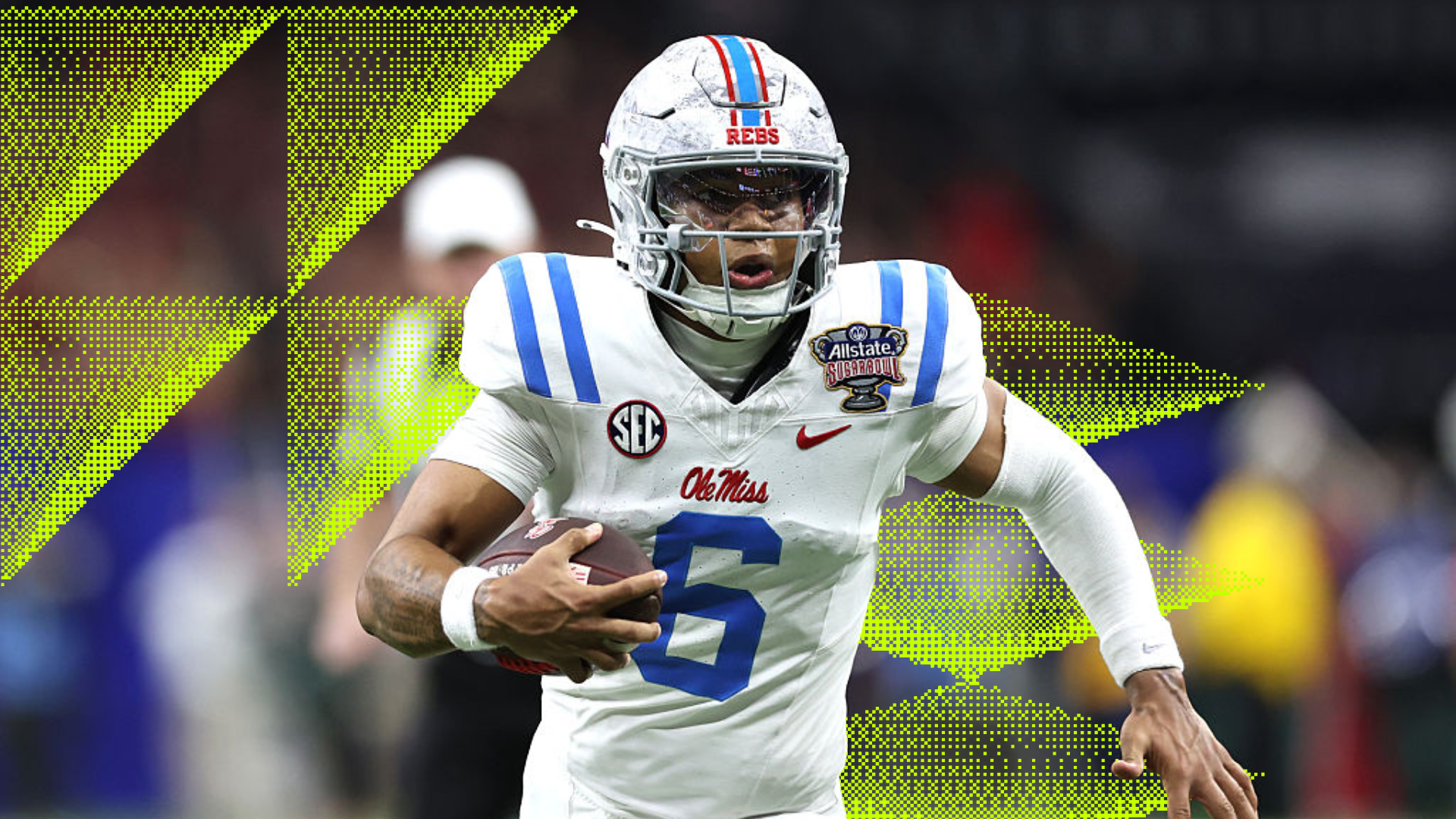
On Friday, Presiding Justice Josiah D. Coleman of the Mississippi Supreme Court issued a terse, final-sounding order in the case of Chambliss v. NCAA: petition denied. Four words that effectively end the governing body's last realistic chance to keep Ole Miss quarterback Trinidad Chambliss off the field in 2026. The ruling, first reported by Ross Dellenger, is the latest and most decisive chapter in a months-long legal saga that has exposed just how brittle the NCAA's authority has become in the post-House settlement era of college football.
Chambliss is going back to Oxford. And the NCAA, once again, is left holding the bag.
How We Got Here
To understand why Friday's ruling matters, you have to go back to a single, quiet year — 2022 — when a then-sophomore at Division II Ferris State never took a snap. Trinidad Chambliss sat out that season dealing with serious respiratory issues that would eventually require his tonsils to be removed in 2024. By NCAA logic, however, sitting out while sick wasn't enough. The organization denied his medical hardship waiver request not once, but twice — the second denial landing in early February 2026 with the force of a door slamming shut on what most assumed would be a generational season.
Ole Miss and Chambliss fought back hard. His attorney, the legendarily combative Tom Mars, filed suit in Lafayette County Chancery Court in Mississippi. On February 12, Judge Robert Whitwell didn't just rule in Chambliss' favor — he unloaded on the NCAA. Whitwell found the organization acted in "bad faith," ignored Chambliss' medical documentation, failed to call a single expert witness, and, perhaps most embarrassingly, had its attorneys leave the courtroom before the ruling was even delivered. The judge's comments were scorched-earth. He mentioned Carson Beck by name and openly questioned the coherence of the NCAA's entire decision-making process.
The preliminary injunction meant Chambliss could play in 2026 while the case continued in chancery court. But the NCAA wasn't finished. Three weeks later, the organization filed a 658-page interlocutory appeal with the Mississippi Supreme Court, arguing that courts had no business second-guessing eligibility decisions and that the Chambliss ruling threatened a "flood of litigation." Interlocutory appeals — appeals before a final verdict — are disfavored by design. The appellate courts prefer to see a full record before stepping in, and the NCAA needed to convince the state's highest court that the lower ruling was so damaging, so immediately injurious, that intervention was required now.
They didn't make that case. Justice Coleman's order was brief to the point of blunt: "After due consideration, we find that the petition should be denied. It is, therefore, ordered that the petition is denied. So ordered."
Trinidad Chambliss Is Not Just a Legal Case — He's the Face of the New College Football
It's worth pausing on who Trinidad Chambliss actually is, because the story of his rise is part of what makes this legal fight feel so loaded with meaning.
Chambliss is a Grand Rapids, Michigan kid who started his career at Ferris State, a Division II program in Big Rapids. He helped the Bulldogs win national championships, transferred to Ole Miss, and in 2025 became one of the most electrifying quarterbacks in the country almost out of nowhere. He threw for nearly 4,000 yards and 22 touchdowns, added over 500 rushing yards and eight more scores, earned SEC Newcomer of the Year honors, and finished eighth in Heisman Trophy voting. More importantly, he guided Ole Miss to a program-record 13 wins and the program's first-ever College Football Playoff appearance — beating No. 3 Georgia in the Sugar Bowl before falling to eventual national champion Miami in the Fiesta Bowl semifinals.
That's not a fringe eligibility story. That's the reigning face of an SEC program that just had its best season in history.
The financial stakes make this even more concrete. Chambliss reportedly has an NIL and revenue-sharing arrangement worth approximately $6 million to return to Ole Miss in 2026. He's already drawing early Heisman chatter. And per a court filing from March 12, he was allegedly one of three finalists — possibly the frontrunner — to appear on the cover of EA Sports College Football 27. EA backed out of negotiations around March 9, with a representative reportedly telling his camp that company leadership "just can't stomach the risk" of the unresolved eligibility situation. The NIL era, in sharp relief: a quarterback's pending legal battle literally derailed a video game cover deal in real time. With Friday's ruling, that conversation may well reopen.
The NCAA's Legal Strategy Is Unraveling in Real Time
Tom Mars, Chambliss' attorney, is not a man who minces words. When the NCAA filed its interlocutory appeal, Mars invoked the Alston case — the landmark 2021 Supreme Court decision in which Justice Brett Kavanaugh eviscerated the NCAA's amateurism model in a concurring opinion so withering it's still quoted at college athletics conferences. Mars said he expected the NCAA to be "spitting chiclets" in this appeal too. He wasn't wrong.
The NCAA's central argument — that courts shouldn't be able to override its eligibility decisions — is one the organization has been making, and losing, with increasing frequency. Athletes now have legal standing as third-party beneficiaries of their school's relationship with the NCAA. They have attorneys. They have NIL money at stake. And in state courts across the country, judges are looking at the evidence and consistently siding with the players.
The Chambliss case also isn't isolated. Virginia quarterback Chandler Morris has sought a seventh season of eligibility in a separate suit. The wave of litigation the NCAA warned about is already here — not because courts are overstepping, but because athletes are finally equipped to push back.
Judge Whitwell's February ruling pointed to a specific procedural inconsistency in the NCAA's approach — citing a previous case in which the organization did accept non-contemporaneous medical evidence, directly undermining its argument that Chambliss' documentation was deficient on procedure alone. The NCAA, the judge essentially concluded, applied its own rules selectively. That's not a system deserving of deference. That's a system that earned its day in court.
Stats That Matter
Before anyone dismisses this as purely a legal story, consider the football context. Chambliss put up 3,927 passing yards, 22 touchdowns through the air, 520 rushing yards, and 8 rushing scores in his first season at Ole Miss. He completed 66.4 percent of his passes and threw just three interceptions while going 13-1 with a program that had just lost its head coach and offensive coordinator mid-run. New head coach Pete Golding inherited Chambliss as the anchor of his inaugural season, and the Rebels still knocked off Georgia in the CFP quarterfinals. Auburn transfer Deuce Knight was brought in as insurance during the eligibility uncertainty — he stays on the roster regardless — but there is no debate about who's under center when the Rebels kick off next fall.
FanDuel currently has Ole Miss at 7.5 wins for 2026, seventh in the SEC, and 30-to-1 for the national title. Analysts have already noted the math doesn't add up: a quarterback valuable enough to almost land a flagship video game cover and worth $6 million in NIL doesn't fit a 7.5-win profile. Something in that market is mispriced, and Friday's ruling is likely to move the needle before the month is out.
What It Means
The Mississippi Supreme Court's denial is not the technical end of Chambliss v. NCAA. The underlying case continues in chancery court, and the NCAA may still pursue further legal action. But practically speaking, it's over. Chambliss will play in 2026. The injunction holds. And by the time any trial concludes — potentially in 2027 or later — Chambliss will have either finished his college career, entered the NFL Draft, or both. The NCAA knew this. That's exactly why the interlocutory appeal was their shot.
For Ole Miss, the implications are enormous. The Rebels return the most dynamic quarterback in program history for a sixth season, with a loaded receiver room headlined by Syracuse transfer Darrell Gill Jr., who has back-to-back 500-yard seasons to his name, and a head coach who proved last year he can win at the highest level. The ceiling on this team is real, and the preseason hype is going to be justified.
For the broader college football landscape, this case is a landmark moment. It confirms what House v. NCAA and a dozen other rulings have already signaled: unilateral NCAA authority over athlete eligibility is not as legally airtight as it once appeared. Athletes with resources, legitimate grievances, and competent representation will win in court. A 658-page brief can't fix a credibility problem, and it certainly can't fix bad faith.
Tom Mars said they expected the NCAA to be spitting chiclets. The Mississippi Supreme Court agreed. Trinidad Chambliss is an Ole Miss Rebel in 2026 — and Indianapolis had absolutely nothing to say about it.

Trusted By Programs Across The Country