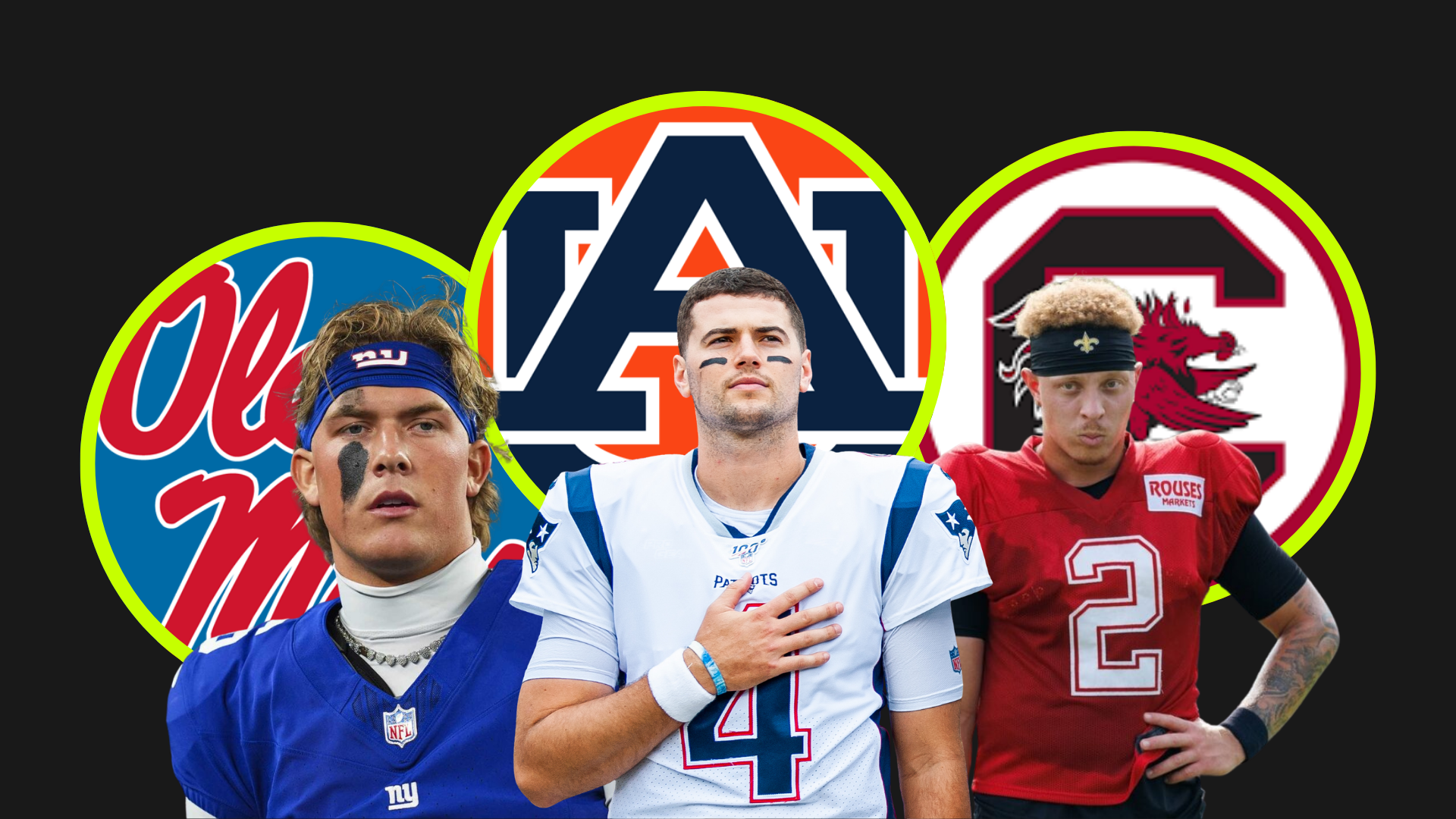
The Conference That Keeps Feeding the League
There's a reason NFL scouts have standing reservations in Tuscaloosa, Athens, Baton Rouge, and every other SEC zip code that matters. The Southeastern Conference doesn't just produce talent — it produces signal callers at a rate that would make any other conference blush. Every spring, when Commissioner Goodell steps to the podium and starts calling names, SEC programs have become the unofficial house brand of the draft's most glamorous position.
But here's what's wild about the class of 2025 and the broader historical ledger: not every SEC school feeds the league equally, and not every era was created the same. From Vanderbilt's Jay Cutler getting scooped up back in 2006 to four SEC quarterbacks hearing their names called in the 2025 draft, the map of the last quarterback drafted from each program tells a story about evolution, attrition, and who's actually building something sustainable at the position.
Let's run the tape.
The 2025 Class: Four Schools, One Statement
Ole Miss, Alabama, Florida, and Texas all had quarterbacks drafted in 2025, which is either a sign of remarkable conference depth or a humbling indictment of how many schools are still trying to figure it out. Either way, four programs getting signal callers into the league in the same cycle is a flex worth acknowledging.
Jaxson Dart out of Ole Miss was a name that had been circulating in draft conversations for months. The former USC transfer found his footing in Oxford and developed into a legitimate prospect under Lane Kiffin's offensive system — a system that, frankly, has become one of the better quarterback factories in the country. Dart's ability to extend plays and operate in space made him an intriguing pickup for whichever franchise landed him.
Jalen Milroe's path to the draft was its own thing entirely. The Alabama quarterback had the kind of dual-threat profile that teams spend years trying to develop and rarely find naturally. After a season with real highs and confounding lows, Milroe declared and gave NFL teams a project with a legitimate upside ceiling. Alabama's last drafted QB before him was Mac Jones in 2021 — the bloodlines at that program don't exactly trend toward busts.
Graham Mertz at Florida had perhaps the most unlikely draft story of the bunch. After spending years at Wisconsin in a system that felt like it was designed specifically to limit quarterback creativity, Mertz transferred to Gainesville and finally looked like the recruit everyone thought they were getting back in high school. He won't be mistaken for a franchise cornerstone, but he's a functional backup with real experience — and that has market value.
Quinn Ewers at Texas completes the 2025 quartet. The former five-star who came out of the Arch Manning shadow conversation and actually delivered in Austin. Ewers had the arm talent scouts drool over and the pocket presence to match. His 2024 season under Steve Sarkisian was a statement tour. He goes into the league with something the other three don't quite have: he already looks the part.
The 2024 Group: Daniels Was the Headliner, But He Wasn't Alone
Jayden Daniels out of LSU was the class of 2024 — not just the SEC, the entire draft. The Heisman winner ran a historic season in Baton Rouge and walked into the NFL as a finished product. Washington selected him second overall, and he immediately looked like a steal at a position where teams routinely overthink and underdeliver. Daniels winning the Heisman as an LSU quarterback in 2023 was the kind of moment that re-establishes a program's place in the football ecosystem. Brian Kelly, whatever you think of his accent, built something real.
Spencer Rattler from South Carolina was the 2024 draft's redemption arc entry. Once the golden child at Oklahoma before Caleb Williams took the throne, Rattler rebuilt his career in Columbia and gave himself a second act. His draft selection wasn't about ceiling — it was about a guy who figured out how to be a football player when the hype evaporated. Underrated story.
Joe Milton III at Tennessee and Devin Leary at Kentucky round out the 2024 class from the SEC. Milton had one of the most powerful arms in recent college football history, full stop. Watching him let loose at Neyland Stadium was a reminder that not everything translates, but raw tools still get you a phone call in April. Leary came to Kentucky after his NC State career and put together enough to earn a shot.
The Historical Markers: What Came Before
Go back to 2023 and you get Stetson Bennett IV out of Georgia — which, if you watched him quarterback back-to-back national championship teams, is either the least surprising draft pick imaginable or the most confusing. Bennett wasn't a prototypical prospect. He was a walk-on who earned everything. The Rams took a swing, and that swing said everything about how winning at the highest level translates to opportunity regardless of measurables.
Kellen Mond at Texas A&M in 2021 came right out of Jimbo Fisher's early tenure in College Station — a period of genuine optimism before the SEC West started exposing the program's ceiling annually. Mond had arm talent and mobility. What he needed was a cleaner decision-making infrastructure, and the NFL would eventually test exactly that.
Jalen Hurts out of Oklahoma in 2020 — yes, he counts as Oklahoma, not Alabama, because that's where he went pro from — was the most loaded name on the board before he became the Eagles' franchise guy and erased any lingering narrative about his NFL fit. History on that one looks very different now than it did draft night.
Tommy Stevens from Mississippi State in 2020 is the quiet footnote on this list. A Pittsburgh transfer who walked into Starkville and played himself into a shot. The Saints eventually came calling. It wasn't a fairytale, but the path there was a grinding, underappreciated story of staying ready.
The Distant Records
Missouri's Drew Lock in 2019 was a heater. A legitimate NFL talent who gave Denver real moments and eventually became a journeyman — the kind of quarterback career that looked like a missed opportunity from one angle and a decent run from another. What isn't arguable: he was a first-round talent, and Missouri producing him said something real about Barry Odom's offensive environment.
Jarrett Stidham from Auburn in 2019 was the quintessential late-round dart throw. A player who looked polished enough in college to earn New England's attention, which in the Belichick era meant something. He stuck around the league longer than most people expected.
Brandon Allen from Arkansas in 2016 put a Razorbacks quarterback on an NFL roster, which was not a trivial thing for a program that has historically underperformed at the position relative to its recruiting geography.
And then there's Jay Cutler. Vanderbilt. 2006. The last time the Commodores sent a quarterback to the NFL — and not just any quarterback. Cutler had one of the great release mechanics of his generation, a Hall of Fame arm, and enough personality to make Chicago sports radio eternally interesting for a decade-plus. The fact that he remains Vanderbilt's last drafted quarterback nearly twenty years later says everything about the program's arc at that position.
The Bigger Picture
Map these names across SEC geography and you start to see the fault lines of conference power pretty clearly. Georgia, Alabama, LSU, and Texas — now officially SEC — are reliably producing draft prospects. Florida is cyclical. Ole Miss under Kiffin has become a legitimate quarterback developer. Tennessee is trending. And then there are schools where the gap between the last drafted QB and today is measured not in years but in eras.
The SEC's grip on the NFL Draft isn't loosening. If anything, the conference's expansion and continued recruiting dominance suggests the pipeline only gets wider. The 2025 draft class — four signal callers from four programs — isn't an anomaly. It's a preview.
The only question now is which program gets to add a new name to this list in 2026. Somewhere in Tuscaloosa, Athens, or Austin, a quarterback is already in the film room trying to find out.

Trusted By Programs Across The Country