
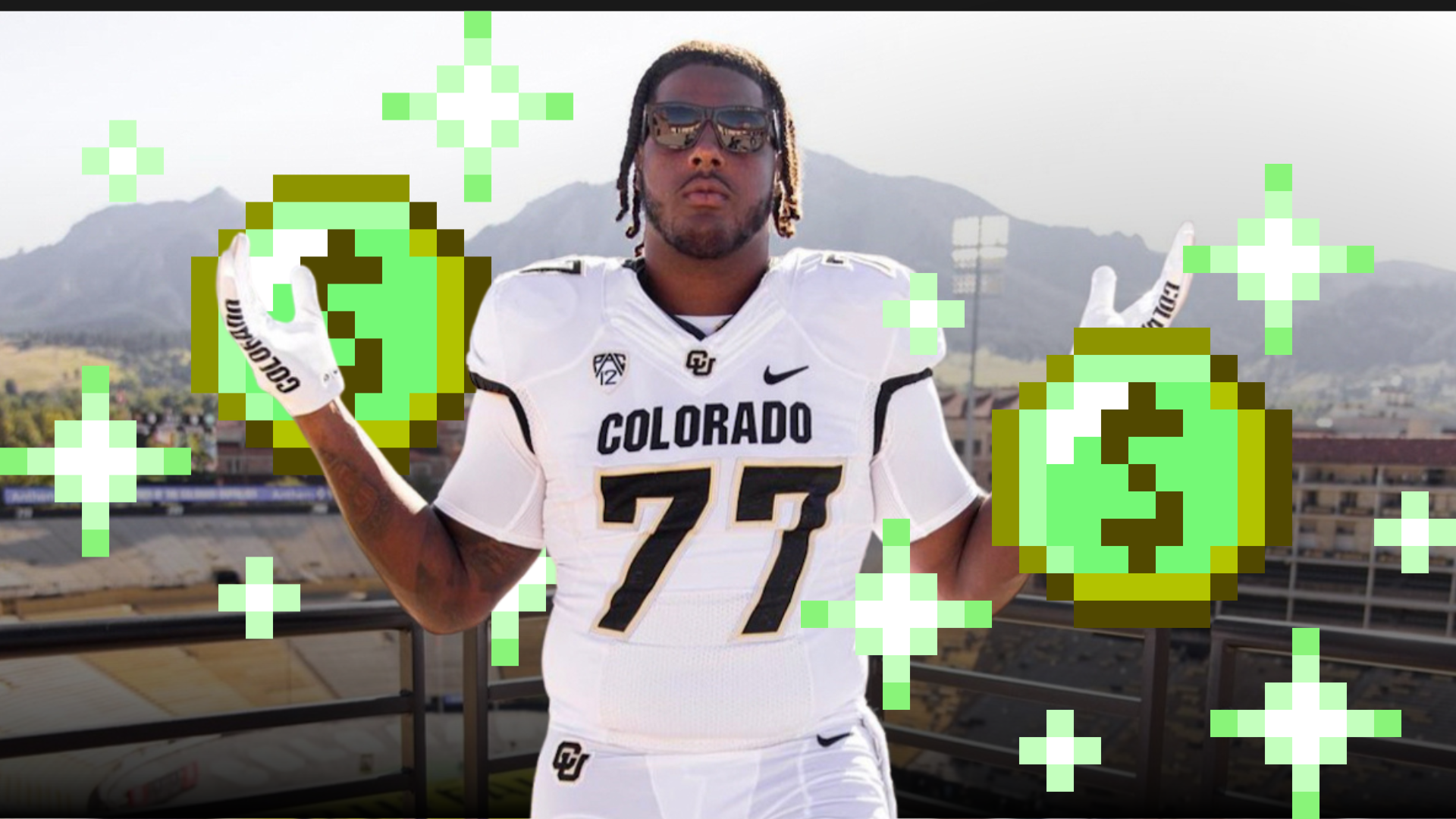
There's a moment every offseason when college football stops pretending it's not the NFL. This cycle, that moment had a name: Jordan Seaton. And a price tag: $4 million.
When the 6-foot-5, 330-pound offensive tackle out of Colorado quietly entered the transfer portal on January 12 — just days before it was scheduled to close — the reaction across the sport was immediate. Not because a transfer happened, but because of who was transferring. Seaton wasn't just a five-star. He was a projected 2027 first-round pick, a two-year starter in the Big 12, and arguably the most physically dominant offensive lineman available in any portal cycle in recent memory. The moment he hit the board, the bidding war began.
The Recruitment That Felt Like NBA Free Agency
Lane Kiffin. Dan Lanning. Mario Cristobal. When the who's-who of college coaching descended on Atlanta to wine and dine a 20-year-old offensive tackle, it told you everything about the current state of the sport. Seaton's camp ran a process that looked more like Klutch Sports representing a supermax candidate than a kid picking a college. Programs flew in from across the country. Oregon and LSU emerged as the final two. And when the dust settled, the Tigers won — at a cost that shook the industry.
CBS Sports' Chris Hummer reported Wednesday that Seaton's deal with LSU is believed to exceed $4 million for the 2026 season — a figure that industry sources originally estimated would top out around $2.5 million. It didn't. His camp reportedly pushed further, requesting additional incentives including cars and real estate. Whether those perks were granted remains unclear, but the base number alone rewrote the record books: Seaton is now believed to be the highest-paid offensive lineman in college football history.
Putting the Number in Context
To understand just how seismic this is, consider the comparison that Saturday Blitz flagged: Utah's Caleb Lomu went 28th overall to the New England Patriots in the 2026 NFL Draft, landing an average annual value of roughly $4.5 million. Seaton, still in college, is earning within range of a late first-round pick's rookie deal. That's not hyperbole — that's the new math of college football.
Seaton's deal also puts him in rare company even among quarterback transfers, which have long commanded the top dollars in the NIL era. Texas Tech's Brendan Sorsby reportedly secured around $5.1 million. LSU's own quarterback Sam Leavitt reportedly signed for approximately $6 million. That the man protecting Leavitt's blindside is earning in the same stratosphere as signal-callers isn't just notable — it's a structural shift in how programs value the trenches.
Who Is Jordan Seaton?
The Washington, D.C. native arrived at Colorado in 2024 as the nation's top-ranked offensive tackle and the 13th overall prospect in the class, fresh off a decorated career at IMG Academy in Bradenton, Florida. He immediately validated the ranking by starting all 13 games as a true freshman — a program record. Freshman All-American honors from On3, 247Sports, and Pro Football Focus followed.
His sophomore season was interrupted by a lower-body injury that limited him to nine games, but even at partial health, Seaton earned All-Big 12 Second Team recognition and midseason All-America nods from both Sporting News and Athlon. When he was on the field, he was elite. Per Saturday Down South, his pass-blocking grade from Pro Football Focus ranked among the best of any Big 12 offensive tackle with 500-plus snaps in 2025. He arrives in Baton Rouge with 22 career starts and at least two seasons of eligibility remaining — though the 2027 NFL Draft looms large.
The Elephant in the Room
Former LSU star Tyrann Mathieu didn't exactly mince words when weighing in on the deal, noting on his podcast that Seaton is essentially a six-to-seven-month rental en route to the NFL. It's a fair point. LSU isn't building a dynasty around this kid — they're buying a dominant left tackle to protect Sam Leavitt for one, maybe two, shots at a national title. It's a calculated gamble, and Lane Kiffin — a man who just beat out Dan Lanning and Mario Cristobal to land him — clearly believes it's worth every penny.
The Tigers, already stinging from Brian Kelly's dismissal following a disappointing run, are all in on Year One of the Kiffin era. Seaton is the exclamation point on a roster being assembled with the urgency of a franchise in win-now mode. For a program that has watched Alabama, Georgia, and Texas redefine what commitment to roster-building looks like, this move signals that LSU is done playing catch-up.
What This Means for Everyone Else
Here's the uncomfortable truth: every coach who complained about NIL chaos this offseason still got on a plane to Atlanta to try to land Seaton. The transfer portal isn't something that happened to college football — it's something college football chose, loudly and repeatedly. Oregon losing this battle isn't a failure of process; it's an acknowledgment that sometimes the number wins. The Ducks wisely spread their resources across multiple impactful additions rather than breaking the bank on one player. That's a legitimate strategy too. But LSU chose the other path.
And they're not wrong for it. In a world where your offensive tackle can earn more than a late first-round NFL pick, where 20-year-olds hold meetings in Atlanta hotel suites while SEC coaches pitch them on their futures, where cars and real estate are reportedly part of the negotiation — the old playbook is dead. The programs that accept that reality and move aggressively will compete. The ones clinging to the old way won't.
The Bottom Line
Jordan Seaton is going to line up at left tackle for Lane Kiffin this fall. LSU will open the season against Clemson on September 5, and when Seaton sets his feet in pass protection for the first time as a Tiger, every dollar will be on display. Whether it's worth $4 million will be determined on the field. But the precedent has already been set off it.
College football's financial arms race didn't start with Jordan Seaton. But his deal is the clearest signal yet that there's no ceiling — and no going back.

Trusted By Programs Across The Country