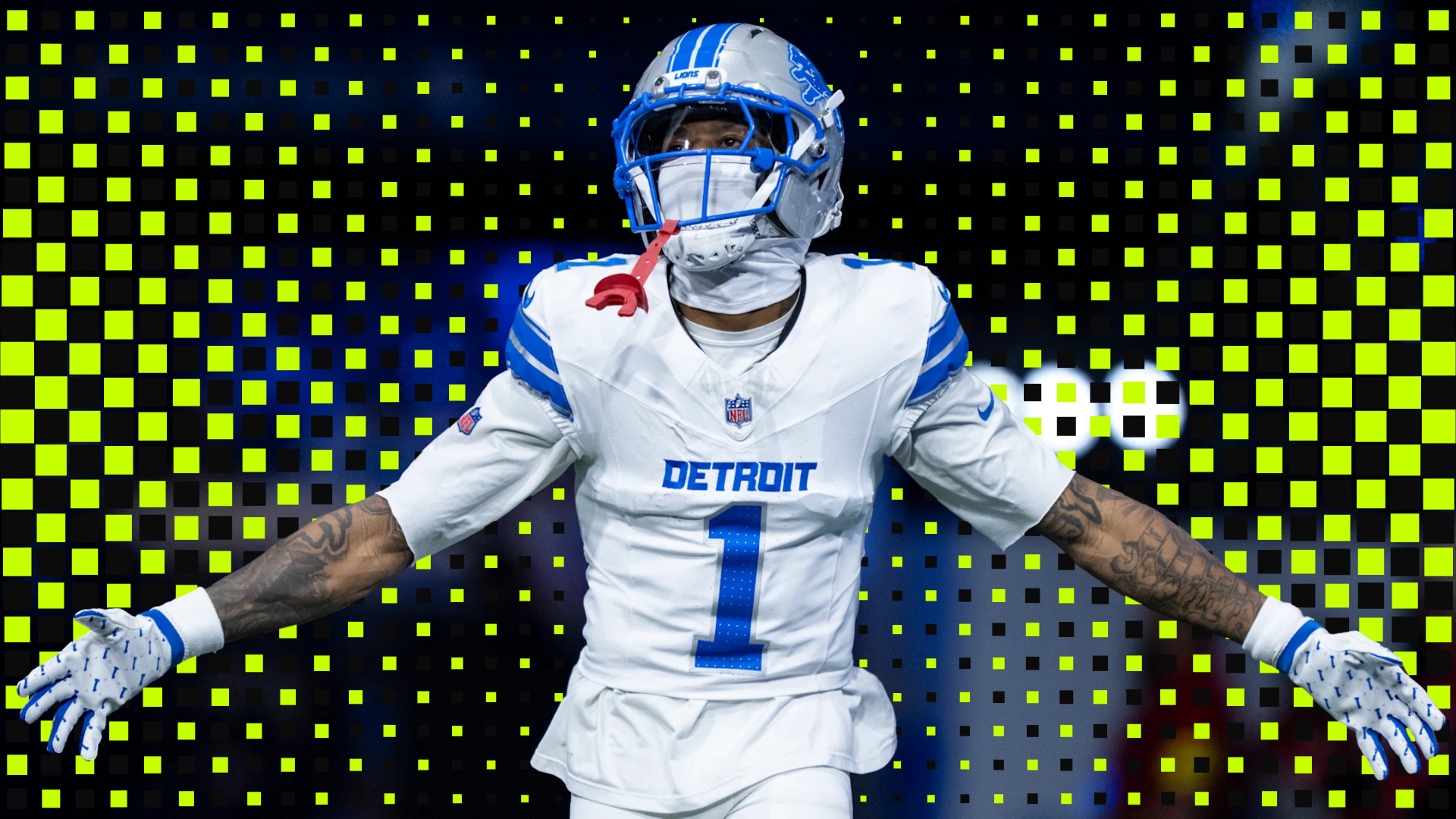
There are lawsuits, and then there are statements. Detroit Lions wide receiver Jameson Williams just filed one that's clearly both. The former Ohio State and Alabama standout dropped a bombshell this week, taking the NCAA, the Big Ten Conference, and the Southeastern Conference to court in Los Angeles County over what he says is the systematic and ongoing theft of his name, image, and likeness — with zero compensation in return. Not a bad deal, if you're the one doing the taking.
What the Lawsuit Actually Says
Williams, the No. 12 overall pick in the 2022 NFL Draft, filed the suit in Los Angeles County, alleging the three entities used his name, image, and likeness without fair compensation. He's seeking an injunction barring the NCAA, Big Ten, and SEC from using his NIL "for financial or similar gain or reason without his consent and compensation."
The legal claims aren't subtle. Williams formally charges all three defendants with violating the Cartwright Act, the Unfair Practices Act, the Sherman Antitrust Act, and the Lanham Act — citing anti-competitive collusion, predatory pricing, monopolistic practices, and deceptive branding. That's not just a complaint; that's a battering ram aimed at the structural foundations of college athletics.
"To date, Williams has received no fair compensation from Defendants for the full commercial value of his name, image, and likeness. Defendants continuously financially benefit from Jameson Williams' name, image and likeness rights, while also doing so without providing him with just compensation."
— Williams v. NCAA et al., LA County Court Filing
Beyond back-pay for his playing days, Williams is also seeking social media earnings he says he would have received if not for the defendants' unlawful conduct, as well as a cut of the game telecast group licensing revenue he argues was earned, in part, because of his success on college football fields. In other words: every replay, every highlight package, every social media post featuring his number — he wants a piece of the revenue it generated.
He also wants the defendants prohibited from using his NIL going forward "for financial or any similar gain or reason without his consent and compensation." That's not just retroactive justice — it's an attempt to flip the power structure entirely.
The Career That Made Him Invaluable
If you want to understand why Williams has a case worth watching, you need to understand what his college tape looked like — and why it moved the needle for two of the biggest brands in the sport.
Williams played at Ohio State in 2019 and 2020, logging 266 yards and three touchdowns on 15 catches, before finishing his collegiate career at Alabama in 2021. That final season at Bama was where things went stratospheric. He led the Crimson Tide with 1,572 receiving yards, 15 touchdowns, and 79 receptions in 15 games — earning first-team All-American honors. He was must-watch television. He was the story. And he was getting paid exactly nothing for any of it.
Williams suffered a torn ACL in the second quarter of the College Football National Championship game against Georgia — yet Detroit still made him the 12th overall pick months later. In the NFL, he's been everything the Lions hoped. He's posted back-to-back 1,000-yard receiving seasons in Detroit, including a career-best 63-reception, 1,117-yard, seven-touchdown campaign in 2025. The machine that college football built around his marketability is still running — just without cutting him in on the profits.
Why This Is Happening Now
This didn't come from nowhere. College athletics has been at war with its own financial model for over a decade, and the walls have been crumbling fast.
The legal pressure started building with the landmark O'Bannon v. NCAA decision, where former athletes sued the NCAA over its use of their names and likenesses in video games, broadcasts, and related media, arguing that athletes deserved a share of licensing revenues tied to their athletic performance and fame. The NCAA lost that fight, and the dominoes kept falling. Then came the Supreme Court's unanimous NCAA v. Alston ruling in 2021, which opened the floodgates for NIL. Then the House settlement — a seismic $2.8 billion agreement that allowed schools to directly pay college athletes for the first time in NCAA history, ushering in the revenue-sharing era.
But Williams played before all of that. He was in Columbus and Tuscaloosa during the era when the NCAA's amateurism model was still the law of the land — when NIL was not as prolific as it is in 2026. The rule change arrived too late for him to benefit. So now he's going to court to collect on what the marketplace would have paid him.
The House settlement's $2.8 billion in back damages primarily went to athletes who played after 2016, with the bulk directed toward football and men's basketball players. Williams' lawsuit takes that logic a step further: if the entire system was illegal, why should the statute of limitations — or the boundaries of a settlement he wasn't party to — determine what he's owed?
Biggest Winners & Losers If This Holds Up
Winners: Former stars of the pre-NIL era who generated massive broadcast revenue. Player attorneys and NIL rights advocates who've been building this legal framework for years. Current players now better positioned to negotiate ironclad NIL terms. Athletes whose highlight reels, jersey sales, and social content still drive engagement today.
Losers: The NCAA, which faces yet another existential antitrust threat to its operating model. Power conferences that have been monetizing archival content for decades. Television networks whose multi-billion-dollar deals may face retroactive liability questions. Schools that built brand equity on player highlights without consent frameworks in place.
How It Could Change College Sports
Let's not bury the lede: if Williams wins, or even settles favorably, the floodgates open. Every former player from the pre-2021 NIL era who was a television event — a Reggie Bush at USC, an Adrian Peterson at Oklahoma, a Tim Tebow at Florida — suddenly has standing to ask the same question. Were you using my face? Were you selling my story? What's it worth?
The conferences have been selling broadcast rights worth billions for decades. The major conferences and the NCAA generate the majority of their revenue through selling broadcast rights for football and men's basketball. If courts determine that athletes from those broadcasts are owed a share retroactively — beyond what the House settlement already covered — the financial liability for these organizations becomes almost incalculable.
The recruiting and roster implications are just as profound. Right now, high school prospects and their families are watching how the institutions treat players who helped build these empires. Every lawsuit filed by a former player who was exploited and uncompensated is a data point. It reshapes what "loyalty" to a conference or program means in the NIL era.
The conference model also has to reckon with the Lanham Act angle. Williams alleges that the NCAA, Big Ten, and SEC continue to use his NIL through social media posts and highlight packages on television without properly compensating him. That's not ancient history — that's happening right now, in 2026, with an active NFL star's likeness. No one can argue this issue is resolved.
Final Take
Jameson Williams isn't just a wide receiver with a beef. He's a first-round talent who generated tens of millions in broadcast value for two of the most powerful schools and conferences in America — and walked away with a scholarship, an ACL tear, and a whole lot of nothing from the people who profited most from his work.
The NCAA spent decades hiding behind the word "amateurism" like it was a legal shield. Courts have dismantled it piece by piece — O'Bannon, Alston, House — and yet the organization keeps treating settled law like a negotiating position. Williams' lawsuit is the latest reminder that the bill for that era of exploitation is still coming due, and it's not going to stop arriving just because the House settlement bought some temporary peace.
College football is a multi-billion-dollar industry. It always was. The only thing that's changed is that the people who made it that way are finally getting organized enough to say so — in court, on the record, under oath. Jameson Williams just turned his name, image, and likeness into a legal weapon. And every former player watching this case should be taking notes.

Trusted By Programs Across The Country