
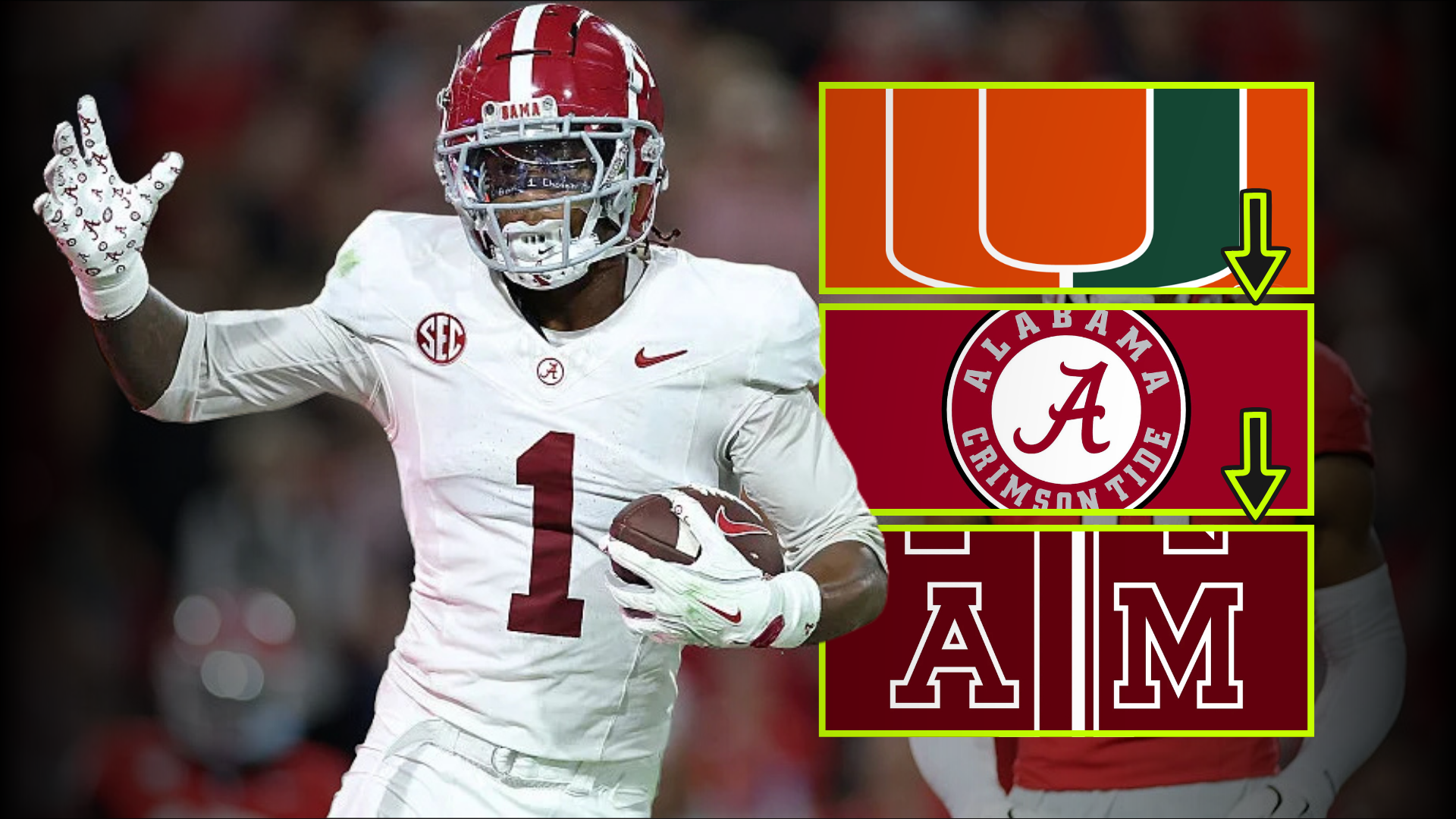
The belief era is here in College Station
You can tell a lot about a transfer by how they talk about their new home. Some guys mention facilities. Others talk opportunity. Isaiah Horton? He’s talking about belief and not in the vague, PR-trained way athletes sometimes lean on when the cameras are rolling.
This feels personal.
The former Alabama and Miami wide receiver didn’t just pick Texas A&M for targets or exposure. He picked it because he trusts the guy throwing him the ball and the man running the program. In a college football world that increasingly feels like speed dating with NIL deals attached, Horton’s decision sounds almost old-school.
And that might be exactly what makes it dangerous for the rest of the SEC.
From Tennessee roots to Texas connection
Before Horton was a 6’4” red-zone problem for defensive backs, he was just another kid running routes in Tennessee. That’s where this story really starts.
Long before College Station entered the picture, Horton and Texas A&M quarterback Marcel Reed were building chemistry on 7-on-7 circuits, traveling the country, learning each other’s tendencies the way only young athletes can. No playbooks, no pressure, just vibes and reps.
That connection stuck.
Fast forward to 2026, and that same quarterback-receiver duo is reunited, now with SEC defenses standing in the way. Horton didn’t hesitate when explaining how much that matters.
He trusts Reed. Completely.
And in a sport where timing is everything and trust is non-negotiable, that built-in chemistry is the kind of advantage you can’t teach in spring practice.
A weapon Texas A&M desperately needed
Let’s call it what it is. Texas A&M had a roster gap.
After losing Noah Thomas, the Aggies were missing that true outside presence. The kind of receiver who doesn’t just run routes but tilts coverage. The kind of guy who forces defensive coordinators to stay up late.
Horton fits that mold perfectly.
At 6’4”, he brings size the Aggies lacked in 2025. But this isn’t just about height. It’s about how that size translates. Horton isn’t just a jump-ball guy. He’s a field stretcher, a red-zone mismatch, and most importantly, a structural fix for the offense.
His presence allows everyone else to slide into more natural roles. Slot receivers can stay in the slot. Speed guys can work space instead of battling outside corners. The entire room gets cleaner.
That’s roster construction 101. And Texas A&M just passed the exam.
Production that travels
This isn’t a projection play. Horton has already shown he can produce at a high level.
Across his last two seasons at Miami and Alabama, he totaled 1,127 receiving yards and 13 touchdowns. Not video-game numbers, but in two elite programs with loaded depth charts? That’s legit.
More importantly, his trajectory is pointing up.
After limited action early in his career, Horton grew into a reliable target. The kind of receiver quarterbacks look for when things break down. The kind of player who understands leverage, spacing, and how to win when the play isn’t perfect.
Now he enters his final season with something he didn’t always have before. Stability. A defined role. And a quarterback who already knows where he’s going to be before the ball is snapped.
That’s how big seasons happen.
Holmon Wiggins gets his guy
There’s another layer to this move that shouldn’t be overlooked.
Texas A&M offensive coordinator Holmon Wiggins has been tracking Horton for years. He recruited him out of high school. Tried again when Horton entered the portal previously. This wasn’t a last-minute evaluation. This was a long-term pursuit.
And when Wiggins finally got his guy, it wasn’t by accident.
He needed a specific archetype. A big-bodied receiver who could anchor the outside and bring physicality back to the offense. Horton checked every box.
It also helps that Wiggins understands how to use players like him. His background at Alabama included working with NFL-caliber receivers, and his offenses have consistently created opportunities for wideouts to thrive in space and in structure.
Now he gets to build around a player he believes in.
That combination coach vision plus player fit is where things can get scary.
A locker room that actually cares
Horton didn’t just talk about scheme or opportunity. He talked about the room.
And what stood out to him wasn’t talent. It was hunger.
In an era where freshmen can walk in with NIL deals and expectations, Horton noticed something different about this group. They’re in the film room. They’re asking questions. They’re engaged.
That matters more than any recruiting ranking.
Veterans notice effort. And when a seasoned player like Horton goes out of his way to praise younger teammates for their work ethic, it says something about the culture Mike Elko is building.
Because culture isn’t a slogan. It’s behavior.
And right now, Texas A&M looks like a team that’s buying in.
The Marcel Reed factor
Let’s not overcomplicate this. Wide receivers go where quarterbacks can get them the ball.
Horton knows Reed can do that.
Reed enters his redshirt junior season with expectations climbing fast. And now he’s got a familiar weapon on the outside who already speaks his language.
That’s not just chemistry. That’s efficiency.
Expect back-shoulder throws. Timing routes that hit before the defense can react. Plays where it looks like Reed and Horton are reading from the same script while everyone else is still guessing.
If that connection clicks early, Texas A&M’s offense could jump from solid to explosive in a hurry.
What this means for the Aggies in 2026
Texas A&M isn’t sneaking up on anyone anymore.
After a College Football Playoff run last season, the expectations have shifted. This is no longer about building. It’s about sustaining and leveling up.
Horton helps with both.
He gives the Aggies a reliable outside threat, balances the receiver room, and adds experience from two powerhouse programs. But more than that, he reinforces the identity Elko is trying to establish.
Tough. Connected. Intentional.
If Horton delivers the way his skill set suggests, this offense becomes significantly harder to defend. And in the SEC, where margins are razor-thin, one matchup problem can be the difference between a playoff berth and a New Year’s Six consolation prize.
Final take
Isaiah Horton didn’t just transfer to Texas A&M. He chose a situation he believes in.
A coach building something real. A quarterback he trusts like family. An offense that actually needs what he brings.
In a sport dominated by movement and money, that kind of clarity stands out.
And if everything clicks the way it looks on paper, Aggies fans might be watching something special this fall. Because when talent meets trust, and opportunity meets preparation, you don’t just get production.
You get problems.
For everyone else.

Trusted By Programs Across The Country