
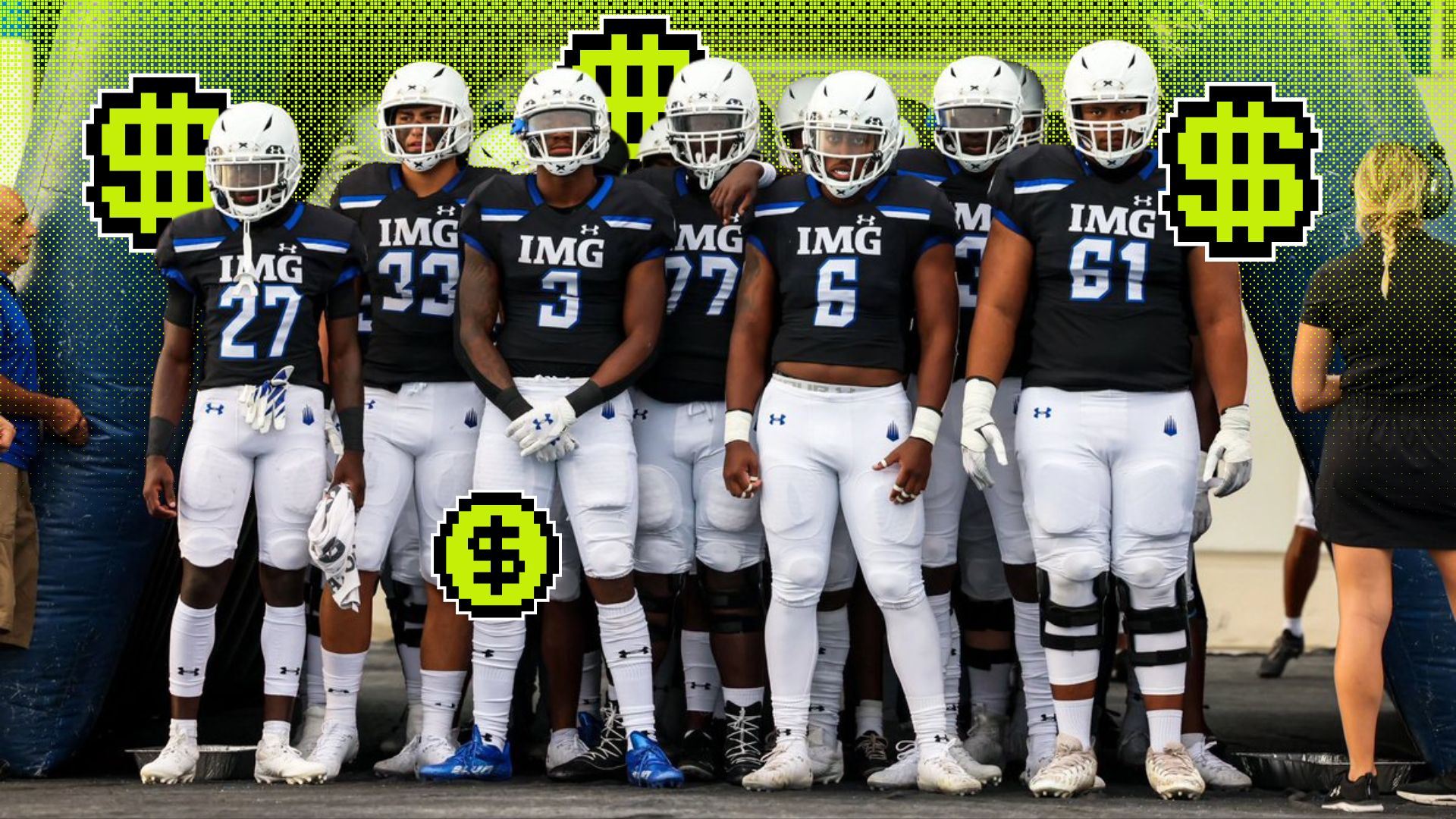
The Most Famous Prep School in America Just Got a $1.72 Million Reality Check
When you think of IMG Academy, you think of the factory. The machine. The place where teenagers arrive as raw talent and leave as first-round picks, D1 commits, and blue-chip prospects. Bradenton, Florida’s most famous zip code has produced pros across virtually every major sport, and its reputation as the gold standard of elite prep athletics is basically unmatched in the United States.
But on February 12, the U.S. Department of the Treasury’s Office of Foreign Assets Control — better known as OFAC — reminded everyone that prestige and compliance are two very different things. IMG Academy has been ordered to pay $1,720,000 to settle potential civil liability after it spent five years accepting tuition payments from two individuals who were sanctioned by the federal government for their ties to a Mexican drug trafficking organization.
Let that sink in. Five years. 89 violations. $1.72 million.
How It Happened
Between 2018 and 2022, IMG Academy entered into yearly tuition enrollment agreements with two individuals — identified only as "SDN 1" and "SDN 2" in OFAC’s release — who had both been designated as Specially Designated Nationals under the Foreign Narcotics Kingpin Designation Act. In plain English: the federal government had already flagged these people as financial supporters of a sanctioned Mexican drug cartel before IMG ever cashed the first check.
The two students enrolled at IMG were the children of these sanctioned individuals. Their identities, sport, and specific program remain confidential — which is the right call for the kids who had zero say in any of this. What’s not confidential is the money. Tuition payments for the first student ranged from $47,026 for a half-semester up to $98,867 for a full academic year. The second student’s annual tuition ran between $100,549 and $102,235. Across the five-year enrollment window, OFAC tracked 83 separate transactions tied to these agreements.
The payments were wired from third-party individuals in Mexico. IMG had the names. They just never screened them.
The Core Problem
That last sentence is the one that should haunt IMG’s administration. This wasn’t a sophisticated scheme that slipped through airtight compliance protocols. According to OFAC, IMG Academy simply did not have a sanctions compliance program in place at all during this period. No screening process. No Chief Legal Officer. Nothing. For a school that charges six figures annually per student and brands itself as a world-class institution in both athletics and academics, the absence of basic financial due diligence is a stunning gap.
OFAC made clear in its statement that IMG’s conduct allowed sanctioned cartel-connected individuals to conduct commerce with U.S. persons and gain access to the U.S. financial system — a serious consequence that extends well beyond the school’s balance sheet. The fine also carries a notable asterisk: OFAC indicated the penalty level reflects the fact that IMG did not voluntarily disclose the violations. The school cooperated once it became aware, but awareness came late.
IMG’s Response
To its credit, IMG Academy hasn’t played defense or tried to spin this into something it isn’t. In a statement provided to the Bradenton Herald, the school acknowledged the absence of a compliance program during the relevant years and confirmed full cooperation with OFAC’s investigation once the issue surfaced.
Since then, IMG has implemented a comprehensive sanctions compliance program and brought on a Chief Legal Officer to lead it. Better late than expensive — though at $1.72 million, the lesson was already paid in full.
The Bigger Picture: Money and High School Athletics
It would be too easy to treat this story as an isolated compliance failure and move on. But it lands in the middle of a broader, messier conversation about money flowing through high school athletics — one that’s gotten a lot louder since NIL blew the doors off the amateurism myth at the college level.
High school sports aren’t governed by the same NIL framework, but the financial pressure is very real and very present. Case in point: this past fall in Southern California, a figure known as the “Money Man” — Brett Steigh — went on a YouTube show and openly admitted to paying families up to $50,000 plus expenses to steer their sons to specific football programs. He said he’d been doing it since 2018. The fallout hit Bishop Montgomery High School hardest, where 19 football players were ruled ineligible by the CIF Southern Section for violations that included falsifying paperwork and illegal recruiting.
The common thread in both stories isn’t just money — it’s the absence of oversight in spaces where elite athletics and serious financial incentives intersect. At the high school level, the rules exist. The screening processes, apparently, do not always follow.
What It Means Going Forward
IMG Academy remains one of the most powerful prep institutions in the country. Their boys basketball team is currently 17-9 on the season, and the football program went a perfect 9-0 this past fall. The school has placed over 150 student-athletes into professional sports over the last decade. None of that changes because of this fine.
But the fine does change something — or at least it should. In an era where elite prep schools are functioning more like minor-league franchises than traditional high schools, the financial infrastructure behind them needs to be held to a higher standard. Accepting six-figure tuition wires from overseas without running a single name through a federal sanctions list isn’t a technicality. It’s a failure of institutional responsibility.
IMG says it has corrected course. OFAC said prove it to the tune of $1.72 million. The receipt has been issued. Now the work begins.
The most expensive lesson IMG Academy ever learned didn’t happen on a practice field. It happened in a Treasury Department report.

Trusted By Programs Across The Country