The Setup
Imagine putting four years of blood and organizational grit into building something real — grinding through a 3-10 opening season, weathering the skeptics, and clawing your way to a 9-4 record that finally had national pundits paying attention. Imagine ESPN projecting your program into the College Football Playoff as the top-ranked Group of Five conference champion, a designation that would earn an automatic berth in the playoff field. And then imagine your own state legislature — the very body that's supposed to have a vested interest in your success — voting your funding bill into the trash.
That's exactly what just happened to the University of Hawai'i Rainbow Warriors football program. On May 9, Senate Bill 3263 — the bill that would have allowed the state to direct $5 million annually toward athlete Name, Image and Likeness compensation — failed its final reading in the Hawaiian Senate. And in one of the more politically bewildering twists, the no votes included three senators who originally introduced the bill: Donna Mercado Kim, Kurt Fevella, and Glenn Wakai. If that sounds like a scene from a political drama nobody asked for, that's because it basically is.
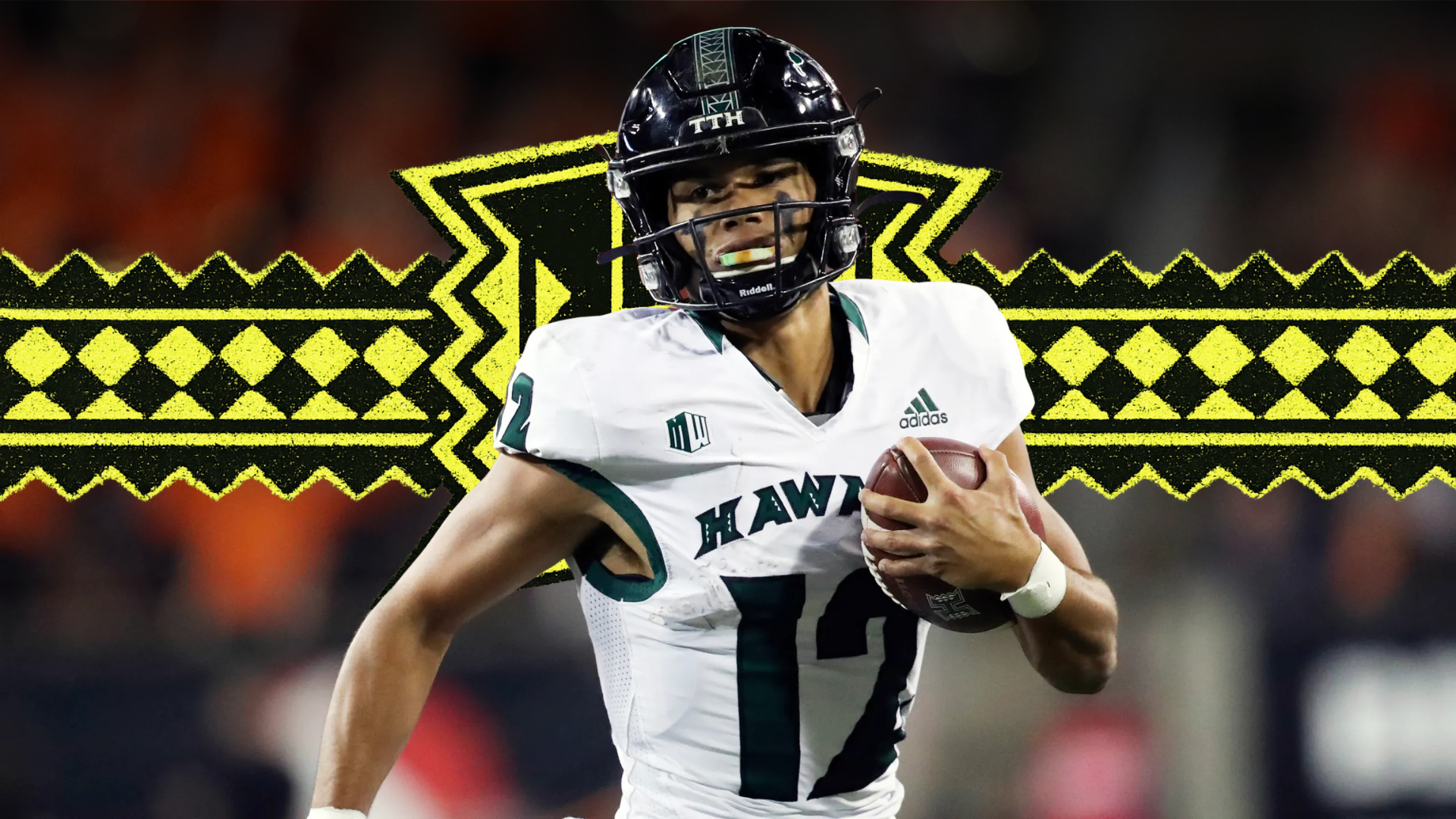
The Rainbow Warriors are sitting on the edge of something genuinely historic. Coach Timmy Chang — a born-and-raised Honolulu kid and former record-setting UH quarterback who shattered the NCAA career passing yardage mark in 2004 — has rebuilt his alma mater from the ground up. After going 3-10 in his first season, a steady climb culminated in a 9-4 campaign in 2025. He restocked the roster through a calculated transfer portal approach and now has ESPN's Bill Connelly projecting Hawaii as the No. 12 seed in the 2026 CFP bracket — a potential automatic berth as the top Group of Five conference champion out of the Mountain West. The program hasn't been this relevant nationally since the 2008 Sugar Bowl era. And the state just pulled the rug.
What the Bill Actually Was
Let's be precise about what died in that Senate chamber. SB 3263 wasn't some blank check or a backdoor player payment scheme — it was a structured appropriation that would have provided Hawaii Athletics with a reliable, state-backed NIL funding stream through 2030. Athletic Director Matt Elliott had requested $5 million annually at the outset of the legislative session, framing it plainly: the department is currently relying entirely on private fundraising to meet NIL obligations, and that is not a sustainable model for a program trying to compete nationally.
The bill cleared the House with amendments. The conference draft, recommended by joint committees, passed on that side. But when it hit the Senate floor for a final reading, it collapsed — torpedoed in part by the very people who wrote it. The no votes from the bill's own original sponsors were the kind of procedural self-immolation that doesn't happen often. The result is unambiguous: zero state NIL dollars for UH athletics heading into the 2026 season.
The Real-World Consequences
Here's where the stakes get concrete. The modern college football ecosystem runs on NIL the way a Formula 1 car runs on fuel — without it, you're not just slow, you're parked. For a program like Hawaii, geography already creates a massive structural disadvantage. The 2,500-mile Pacific Ocean between Honolulu and the mainland isn't just a logistical challenge — it's a recruiting narrative that programs with deeper pockets exploit relentlessly. Every year, UH has to convince talented players that the islands are worth the isolation, the travel costs, and the time zone difference. NIL dollars are the counterweight to all of that.
Men's volleyball head coach Charlie Wade, whose team is in contention for a national championship, warned in his legislative testimony that without state-backed NIL funding, the program risks losing its most talented players to mainland universities willing to pay more — effectively transforming a championship-caliber program into a feeder system. He wasn't being dramatic. That's not a hypothetical — it's the documented reality of the transfer portal era. Players leave for money. That's the game now.
On the football side, Chang has already felt the pull. Despite navigating a productive portal cycle for 2026 — adding Bishop Gorman alumni like former Washington wide receiver Audric Harris, former Michigan State quarterback Jeremiah Hughes, and former Oregon safety Kodi DeCambra — multiple impact players from the 2025 roster departed for programs offering bigger NIL paydays. That's the treadmill Hawaii is running on: recruit well, develop well, then watch players get poached by programs that can simply outbid you.
Chang addressed the NIL reality with characteristic directness earlier this year, noting that when players have value, there is now a serious monetary business side to college football that can't be ignored. His message to the legislature was simple: we are a state school, we represent the state, and we need help. The state said no.
The Cruel Irony of the Timing
The timing of this failure is not just unfortunate — it's almost cinematically cruel. This bill died in the same legislative session that saw UH athletics achieve its highest national profile in nearly two decades. The Rainbow Warriors men's volleyball team won a national championship. The football program is being discussed in the same breath as CFP contenders. ESPN's preliminary outlook placed UH as the top-ranked Group of Five conference champion in a 12-team playoff projection, slotting the program among the nation's elite. And in the middle of all of it, the state legislature decided this was the moment to pump the brakes.
Supporters have pointed out that boosters filling Stan Sheriff Center can generate real dollars — fans contributing small amounts that add up quickly to meaningful recruiting resources. That grassroots energy is real and admirable. But private fundraising alone cannot compete with programs in power conferences or even well-resourced Group of Five schools that have state backing, deep booster networks, and established NIL collectives with eight-figure war chests. Hawaii is not playing on a level field, and the state just declined to help level it.
What It Means Going Forward
The practical question now is how Chang and Elliott patch the hole. Private fundraising will have to carry more weight. The booster community will be asked to step up in ways it hasn't before. The athletic department will navigate NIL deal-making on a piecemeal basis — a model that works until it doesn't, and usually stops working right when you need it most, like when you're a legitimate CFP contender trying to keep your roster intact through a brutal offseason portal window.
There is technically still a narrow path forward. The governor has until July 15 to sign or veto legislation, and some supporters are holding out hope the matter could be revisited before then. But as of the legislative session's close, the Rainbow Warriors are heading into the most consequential season in recent program history without the financial foundation their ambitions demand.
Chang opens 2026 on the road at Stanford on August 29 — a Power Four opponent, enemy territory, right out of the gate. If the 'Bows win that game, the national conversation ignites. But the conversation happening in Honolulu right now is a different one entirely: about whether the state that produced this team, this coach, and this moment actually believes in them enough to fund it.
The Closing Take
There's a version of this story where Hawaii finishes 2026 undefeated in the Mountain West, punches into the CFP, and puts Hawaiian football on the national map permanently. And there's a version where the NIL gap widens, key players leave for programs that can pay them, and the momentum that took four years to build quietly dissolves. The difference between those two versions might very well come down to the $5 million that just died on the Senate floor. The legislature had a chance to bet on its own team. It blinked. The Rainbow Warriors don't have that luxury.

Trusted By Programs Across The Country