College football's transfer portal has always been a two-way street — programs use it to recruit, players use it to rebuild. But Florida Atlantic just threw a roadblock in the middle of that highway, and it's got everyone in the sport watching what happens next.
On May 18, 2026, FAU filed suit in Palm Beach County Circuit Court against four of its former football players — running back Gemari Sands, wide receiver Asaad Waseem, linebacker Tyler Stolsky, and defensive back Zion Paret — alleging breach of NIL contracts after all four entered the transfer portal in January. The lawsuit isn't just about money. It's a declaration that schools are done watching players cash out and walk. In Boca Raton, they're sending a message: the contracts are real, the clauses have teeth, and the era of consequence-free transfers may be over.
The Clause That Started It All
Buried inside each of FAU's NIL agreements was a "liquidated damages" provision — a contractual trapdoor that activates the moment a player enters the transfer portal before the deal expires. The terms required each athlete to repay half of whatever money remained on their contract at the time of departure. It's not unusual language in business contracts. In college football in 2026, it's starting to feel like a revolution.
FAU isn't alone in pulling this trigger. Cincinnati sued former quarterback Brendan Sorsby earlier this year after he transferred to Texas Tech, seeking a reported $1 million buyout. Georgia pursued linebacker Damon Wilson over a half-million-dollar NIL deal. What FAU is doing fits a pattern — programs are organizing, lawyering up, and treating NIL contracts the way the business world has always treated contracts: seriously.
The Four Players and What Was On the Table
To understand the weight of these lawsuits, you have to look at the contracts themselves — and the numbers tell a story about how aggressively FAU was trying to hold its roster together.
Asaad Waseem had the biggest deal in the group. The wide receiver — who put up 66 catches, 699 yards, and 5 touchdowns in 2025 — signed a 15-month, $69,000 NIL contract in September, with monthly payments scaling up to $5,000. He left for Purdue anyway. Tyler Stolsky, a linebacker who contributed 86 tackles and was one of FAU's defensive anchors, had his original deal upgraded to $45,000 in monthly installments through December 2026 before he transferred to West Virginia. Defensive back Zion Paret had a $30,000 agreement paying $2,000 per month, and he's now at UConn.
Then there's Gemari Sands, and his story might be the most telling of all. Sands was FAU's leading rusher in 2025, piling up 465 rushing yards and adding 40 receptions out of the backfield. The Owls knew what they had — and on New Year's Eve, they handed him an amended deal that bumped his licensing fee to $18,000, paid in $1,500 monthly installments starting January 22. Nine days later, Sands gave FAU notice of his transfer. He's now on Florida State's roster.
The timing of that amendment is worth sitting with. FAU raised Sands' compensation on December 31st. He gave them a portal notice on January 9th. Whether that sequence makes the legal case stronger or more complicated is exactly the kind of thing lawyers get paid to argue.
The Transfer Portal Meets the Courtroom
The broader context here is a sport in genuine legal flux. For three years after NIL went live in 2021, the working assumption was that these deals were more handshake agreements than enforceable contracts — the spirit of a new era rather than the letter of the law. Schools paid, players played, and if someone left, everybody moved on.
That understanding started cracking when bigger programs with bigger money began attaching real contractual language to NIL deals. The liquidated damages clause became the weapon of choice because it doesn't require proving actual damages — the parties agree in advance what a breach is worth. It's efficient, and in court, it's often airtight if the contract was drafted properly.
What FAU is doing fits a blueprint that started at the Power Four level and is now filtering down. Programs at every level are watching the Cincinnati-Sorsby case closely, and the FAU suit adds four more data points to what's becoming a rapidly developing area of law. The question that courts will ultimately have to answer: are these liquidated damages clauses legally enforceable, or do they function as penalties — which courts traditionally disfavor?
College football analyst Bryan Payton put it simply on social media: "You can't ask to be paid and then choose to not abide by the contract without consequence. Time to be an adult." That sentiment is resonating loudly in athletic departments across the country.
What It Means for the Portal Era
For players, the calculus just changed. The transfer portal has functioned as the sport's free agency for three years, giving athletes leverage they never had before. That leverage isn't going away — but now there are real financial stakes attached to exercising it. A player considering a mid-contract portal entry isn't just weighing a new opportunity; he's potentially weighing a lawsuit and a five-figure debt.
For programs, especially Group of Five schools like FAU that can't compete dollar-for-dollar with SEC and Big Ten money, NIL contract enforcement is a retention tool. If a Boca Raton school can lock in a productive running back or a breakout wide receiver through a contractual commitment — and actually hold them to it — that changes roster management in meaningful ways. It doesn't level the playing field, but it gives mid-major programs a legal mechanism to protect their investment.
For the sport overall, this is the next stage of an ongoing reckoning. The House settlement is restructuring how schools can pay players. Revenue sharing is arriving. The entire infrastructure of college athletics is being rebuilt in real time. NIL contract litigation is just another load-bearing wall in a building that's being renovated while people are still living inside it.
The Bottom Line
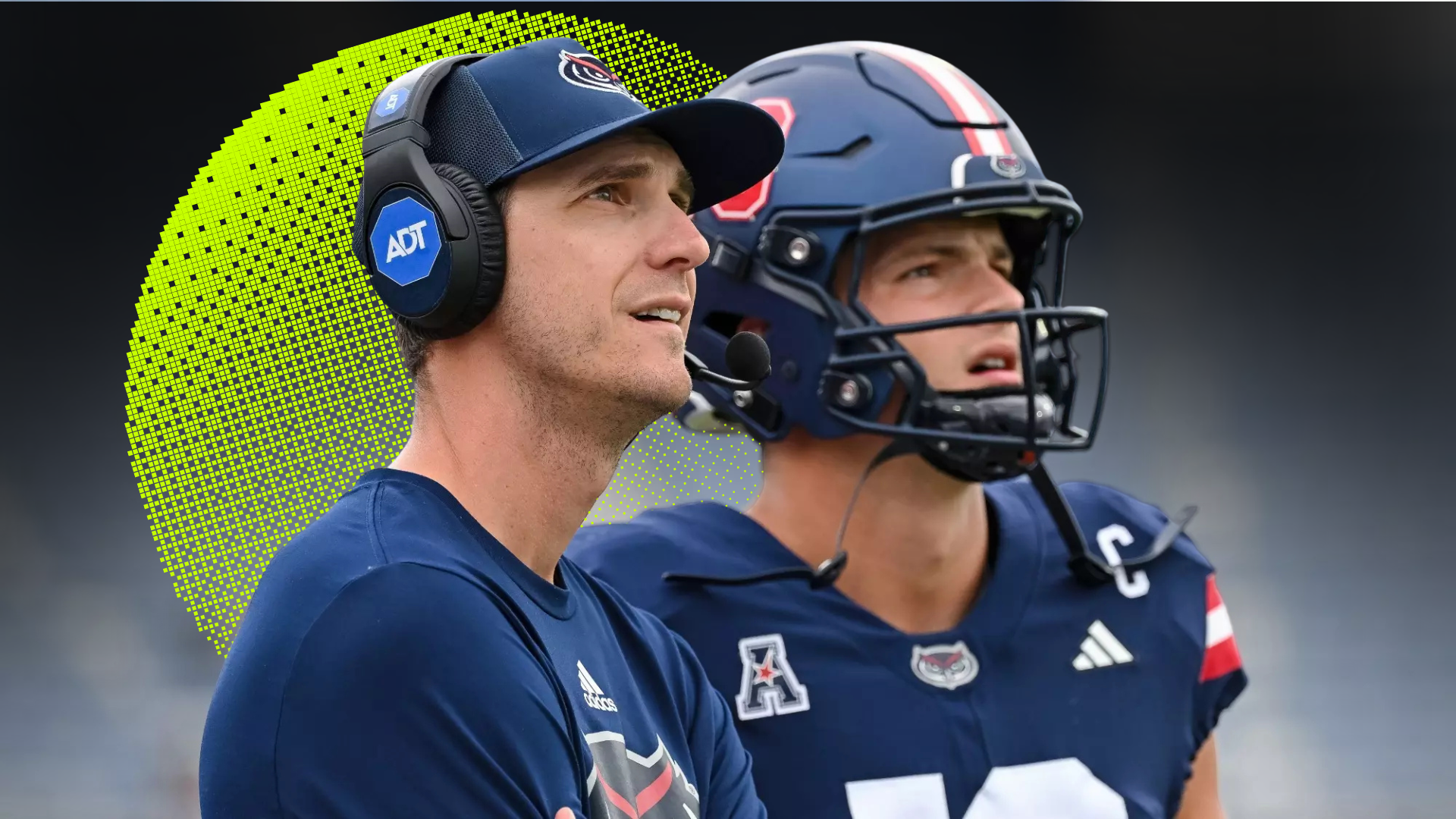
FAU head coach Zach Kittley is entering his second season in Boca Raton focused on building something sustainable, and his program just made a loud statement about how it intends to operate in the new landscape. Winning on the field matters. But apparently, so does winning in Palm Beach County Circuit Court.
Gemari Sands will suit up for Florida State. Asaad Waseem will line up for Purdue. Tyler Stolsky is headed to Morgantown, and Zion Paret to Storrs. None of that changes. But if FAU prevails in court — or even just forces a settlement — the precedent will echo well beyond South Florida. The message to every player signing an NIL deal going forward is as clear as it is uncomfortable: read the contract, because somebody built a trapdoor in it, and they know exactly where it is.

Trusted By Programs Across The Country