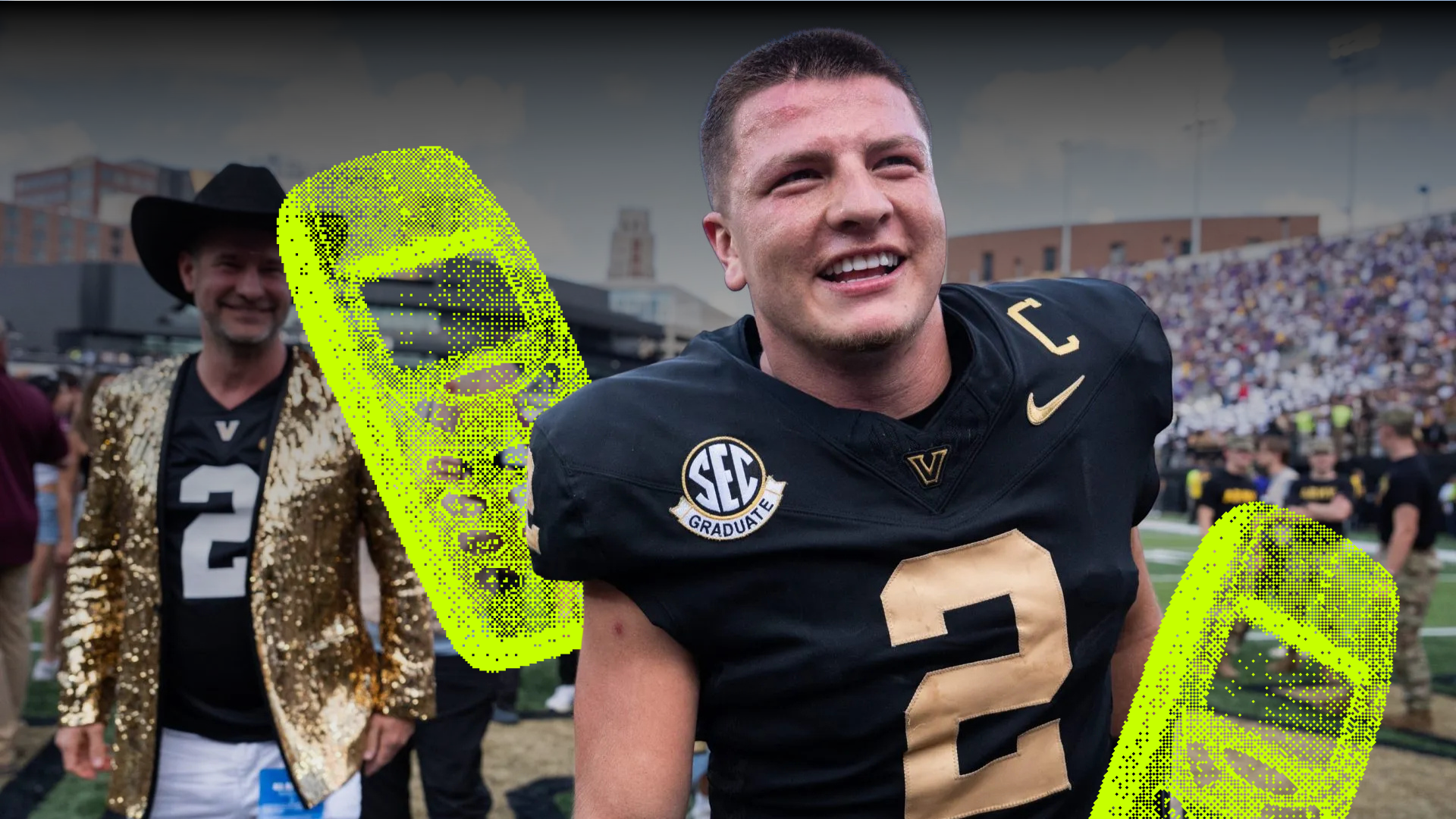
Diego Pavia spent four years telling NFL scouts he didn't care what they thought. On Saturday afternoon, those same scouts finally got the last word.
The Vanderbilt quarterback, the same one who bullied Alabama in Nashville, dragged the Commodores to their first 10-win season in school history, finished as the Heisman runner-up, and out-graded both first-round quarterbacks in the country, watched all 257 picks of the 2026 NFL Draft come and go without his name attached to any of them. The most productive dual-threat quarterback in the SEC last fall is now the most famous undrafted free agent in football.
And he made history on the way out the door. Pavia is the first Heisman Trophy finalist since Kansas State's Collin Klein in 2013 to go undrafted, and the first Heisman runner-up since Iowa's Brad Banks in 2003 to slip through every round untouched. That's not a quirk. That's a referendum.
The slow-motion slide that nobody could stop
Friday night was supposed to bring some clarity. Instead, the silence got louder. Heisman winner Fernando Mendoza came off the board with the No. 1 overall pick to the Raiders. Alabama's Ty Simpson followed in the first round to the Rams. Notre Dame running back Jeremiyah Love, the third Heisman finalist alongside Pavia, was scooped up Thursday night. The only finalist still waiting? The one with the best PFSN QB Impact grade in the country, the one who outperformed every quarterback drafted ahead of him by virtually every advanced metric available.
By Saturday morning, the discourse had shifted from "where will Pavia land?" to "is anyone actually going to call?" ESPN's Adam Schefter had reported that the Carolina Panthers brought him in for a pre-draft visit, and that other teams were doing independent homework on the Vanderbilt quarterback. Schefter publicly predicted Pavia's name would be called. It wasn't. The Panthers passed. So did everyone else.
Why teams ran the other way
If you want to understand how a Heisman finalist becomes a UDFA, start with the tape measure and end with the temperament — but don't pretend either one is the whole story.
Pavia checked in at 5-foot-9 7/8 at the Senior Bowl, then 5-foot-10 1/8 and 207 pounds at the Combine, making him the only quarterback at the event under six feet. NFL.com listed him at 5-foot-9, 198 pounds. The number changed depending on the room. The reaction did not. Modern NFL front offices have spent the better part of two decades convincing themselves that Russell Wilson was the exception, not the rule, and the post-Kyler Murray pendulum has swung hard back toward prototypes. Bleacher Report's Dame Parson flagged "spotty decision-making" and questions about reading defenses post-snap. The Ringer's Todd McShay said outright in February he wasn't sure Pavia could play quarterback in the NFL. NBC's Chris Simms graded his Combine throwing session a "C-minus to D" to his backside and a "B" to his front side — which is another way of saying his arm talent is a coin flip depending on which way he's rolling.
Then there's the schtick. NFL Network's Tom Pelissero ran a temperature check around the league last week and the answers came back arctic. An NFC scouting director told him "the whole schtick gets old" and dropped a Johnny Manziel comparison that wasn't meant as a compliment. An AFC quarterbacks coach kept circling back to size. An AFC scouting director floated the question of whether Pavia could even survive being a backup — "he's coming to take someone's job and it's going to be kind of an interesting dynamic wherever he goes, because you know the fans are going to be calling for him wherever he goes."
That's the part that stings. Front offices weren't just worried about whether Pavia could play. They were worried about what happens in the locker room when he can't.
The Heisman ceremony that aged like milk
The NFL doesn't draft on December production alone. It drafts on December impressions. And Pavia's December impression — a thumbs-down emoji and an Instagram post telling Heisman voters where to stuff it — became a draft-room talking point in a way nobody at Vanderbilt anticipated.
He apologized the next morning. He congratulated Mendoza, called him a deserving winner, took accountability for not handling the moment well. The apology was real. The tape of him not handling the moment was already in every scouting binder in the league. Throw in his decision to skip the 40 and most of the on-field testing at the Combine after publicly stating he'd outrun Manziel, and you've got a candidate whose rough edges started to outweigh the highlights for the people responsible for spending real draft capital.
The numbers that should have saved him
This is the maddening part. Pavia put up 3,539 passing yards, 29 touchdowns, eight interceptions, a 70.6 completion percentage, and added 862 rushing yards with 10 more scores on the ground. He led the SEC in completion percentage, yards per attempt, passer rating, and touchdown passes. His 94.8 PFSN QB Impact grade was the best in the nation — better than Mendoza, better than Simpson, better than every passer who came off the board on Day 1 or Day 2.
The film says ace. The frame says backup. The league sided with the frame.
For context: in the last 15 NFL Drafts, every Heisman finalist with one notable exception (Klein) has heard their name called somewhere. Even Collin Klein, the comp Pavia is now stuck with, signed as a UDFA, made a roster, and bounced around before pivoting to coaching. Brad Banks, the 2002 Heisman runner-up Pavia just joined in the record books, washed out of the NFL entirely and went to the CFL. The historical track record for what happens after this isn't kind. It also isn't a verdict.
What's next, and why Pavia might be exactly the wrong guy to bet against
The undrafted free agent market opens immediately, and Pavia will sign somewhere within hours. Carolina remains a logical landing spot given the pre-draft visit. So does any team with an established veteran starter and a willingness to keep a developmental gunslinger on the practice squad. ESPN's Jordan Reid raised the CFL and UFL as legitimate fallbacks. Reid also said something that got buried in the noise: "He's one of those dudes that they would take a bullet for. A lot of guys have said that." That's not a small thing for a 24-year-old quarterback whose biggest professional asset is the room he walks into.
Pavia's mentor through this entire process has been Manziel — yes, that Manziel — who has been checking in on him, advising him, and apparently warning him exactly how cruel the post-draft process can get. The irony of the league using "Johnny Football" as a slur about Pavia while Manziel himself counsels him through it is the kind of detail you can't write.
The closing take
The 2026 NFL Draft will be remembered for Mendoza going No. 1, for whatever the Browns did this weekend, for the trades and the steals and the reaches. But there will be a footnote, and the footnote will be Pavia. The Heisman finalist no team would touch. The 5-foot-10 quarterback who broke Vanderbilt and broke draft boards on his way out.
If you've followed his career — junior college kid, New Mexico Military Institute, New Mexico State, the NCAA eligibility lawsuit that he won, the SEC Newcomer of the Year season, the Heisman campaign — you already know the play. He's been here before. He's been doubted before. The frontal lobe joke he made at the Combine wasn't a tell about his maturity. It was a reminder that the chip on his shoulder is the entire engine.
The NFL just gave him the biggest one of his life. Now we find out if it's still loud enough to hear over 32 front offices saying no.

Trusted By Programs Across The Country