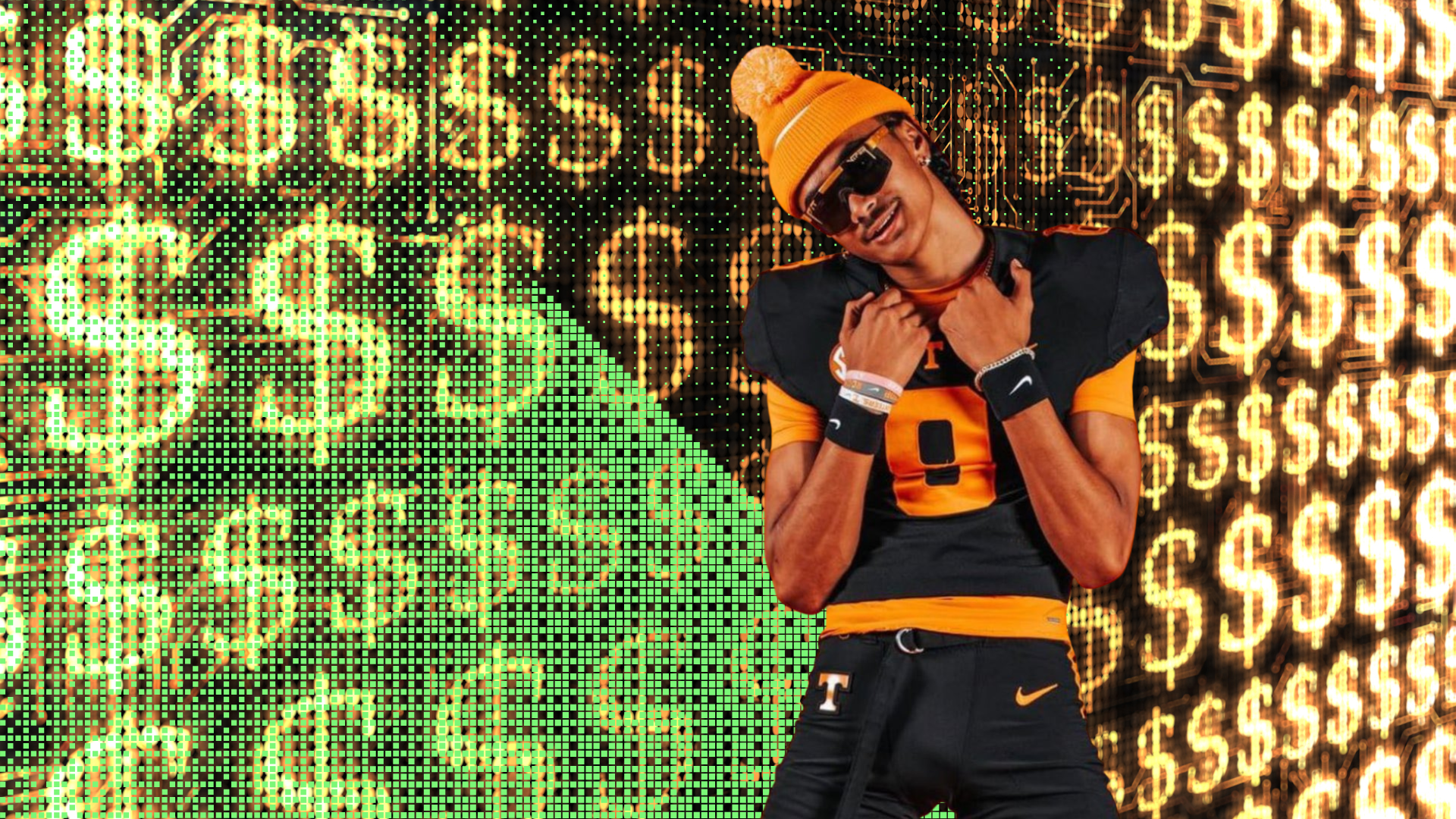
Something strange is happening in college football, and it's not another conference realignment fever dream. The best players in the sport — the ones who'd hear their names called in the first round of the NFL Draft — are actively choosing to stay in school. Not because they need more reps. Not because they love their dorm room. Because the money in college football has gotten so absurdly good that going pro is, in some cases, a pay cut.
Welcome to 2026, where the NIL era has officially broken the old calculus of 'get to the league as fast as possible.'
The Manning Standard
Arch Manning is the poster child for this new reality. The Texas quarterback had every reason to declare for the 2026 NFL Draft — the bloodline, the arm talent, the national brand. Instead, he's running it back in Austin, where his NIL valuation sits at a staggering $5.4 million. Reports suggest his total compensation package rivals what the No. 7 overall pick in the draft would earn. Let that sink in. A college junior is making NFL money without ever having to deal with a rookie contract, a bad offensive line in Jacksonville, or the existential dread of being drafted by a franchise that hasn't sniffed the playoffs in a decade.
Manning's decision wasn't made in a vacuum. He looked at the landscape — the NIL deals, the revenue-sharing dollars flowing from Texas's massive alumni base, the partnerships with EA Sports and Panini — and made a business decision disguised as a football one. And he's not alone.
The Domino Effect
Oregon's Dante Moore reportedly secured a return-to-school package worth north of $10 million. South Carolina's LaNorris Sellers ($4M) and Florida's DJ Lagway ($4M) both chose to stay put. Jeremiah Smith, Ohio State's generational receiver valued at $4.2 million, is back in Columbus for what's expected to be his final college season. These aren't developmental players waiting their turn — these are first-round talents who looked at the NFL's slotted rookie wage scale and said 'nah, I'm good.'
The math has fundamentally shifted. The NFL fixed its rookie pay problem back in 2011 after Sam Bradford signed a six-year, $78 million deal as the No. 1 pick. Since then, rookie contracts have been slotted and controlled. Meanwhile, college football's compensation has gone the opposite direction — completely unregulated and skyrocketing. The result is a closing gap that nobody saw coming.
The Eligibility Problem Nobody Expected
But here's where it gets truly wild. NIL money hasn't just convinced stars to delay the draft — it's created a whole new legal battlefield around eligibility. Players are now suing the NCAA for the right to keep playing college football longer than the rules allow.
Trinidad Chambliss recently won his lawsuit against the NCAA and will suit up for Ole Miss in 2026. Joey Aguilar is in the final stages of litigation seeking an eighth year of eligibility. An eighth year. These aren't players clinging to glory days — they're athletes making a rational economic decision. Why leave a system that's paying you millions for a mid-round draft slot that comes with less money and less security?
The lawsuits are exposing a fundamental contradiction in the NCAA's framework. You can't build a system where players earn millions through revenue sharing and NIL deals, then turn around and tell them their time is up based on rules written when the amateur model was still the law of the land. The courts are noticing, and the NCAA keeps losing.
What This Means for the Sport
College football is quietly becoming a legitimate alternative to the NFL for elite talent, at least financially. That's a sentence that would've gotten you laughed out of any room five years ago. But the numbers don't lie. When Arch Manning is making more than mid-first-round picks and Dante Moore is commanding eight figures to stay in Eugene, the sport has crossed a threshold it can't uncross.
For fans, this is mostly great news. Your favorite players are sticking around longer, rosters are getting more talented, and the product on the field is better than ever. For the NFL, it's a quiet alarm bell. The league's pipeline of cheap, controllable rookie talent is facing its first real competition — from the very system that used to serve as its free minor league.
For the NCAA? It's another fire to put out in a building that's been burning for five years straight.
The old saying was that college football was just a stepping stone to the pros. In 2026, for the sport's brightest stars, it's looking more like the destination.
Follow CFB Alerts on Instagram for more NIL coverage and college football news.

Trusted By Programs Across The Country