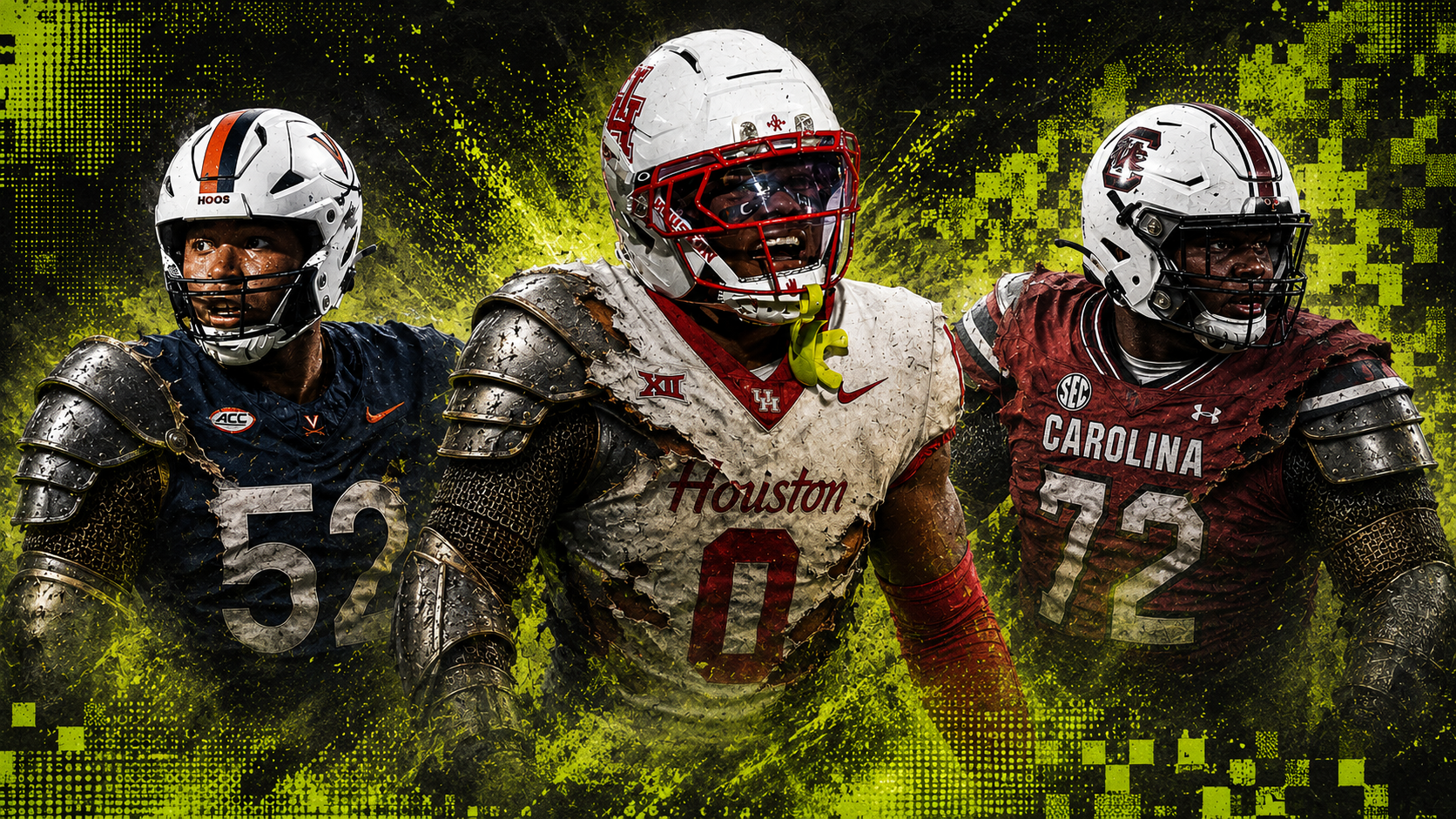
There is a version of college football where youth wins. Where four-star freshmen torch opposing defenses before they can legally rent a car, where the next great thing announces himself in September and everyone pretends they saw it coming. That version is real. It gets the highlights.
But there is another version, quieter and less glamorous, that tends to hold up just as well come November. It is the version built on reps. On guys who have been hit before, who have lined up in a hostile road environment, who know what a defensive scheme adjustment feels like from personal experience rather than film study. It is built on snap counts.
Heading into the 2026 college football season, a handful of programs have quietly assembled some of the most experienced offensive rosters in the country. Not just experienced at one position. Across the board. Quarterback, running back, wide receiver, tight end, offensive line. When you average the national snap-count rankings across all five groups, a picture emerges of which offenses have the institutional memory to execute when things stop going according to plan.
Here is the full ranked breakdown, and why every team on this list deserves more preseason attention than they are currently getting.
1. Virginia Cavaliers
#27 QB | #5 RB | #14 WR | #44 TE | #1 OL
Virginia sits atop this list not because of one elite position group, but because of something harder to manufacture: depth of experience across an entire offense. The Cavaliers own the most experienced offensive line in the country, and it is not particularly close. With anchor Noah Josey leading all FBS players in career snaps entering 2026 and starters Drake Metcalf and McKale Boley returning intact, Virginia's offensive front is the kind of unit opposing defensive coordinators put on their boards in August and do not take off until the final whistle.
Under Tony Elliott, UVA's 2025 season was the program's best in recent memory. The Cavaliers won 11 games, came within a double-overtime loss of taking home the ACC Championship, and closed out at the Gator Bowl. Now they enter 2026 with a new quarterback but a protection picture that should give whoever lines up under center the cleanest pocket in the conference. When you factor in the #5 ranking in returning running back snaps, you begin to understand why Virginia is a legitimate contender to return to Charlotte.
The experience factor here is not just arithmetic. It is chemistry. An offensive line that has played hundreds of snaps together communicates differently than one assembled from parts. They know each other's tendencies. They can solve problems live rather than waiting for a Tuesday film session. That is worth more than a star recruit at any skill position.
2. Houston Cougars
#31 QB | #13 RB | #3 WR | #10 TE | #12 OL
No team in the country balances offensive experience across all five position groups better than Houston. When you run the averages, the Cougars come out on top of the balance-adjusted rankings, ahead of everyone. Their wide receiver room ranks third nationally in career snaps, which means they are not just experienced in a single spot while papering over weaknesses elsewhere. This is a complete offense that has seen things.
Houston's receiver corps in particular is worth watching closely. The #3 ranking in wideout snap experience means this is a group that has run against dime packages, adjusted routes at the line, and caught passes in hostile environments. That kind of collective fluency at the position tends to manifest in third-down efficiency, in red-zone execution, in the moments where an offense either capitalizes or leaves points on the field. The Cougars are built to capitalize.
3. South Carolina Gamecocks
#33 QB | #76 RB | #20 WR | #15 TE | #2 OL
South Carolina is one of only two programs in all of FBS with at least 10,000 career offensive line snaps on their current roster. The other is Virginia. Let that sink in for a second. While the Gamecocks rank 76th in returning running back experience, meaning they will be asking someone relatively new to carry the load in the ground game, the infrastructure around that person is as veteran as it gets.
The #2 offensive line ranking nationally translates to real-world value when LaNorris Sellers is operating behind it. Sellers was the story of South Carolina's 2025 season, a dynamic playmaker whose ceiling has not been fully explored. Surrounding a high-upside quarterback with experienced protection and a seasoned tight end group ranked 15th nationally creates a formula that has worked in this league before. The Gamecocks are a team built to develop a quarterback rather than simply hand one a finished product.
4. UCLA Bruins
#34 QB | #15 RB | #10 WR | #20 TE | #3 OL
UCLA rounds out what is quietly the strongest cluster in this group: Virginia, South Carolina, and the Bruins all rank in the top three nationally in offensive line snap experience. For a program navigating its post-Pac-12 transition into the Big Ten, that kind of structural stability matters enormously. New conference. New opponents. Old, proven offensive line.
The #10 ranking in wide receiver snaps gives UCLA an interesting passing game infrastructure to build around. Big Ten defensive fronts are physical and well-coached, and arriving with an offensive line that has played in meaningful games is a significant competitive advantage. The Bruins' combination of a top-15 running back group and a top-10 receiver corps suggests a two-pronged attack that experienced defenses will still have difficulty neutralizing when the line is winning at the point of attack.
5. Oklahoma Sooners
#32 QB | #31 RB | #11 WR | #2 TE | #21 OL
Oklahoma's placement here hinges almost entirely on one outlier: the #2 ranking nationally in tight end snap experience. That is a uniquely valuable resource in the modern SEC, where tight ends are used in both the run game and as reliable third-down options, and where defenses are built to stop the things you do most. A veteran tight end room gives an offensive coordinator options, and options are everything in a league where the margin for error is measured in inches.
The Sooners also rank 11th nationally in wide receiver experience, meaning the skill position infrastructure is genuinely there. With SEC life now in full swing, Oklahoma is still calibrating. But the experience base on this offense gives new head coach direction and continuity while the program builds toward what it wants to be in its new home.
6. Texas Tech Red Raiders
#46 QB | #21 RB | #5 WR | #12 TE | #17 OL
Texas Tech shows up here on the strength of the fifth-ranked wide receiver group in the country. In a pass-happy Big 12 landscape where spacing and execution define offensive efficiency, having experienced receivers who can win in contested catch situations and manufacture yards after the catch is a meaningful advantage. Red Raiders fans know this offense can light up scoreboards. The question has always been whether the experience is there to sustain drives when things tighten up.
The #21 running back ranking and a respectable offensive line position suggest Tech is not completely one-dimensional. This is an offense with enough veteran presence to stay unpredictable, which in a conference this wide open heading into 2026, is precisely the kind of profile that produces a surprise contender.
7. Oklahoma State Cowboys
#49 QB | #36 RB | #6 WR | #73 TE | #4 OL
Oklahoma State's story this season lives at two positions: receivers and offensive line. The #6 national ranking in wide receiver snap experience means the Cowboys have guys who have seen schemes, who know how to get open, and who are not going to get rattled by a strong safety rolling down in pre-snap. The #4 ranking in offensive line experience gives that corps a platform to operate from. That combination, veteran protection plus veteran weapons on the outside, is legitimately dangerous in the Big 12.
The gap at tight end, ranked 73rd nationally, is a real limitation on what the Cowboys can do in terms of scheme versatility. But sometimes the best offenses are the ones that know what they are and execute it relentlessly. Oklahoma State might be exactly that in 2026.
8. Auburn Tigers
#10 QB | #1 RB | #41 WR | #13 TE | #18 OL
The most fascinating entry on this list. Auburn leads the entire country in returning running back snap experience, while starting over at essentially every other offensive position after a brutal offseason of roster turnover. In Year 1 under Alex Golesh, the Tigers are bringing in USF transfers and reconfiguring an offense around a quarterback with genuine starter pedigree in Byrum Brown. Brown enters 2026 in his fourth season as a starting quarterback, and his chemistry with Golesh's system from their time together at USF is a real asset that cannot be quantified by snap counts alone.
The running back depth chart at Auburn is a legitimate strength headed into the fall. Golesh's offense at USF was predicated on a physical, multi-back ground game that wore defenses down over four quarters. Having the most experienced running back room in the country feeding into that system is not a coincidence. It is a blueprint. The question is whether the less experienced pieces around it can hold up in an SEC schedule with no margin for growing pains.
9. Nebraska Cornhuskers
#8 QB | #130 RB | #23 WR | #33 TE | #5 OL
Nebraska presents the mirror image of Auburn. Where the Tigers have the most experienced running backs in the country, the Cornhuskers rank 130th. Dead last territory. But the #8 ranking in quarterback snap experience and the #5 ranking in offensive line snaps give Nebraska a foundation that should protect the ball and move the chains efficiently. This is a team built to manage games, to control time of possession, to play complementary football.
The Big Ten is going to test every program on this list, but Nebraska's offensive line infrastructure is genuinely among the conference's best in terms of collective experience. That matters in November in Lincoln, when weather becomes a factor and the game slows to a grind. Experienced lines win those games.
10. California Golden Bears
#45 QB | #68 RB | #9 WR | #26 TE | #9 OL
California closes out the top 10 by showing up in two critical position groups: the #9 ranking in both wide receivers and offensive line experience. That is remarkable consistency at positions that define offensive identity. The Bears have experienced pass catchers being protected by an experienced front. In the Big Ten, where every week brings a defense capable of wrecking an unprepared offense, that combination provides a baseline level of competence that younger rosters cannot always guarantee.
Cal's 68th ranking in running back experience is the one gap, but the Bears have the tools to compensate through the passing game. A team that ranks top-10 nationally in both receiver and offensive line snap experience has earned the right to be taken seriously in a competitive conference race.
What It All Means
Experience does not guarantee wins. It never has. The transfer portal era has made it possible to build a veterans-heavy roster that still underperforms because cohesion takes time and chemistry cannot be imported. But as a predictive indicator, returning snap counts remain one of the most reliable measures of which offenses will hold up under adversity, execute in late-game situations, and avoid the catastrophic breakdowns that cost programs seasons.
Virginia, Houston, and South Carolina have each built something that goes beyond what shows up on a recruiting ranking. They have built familiarity. And in a sport defined by one-play swings in 85-yard drives, knowing the person lined up next to you, trusting their reads, and executing without hesitation is an underrated form of roster construction.
The greybeard offenses do not always make the preseason top 25. But come November, they tend to still be playing meaningful football. Keep an eye on all ten of these programs.

Trusted By Programs Across The Country