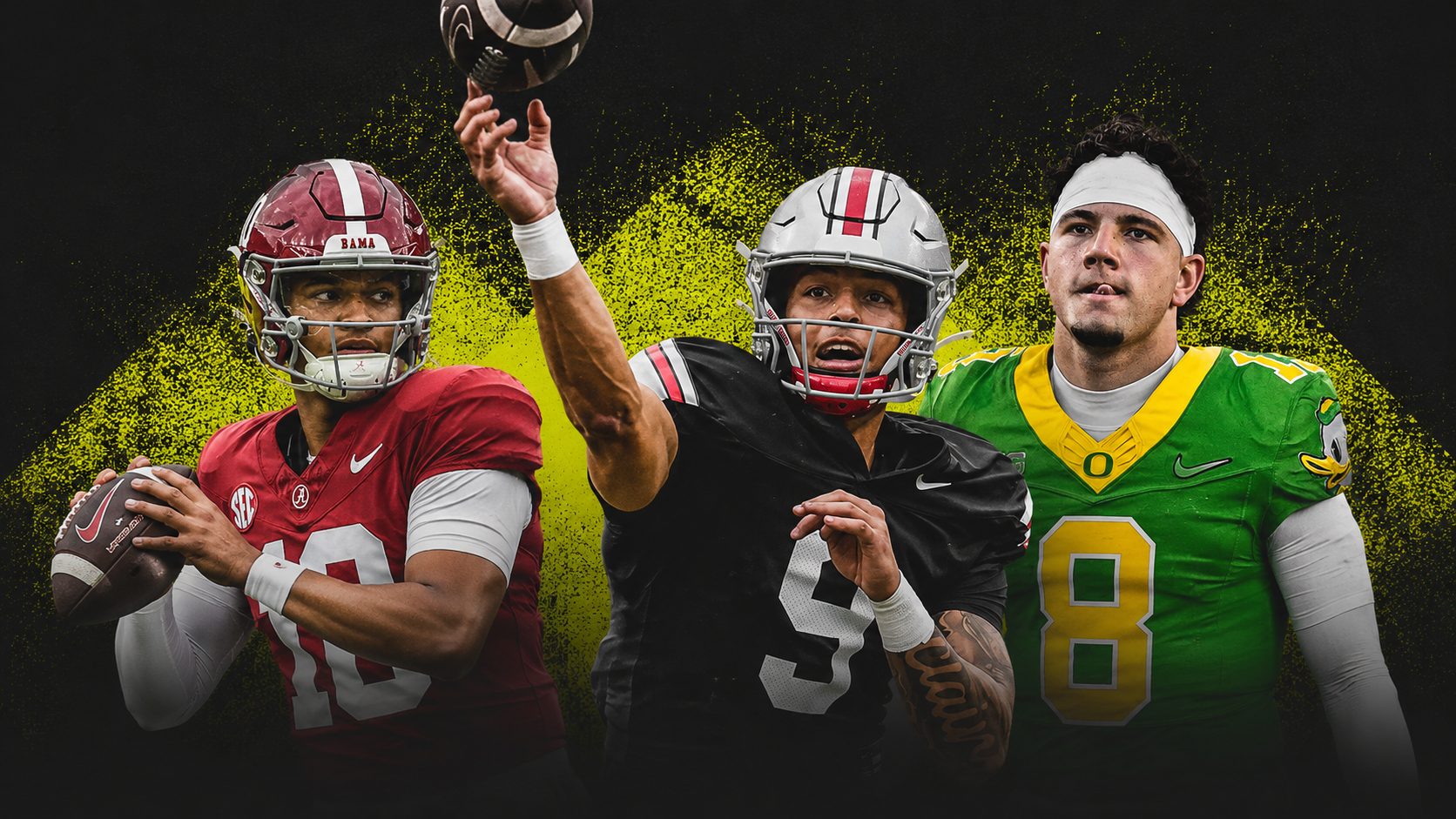
There is a version of your 2026 season that starts in Week 3 when your starting quarterback scrambles on a second-and-seven, gets his foot caught in the turf, and doesn't come back. What happens next is either a minor setback or a full-on crater — and the difference between those two outcomes is almost entirely determined by who's holding a clipboard on the sideline.
Ask Syracuse fans how that goes. In the third quarter of what was shaping up to be one of the more stunning upsets in recent ACC history — a 34-21 road win over Clemson in September 2025 — Steve Angeli planted his foot, crumpled to the ground, and tore his Achilles. He had led the nation in passing yards at the time. The Orange went on to lose their final eight games of the season, never scoring more than 10 points in half of those contests. They finished 3-9. One moment, one snap, one non-contact play that didn't even involve a defender — and a promising season became a cautionary tale that every coach in America bookmarked.
The brutal irony of the modern era is that the transfer portal — the very mechanism that was supposed to democratize roster building — has made genuine quarterback depth nearly impossible to maintain. Any backup with real starting chops can simply log on and find himself a starting job somewhere else. The market for experienced quarterbacks has gotten so lucrative that even second-string players command serious NIL money. ESPN reported top portal quarterbacks expecting deals in the $3–4 million range this cycle, with the best commanding even more. At those rates, "staying put as a backup" is a hard sell.
Which makes the programs on this list genuinely exceptional. Whether through recruiting wizardry, portal timing, or sheer good fortune, these ten schools enter 2026 with something most programs can only dream of: a backup quarterback who could legitimately start somewhere else.
Dylan Raiola, Oregon
The Ducks have quietly assembled the most absurd quarterback room in college football. Dante Moore — a legitimate top-five NFL Draft prospect — is the starter. Behind him sits Dylan Raiola, who arrived via transfer from Nebraska having started 22 games and thrown for 4,819 yards with a 69.1% completion rate, which was a program record for the Cornhuskers. As a sophomore in 2025, Raiola was actually fourth nationally in completion percentage (72.4%) before a broken fibula ended his season in early November.
Let that context sink in: Oregon's backup quarterback was statistically one of the most accurate passers in the country before his injury. He arrived in Eugene fully cleared by medical staff, was throwing touchdowns — including one to his brother, freshman tight end Dayton Raiola — in spring scrimmages, and by all accounts has embraced the developmental redshirt season with the kind of maturity that usually comes from quarterbacks who've already been through the fire. Oregon coach Dan Lanning called out Raiola's "cerebral edge" as one of the things that stood out immediately.
There are legitimate questions to ask. Raiola has shown a reluctance to push the ball vertically — he ranks near the bottom of returning FBS quarterbacks in air yards per attempt — and opposing defenses exploited his pocket presence, sacking him on nearly a quarter of pressures he faced in his Nebraska tenure. But those are issues of scheme fit and development, not ceiling. The blueprint here mirrors what Dante Moore himself did: sit behind a star, absorb the system, and emerge as the eventual heir. That model produced Moore. It may well produce something special in Raiola too.
Tavien St. Clair, Ohio State
Ohio State's quarterback lineage reads like a who's who of the modern NFL: Dwayne Haskins, Justin Fields, C.J. Stroud — and now Julian Sayin, who followed Stroud's footsteps all the way to Heisman finalist status in 2025. But the name to circle for the future is the one wearing the non-contact jersey this spring: Tavien St. Clair, a 6-foot-4, 230-pound redshirt freshman from Bellefontaine, Ohio who was rated a consensus Five-Star Plus+ recruit — meaning all four major services agreed he was among the elite of the elite in the 2025 class.
St. Clair threw for more than 10,000 yards and 100 touchdowns across four high school seasons, winning three consecutive Central Buckeye Conference Offensive Player of the Year awards. He won the accuracy challenge at the Elite 11 Finals. He was invited to the Navy All-American Bowl. By every pre-college measuring stick, the kid can throw. His college sample to date — 13 snaps, zero completions on two attempts against Grambling in 2025 — tells you nothing. What his spring told the coaching staff was considerably more: Eleven Warriors reported that St. Clair "firmly established himself as Ohio State's No. 2 quarterback" after completing a trio of deep balls in the spring game, highlighted by a 40-yard touchdown to Chris Henry Jr. He was more confident, more composed, and more ready than the redshirt freshman who arrived a year ago.
Sayin is the unquestioned starter. But if something happens to him, the Buckeyes won't be reaching for a grad transfer or starting a true freshman cold. They'll hand the keys to a quarterback that most programs would have built their offense around from Day 1.
Austin Mack or Keelon Russell, Alabama
The nature of Alabama quarterback competitions is that they produce elite starters — and, almost as a byproduct, elite backups. The 2026 battle between Keelon Russell (the five-star 2025 recruit ranked No. 2 overall in his class) and Austin Mack (the Washington transfer who followed Kalen DeBoer and offensive coordinator Ryan Grubb to Tuscaloosa) will determine which of these two quarterbacks is the starter and which is the most lethal insurance policy in the country.
Russell offers the sky-high ceiling. He has arm talent and natural playmaking ability that sources told CBS Sports makes him the slight favorite heading into fall camp. Mack counters with the kind of system familiarity that's impossible to replicate — he knows DeBoer's offense, he knows Grubb's timing routes, and he completed 74.3% of his attempts in limited college action. Either one starting for Alabama would be unremarkable. Either one backing up the other is genuinely extraordinary depth.
Deuce Knight, Ole Miss
Deuce Knight entered the 2025 season at Auburn as one of the most physically gifted quarterback prospects in the country — he made Andrew Ivins' 2025 Freaks List, a ranking reserved for athletes with genuinely rare physical profiles. In his only career start against FCS Mercer, Knight delivered a line that looked like a video game glitch: 15-of-20 passing for 239 yards and two touchdowns, paired with 162 rushing yards and four additional scores on the ground. Six total touchdowns in one game. As a true freshman. Against one admittedly soft opponent, sure — but the physical tools on display were undeniable.
When Alex Golesh and his staff left for Auburn from South Florida, bringing their own quarterback in Zak Rozga, Knight read the room and entered the portal. He landed at Ole Miss expecting to be the starter. Then Trinidad Chambliss won his legal battle for a sixth year of eligibility, the Rebels' quarterback room reshuffled overnight, and Knight found himself in the backup role with his redshirt fully intact. He's the No. 6 quarterback in the 2025 recruiting class sitting behind a veteran starter — which, frustrating as that is for Knight personally, makes Ole Miss considerably deeper than anyone is talking about.
Keisean Henderson, Houston
This one is a little different, because Henderson is a true freshman who hasn't taken a college snap yet. But calling him a mere "backup" almost misses the point. Henderson is the No. 1 overall recruit in the entire 2026 class according to 247Sports — the highest-rated player in Houston program history, surpassing even defensive tackle Ed Oliver. He was the MVP of the Navy All-American Bowl. He finished his senior season at Legacy the School of Sport Sciences in Spring, Texas, with 3,880 passing yards, 45 touchdowns, and a 74.5% completion rate, adding 522 rushing yards and 10 scores on the ground.
Conner Weigman is the returning starter, coming off a 2025 campaign where he led Houston to a 10-3 record and threw for 2,711 yards and 25 touchdowns. Weigman is good. He's legitimately good. But the Cougars have the No. 1 recruit in the country waiting behind him, and head coach Willie Fritz has openly acknowledged that the gap between "backup" and "starter" for Henderson won't be large for long. Houston may be the only program in the country where the backup's ceiling clearly exceeds the starter's.
Eli Holstein, Virginia
Holstein's 2025 season at Pittsburgh went sideways in slow motion. The Panthers started 7-0 before things unraveled — his interception rate climbed from 2.4% in 2024 to 4.8% in 2025, turnovers became chronic, and Mason Heintschel ultimately took over the job down the stretch. Holstein transferred to Virginia, where Beau Pribula projects as the 2026 starter. But what Holstein brings to Charlottesville is something genuinely rare for a backup: Power Four starting experience, 3,309 passing yards, and 29 touchdowns. He's been in big games. He's taken hits, made calls at the line, navigated a collapsing pocket. When teams list their backups and that experience is there, it matters more than the narrative around how he lost his previous job.
Byrd Ficklin, Utah
Ficklin operated as something of a secret weapon for Utah in 2025 while Devon Dampier won Big 12 Offensive Newcomer of the Year honors as the starter. In limited action, Ficklin averaged 8.4 yards per carry — second-best among all FBS quarterbacks with at least 25 rush attempts — and his 55 designed carries ranked fifth nationally among quarterbacks with fewer than six starts. He completed 21-of-35 passes for 301 yards and three touchdowns without an interception. Utah has shown a clear willingness to build packages around him rather than simply treating him as emergency depth, which means his value to the Utes is already established and growing.
Mikey Keene, Arizona State
Longevity in college football is underrated. Keene has been doing this at four different programs — UCF, Fresno State, Michigan, Arizona State — and has 34 career starts (22-12 record) and 8,245 passing yards to show for it. He's one of only eight returning FBS quarterbacks with at least 2,000 career snaps who isn't projected to open 2026 as a starter. That stat almost defies explanation. Kentucky transfer Cutter Boley is the presumed starter in Tempe, but Keene provides the kind of seasoned depth that programs spend entire portal cycles trying to acquire. He's been a starter everywhere he's landed. He knows what a game-winning drive feels like.
Amari Odom, Syracuse
Here's the situation with Odom: he's the First Team All-Conference USA quarterback who led Kennesaw State to a conference championship with a 7-2 record as the starter, throwing for 2,594 yards and 19 touchdowns. He transferred to Syracuse, where Steve Angeli — fresh off a torn Achilles that ended his 2025 season after just four games — is expected to reclaim the starting role in 2026. Angeli is reportedly on track for fall camp and has been making steady progress in rehab, reportedly hitting 19 miles per hour on a treadmill as recently as spring meetings. If he's healthy, Odom backs him up. If Angeli's Achilles is anything less than 100%, Odom can start. The Orange won't go winless again.
Brayden Fowler-Nicolosi, Michigan
Michigan's quarterback situation is one of the more fascinating subplots in the Big Ten entering 2026. Bryce Underwood — the No. 1 overall recruit from the 2025 class and the highest-paid freshman in college football history — threw for 2,428 yards as a true freshman but completed only 60.3% of his passes with 11 touchdowns against nine interceptions. Super Bowl champion Eric Weddle, after attending a Michigan spring practice, went on the record saying people "shouldn't be surprised if the backup's playing early." That's not nothing.
Fowler-Nicolosi arrives this summer from Colorado State, where he left as one of the program's most productive passers in history: 6,938 yards and 38 touchdowns across 28 career starts. He didn't see the field at Michigan this spring — wasn't even on campus yet — but if he can absorb new head coach Kyle Whittingham's system quickly, he gives the Wolverines exactly what they need: an experienced option who won't require the offense to be rebuilt around him. Whether or not Underwood grows into the player his recruiting profile demands, having Fowler-Nicolosi as insurance changes the calculus for Michigan in 2026.
What This List Says About the Current Era
College football has never punished quarterbacking instability more severely than it does right now. Offenses are complex, terminology is layered, and the physical gap between a legitimate starter and a capable backup is measured in fractions. The programs on this list didn't find their depth by accident — they earned it through recruiting vision, portal timing, or patience with players willing to accept a reduced role in exchange for a better long-term situation.
What Syracuse 2025 proved, and what every coach knows but rarely says out loud: your season is only as durable as the guy behind your guy. Most teams will never face that moment. But the ones that do — the ones where everything turns on a non-contact play in the third quarter of Week 4 — will find out very quickly whether they prepared for it or just hoped it wouldn't happen.
Ten programs prepared for it. The rest are just hoping.

Trusted By Programs Across The Country