College football has always had a complicated relationship with money. For decades, the NCAA's amateur model meant that the only people in the stadium who couldn't cash in were the ones putting their bodies on the line every Saturday. NIL changed that for players. But quietly, in the background, a different kind of athlete has been building a bag — and they're doing it in foam heads and felt costumes.
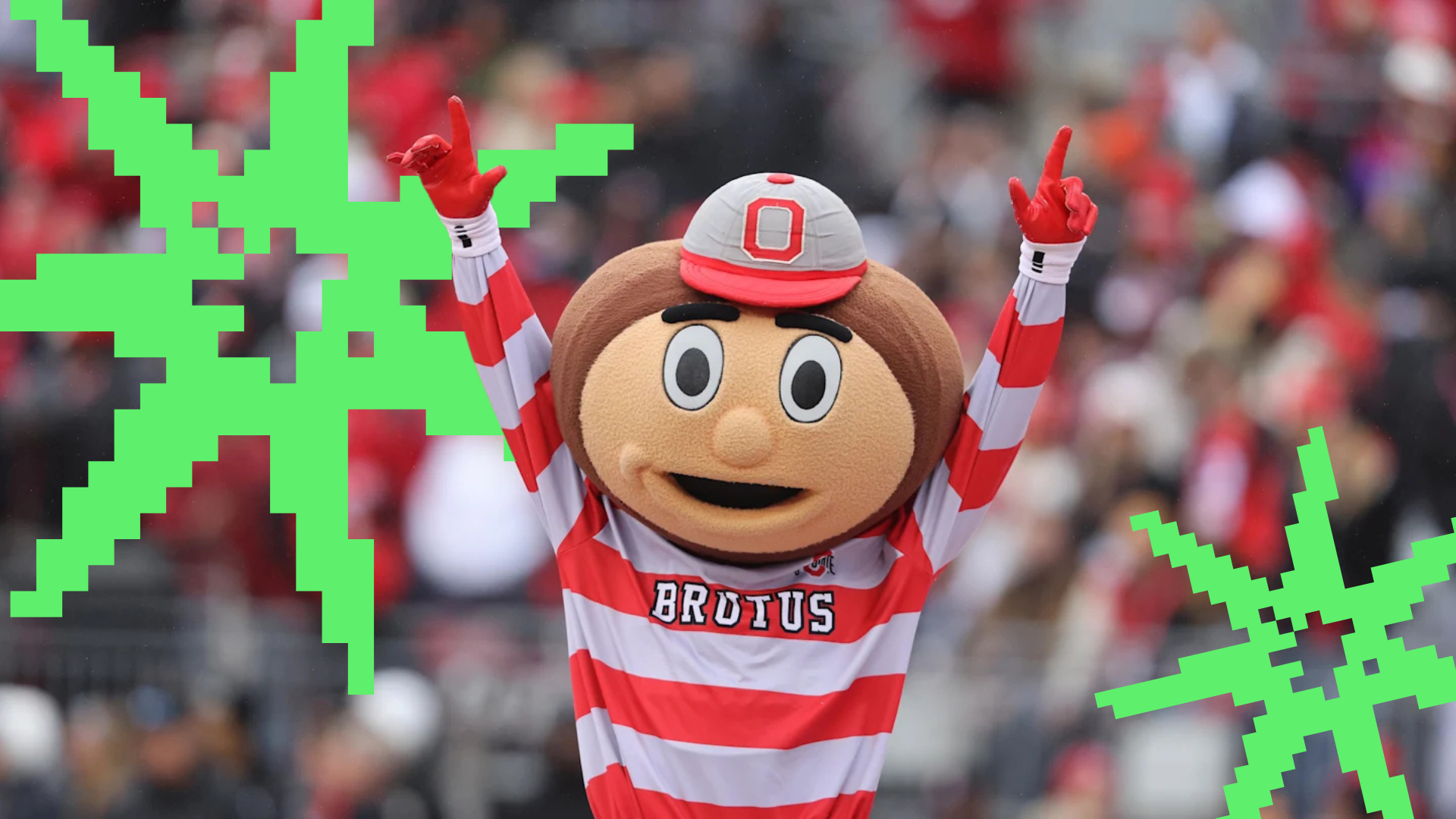
A recent carousel ranked the top 10 college football mascots by NIL earnings, and the numbers are genuinely surprising. Ohio State's Brutus Buckeye sits at the top with $130,028 earned. Minnesota's Goldy Gopher clocks in at number two with $119,605. Michigan State's Sparty rounds out the podium at $99,600. After that, Clemson's The Tiger ($95,771), South Carolina's Cocky ($84,207), NC State's Mr. & Ms. Wuf ($83,636), UNC's Rameses ($82,173), Oregon's The Duck ($76,613), Texas' Hook 'Em ($50,175), and Texas Tech's Raider Red ($49,850) fill out the list.
The spread is wild. Brutus is out here making more in NIL than some backup quarterbacks. And Raider Red, God bless him, is pulling in less than $50K while wearing a cowboy hat the size of a satellite dish. The question nobody seems to be asking: how does any of this actually work?
So... Mascots Have NIL Deals Now?
Yes. And it's not a gimmick.
When the NCAA opened the NIL floodgates in July 2021, the conversation immediately went to quarterbacks, five-star recruits, and basketball players with massive social followings. What few people anticipated was that the mascot — often a student wearing a costume that makes it physically impossible to see, hear, or breathe properly — would become a legitimate NIL earner.
Here's the thing most people don't understand: mascots at major programs are students. Real, enrolled, GPA-maintaining students who audition, train, and represent their university at hundreds of events per year. They are, by the NCAA's own definition, student-athletes — and that means they're eligible to monetize their name, image, and likeness just like anyone else on campus.
The catch? Their "name" and "image" are complicated by the fact that they spend most of their public-facing life behind a foam face. The mascot character itself — Brutus, Goldy, Sparty — belongs to the university. The student inside the costume retains their own NIL rights, but they can't exactly slap their personal brand on a deal when their identity is legally inseparable from a licensed university property.
The Multi-Mascot Problem
Here's where it gets genuinely fascinating: most of the top programs don't have one mascot performer. They have a rotation.
A program like Ohio State might have four to six students sharing Brutus duties across a given year. Football games, basketball games, volleyball matches, charity events, alumni weekends — there's no single person physically capable of doing all of it. So when Brutus inks an NIL deal, who exactly is getting paid?
That $130,028 figure attached to Brutus almost certainly represents the collective NIL earnings of all the students who have performed as Brutus, likely tracked through a collective or coordinated NIL arrangement. Some schools have formalized this through their athletic departments or NIL collectives that manage mascot-specific deals as a group. Others handle it on a per-student basis, meaning the student who performed at the most events or had the most social media visibility in a given year may have earned disproportionately more.
NC State's entry is the most transparent example of this complexity: they literally listed two mascots, Mr. & Ms. Wuf, as a combined entry at $83,636. That's two performers, two costumes, one shared NIL line item. Whether that number splits evenly, by appearance count, or some other arrangement is the kind of thing that gets figured out in a Google Doc between college students and a compliance officer.
Is This by Sport?
Technically, no — mascot NIL deals typically apply to the mascot as a university-wide character, not a sport-specific role. Brutus doesn't have separate deals for football and basketball. The character is the brand, and the student-athlete behind the character earns regardless of which sport they're showing up for.
That said, football exposure almost certainly drives the valuations. The programs dominating this list — Ohio State, Michigan State, Clemson, Oregon — are all programs with massive football audiences, saturated media coverage, and the kind of national brand recognition that makes a mascot's appearance at a product activation actually worth something. Texas' Hook 'Em mascot ranked ninth despite the Longhorns being one of the five most recognizable brands in all of college sports, which suggests that either Texas has been slow to structure mascot NIL aggressively, or the football product's recent struggles have dulled some of the commercial enthusiasm.
The discrepancy between Brutus ($130K) and Raider Red ($49K) probably has less to do with the quality of the performer and more to do with the infrastructure around them. Ohio State has one of the most sophisticated NIL ecosystems in the country. Texas Tech, despite being a passionate fanbase with strong regional loyalty, operates in a smaller media market and hasn't built the same institutional machinery around maximizing every NIL opportunity — including the one wearing the cowboy hat.
What Are the Actual Deals?
The most common mascot NIL arrangements tend to fall into a few buckets. Local and regional brand partnerships — think car dealerships, fast food chains, regional grocery stores — are the bread and butter. A mascot showing up to a grand opening, doing a social post in character (or out of costume as the student-athlete), or appearing in a local commercial is the kind of low-overhead deal that adds up fast when you're doing dozens of them per year.
Merchandise and licensing adjacency deals are trickier because the mascot character itself is university IP. But a student who is known as the Brutus performer can theoretically monetize their own personal brand — their social following, their personal appearances — in ways that trade on the association without directly using the character.
Then there are the collective-managed group deals, which are becoming more common. Some NIL collectives have started treating the mascot program like a mini-team, pooling earnings and distributing based on participation. It's not unlike a player collective deal, just with more fur and fewer Instagram followers.
The Cultural Irony Nobody's Talking About
There's something delightfully weird about the fact that in 2026, we live in a world where a person inside a giant chestnut costume can outpace a legitimate collegiate athlete in NIL earnings — at least at the median level. The average Power Four football player without a massive social following might not be pulling $130K in NIL. Brutus is.
That's not a knock on mascots. Honestly, it's a testament to how undervalued they were for so long. These students work year-round, perform in extreme physical conditions, and serve as the face of programs worth hundreds of millions of dollars — and for decades, the closest they got to compensation was a scholarship and a mention in the game program.
NIL didn't just change the game for quarterbacks. It changed the game for the person doing backflips in a 40-pound costume in 95-degree heat before a noon kickoff.
Brutus Buckeye is the highest-paid mascot in college football. He sees nothing. He hears nothing. He earns more than your starter. College football, baby. There's nothing else like it.
Trusted By Programs Across The Country