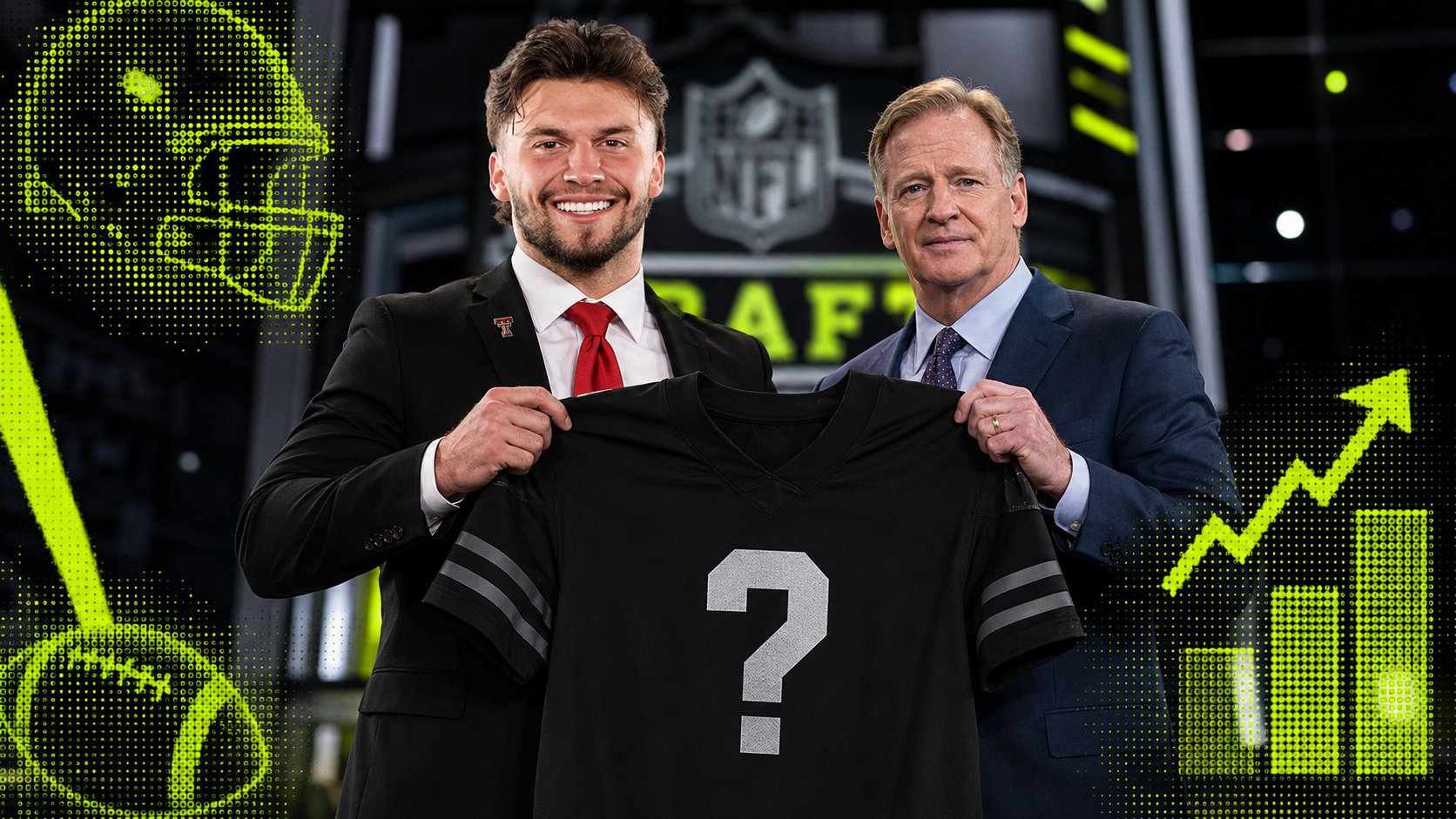
He won. That's the part that should stop you in your tracks. Seven days before he quit college football, Brendan Sorsby walked out of a Lubbock courtroom holding the one thing he'd spent a month and a small army of attorneys chasing: a 2026 season. A judge had told the NCAA to stand down. The eligibility was his. And on Monday, with the ink barely dry on that victory, Sorsby looked at everything he'd just won and pushed it back across the table, filing for the NFL's supplemental draft instead.
If that sounds like a man folding a winning hand, well, that's the cruel poetry of it. Sorsby's entire saga started with bets, and it's ending with the smartest fold of his life.
The week that blew up a college career
To understand why a quarterback would abandon a season he'd literally sued to keep, you have to rewind the tape. The trouble surfaced in March, when law enforcement tipped a sportsbook and the NCAA caught the scent. By April, the organization had looped in Texas Tech. Sorsby admitted to a gambling addiction, checked into a 35-day inpatient program at the Algamus facility in Arizona, and was subsequently ruled permanently ineligible after acknowledging he'd wagered roughly $90,000 on pro and college sports across four years — including 40 bets touching Indiana football back when he was a freshman Hoosier in 2022.
That last detail is the one that turned a personal health story into a national lightning rod: betting on games involving your own program is the third rail of college athletics, and everyone in the sport knew it.
Sorsby didn't go quietly. He lawyered up — and not with just anybody. His lead attorney was Jeffrey Kessler, the litigator whose fingerprints are all over the House v. NCAA settlement, the man who has spent years prying open the NCAA's grip. Kessler reframed the case as a mental-health and addiction matter, arguing the NCAA was obligated to support Sorsby rather than bury him, and pointing out the rich irony of a governing body that polices gambling while profiting from its sponsorship ecosystem. On June 9, it worked. Judge Ken Curry granted a preliminary injunction, ruling Sorsby would suffer "probable, imminent and irreparable injury" without the chance to play. The terms: sit the first two games against Abilene Christian and Oregon State, keep up his treatment, and suit up for the Big 12 opener against Houston on September 18.
For about a week, Sorsby was the most controversial eligible quarterback in America. Then Monday happened.
Why he folded
Monday was the haymaker. In the span of a single day, two separate legal grenades landed at Sorsby's feet, and together they made his hard-won eligibility look about as stable as a house of cards in a wind tunnel.
First, the Big 12 filed suit in federal court in Dallas, seeking a ruling that would let the conference sanction Texas Tech if it actually played Sorsby in 2026. The filing reportedly named Texas Attorney General Ken Paxton and Tech's leadership, and the conference's board didn't mince words, framing the whole thing around protecting competitive integrity and stating plainly that schools shouldn't field players who've bet on their own team's games. Translation: the league was prepared to punish the program for the player's presence.
Second, the NCAA appealed the injunction, asking an Amarillo appeals court to stay the ruling and resolve the matter by late August — conveniently ahead of Tech's September 5 opener. Either move could have yanked the rug out from under Sorsby before he ever took a snap.
Now stack the pressures. Reporting suggested Texas Tech itself was getting wobbly under the conference's legal assault, weighing whether keeping the peace with the Big 12 long-term was worth the war. If the Red Raiders blinked and chose not to play him anyway, Sorsby's whole legal crusade would have bought him a clipboard. Add the relentless criticism from coaches and athletic directors around the country — "disgusted" and "stunned" were the words flying around — and the season ahead looked less like a victory lap and more like a gauntlet.
And there was a clock ticking: a June 22 deadline to apply for the supplemental draft. Faced with a season that might evaporate, a school losing its nerve, and a fanbase ready to boo every road stadium in the conference, Sorsby made the call NFL Network's Tom Pelissero and ESPN's Pete Thamel both confirmed — he's headed for the pros. Sometimes the most prudent play is to take your chips and leave the casino.
The résumé that makes this worth a headline
Here's the thing that separates Sorsby from your average supplemental-draft footnote: the football was never the problem. This isn't a fringe prospect grasping for a side door into the league. When he hit the transfer portal last winter, he was rated the No. 1 quarterback available by ESPN and sat near the top of every major board, courted by basically every Power Four program in need of a passer, Lane Kiffin's LSU among them.
The production backs it up. Across four years at Indiana and Cincinnati, Sorsby completed better than 61 percent of his throws for 7,208 yards and 60 touchdowns against just 18 interceptions, while adding 1,295 yards and 22 scores on the ground. He's a genuine dual threat at 6-foot-3 and 235 pounds — the kind of build NFL evaluators dream on. His 2025 campaign at Cincinnati was his loudest yet: 27 passing touchdowns, nine more rushing, 36 total scores that ranked among the nation's best, plus a surreal afternoon against Northwestern State where he went a flawless 15-for-15 with six touchdowns. He earned second-team All-Big 12 honors and looked, by most accounts, like a future Day 1 or Day 2 pick.
The talent is undeniable. The questions, as one scouting report bluntly put it, are almost entirely about what happens off the field — whether NFL front offices believe the leadership and accountability are there after everything that's unfolded.
So what even is the supplemental draft?
Fair question, because the NFL barely uses it anymore. The supplemental draft exists for players who lose their college eligibility after the regular draft has already come and gone — a relief valve, basically. It runs on a bidding system: teams forfeit a corresponding pick in the following year's draft to claim a player. It debuted in 1977 and has produced a few legitimate names — Hall of Fame receiver Cris Carter, quarterback Bernie Kosar, the supremely gifted and troubled Josh Gordon, and linebacker Ahmad Brooks all came through it.
But it's been gathering dust. The last supplemental draft, in 2023, saw exactly zero players selected. You have to go back to 2019, when Arizona spent a fifth-rounder on safety Jalen Thompson, for the most recent actual pick. Pelissero floated that Sorsby "could be the highest-drafted supplemental pick in decades," which tells you how unusual a prospect of this caliber landing here truly is. The NFL, for its part, declined to comment on the application.
The looming wrinkle is precedent. In 2011, Ohio State's Terrelle Pryor entered the supplemental draft on the heels of a five-game NCAA suspension — and the NFL turned around and slapped him with a five-game suspension of its own. Don't be shocked if the league weighs something similar here, given how Sorsby arrived at its doorstep.
The bigger picture
Zoom out and Sorsby's exit is a flare shot over a sport that's lost the plot on its own rulebook. College football has spent three years getting steamrolled in courtrooms — NIL, the portal, the House settlement, and now a gambling case where a permanently ineligible quarterback briefly out-lawyered the NCAA. The injunction win, however short-lived, was a reminder that "the rules" in college sports are increasingly whatever a judge decides on a given Monday.
It's also a snapshot of the gambling era the NCAA helped build and now can't control. The same institution that cashes sponsorship checks from betting partners drew its hardest line over an athlete who developed a betting problem. Whatever you think of Sorsby's choices, that tension isn't going anywhere, and he won't be the last name caught in it.
For Cincinnati, the chaos has a tidy footnote: the Bearcats are reportedly suing their former quarterback over a $1 million NIL exit fee from his Texas Tech transfer. Even his goodbyes come with litigation.
So Brendan Sorsby moves on — from Bloomington to Cincinnati to a Lubbock courtroom to, improbably, an NFL draft mechanism most fans forgot existed. He won the legal fight and walked away anyway, because winning the battle wasn't the same as winning the war. In a sport that can't stop suing itself, the most college-football thing imaginable was a quarterback realizing the only way to actually play football was to leave college entirely. Cash out while you're ahead. Sometimes that's the whole game.

Trusted By Programs Across The Country