You could write a movie about college football's perpetual identity crisis, and the Brendan Sorsby saga would make for a hell of an opening act. Last week, a Texas state judge handed down a ruling that made the internet go sideways, blocked the NCAA's enforcement arm cold, and put one of the most talented quarterbacks in college football right back on the field for the Red Raiders. If you thought the NCAA's grip on player eligibility was ironclad, Lubbock County Judge Ken Curry had something to say about that.
How We Got Here
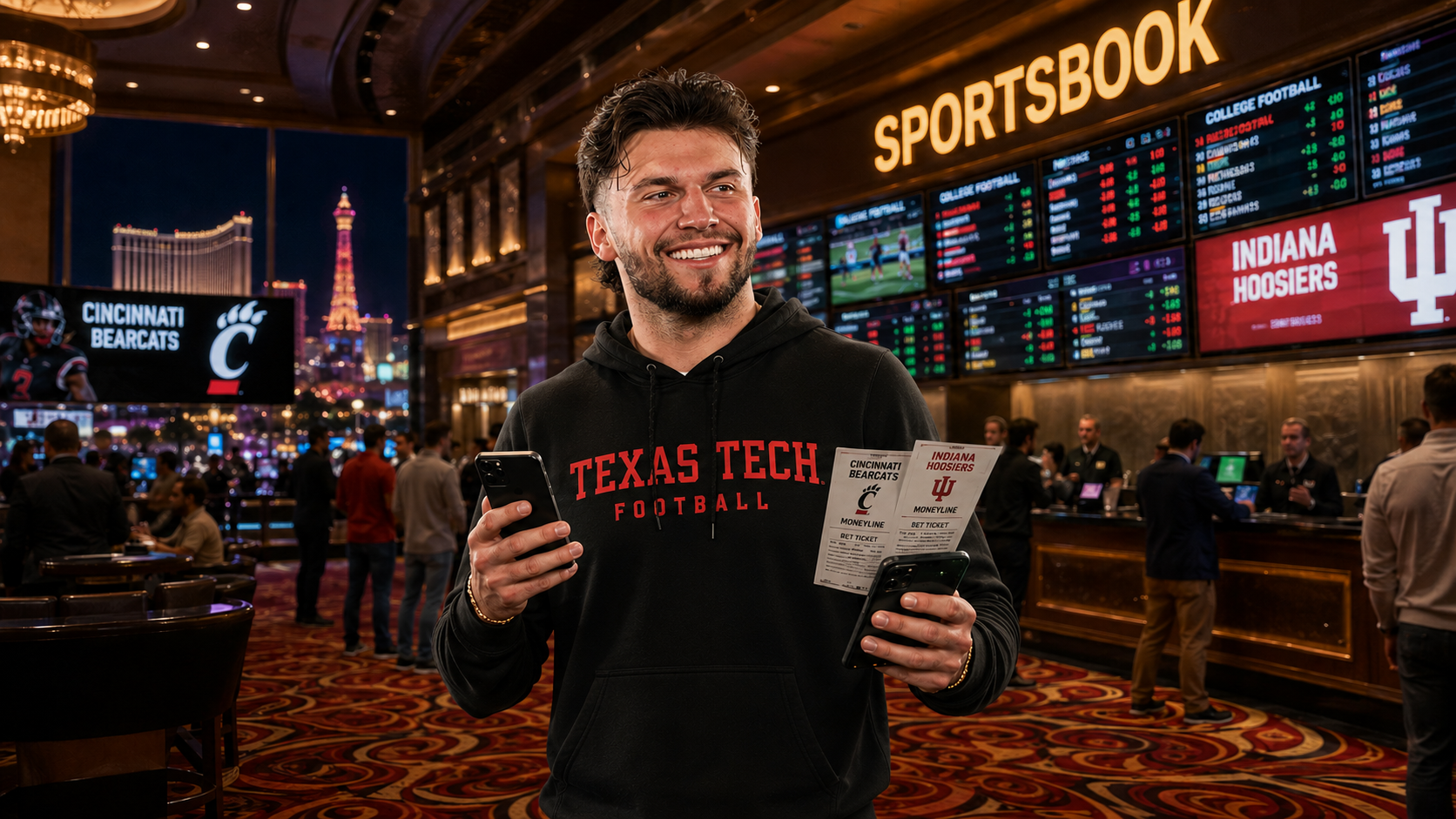
Sorsby didn't land on the NCAA's radar by accident. During his time as a redshirt freshman at Indiana, he placed approximately 40 wagers on Hoosier football games — a clear violation of NCAA Bylaw 12.9. The investigation widened from there, ultimately uncovering roughly $90,000 in bets placed over four years spanning his time at Indiana, Cincinnati, and Texas Tech. The NCAA declared him ineligible, case closed.
Except it wasn't. Sorsby lawyered up, took the fight to a Texas court, and argued that the NCAA's enforcement action would cause "probable, imminent and irreparable injury" — legalese for "don't bench me." Judge Curry agreed. And unlike so many skirmishes between players and the governing body that end in quiet settlements or appeals-court dead ends, this one went all the way to a full injunction, with conditions, in writing, before the season started.
The Ruling
Judge Curry's order reads with the kind of clarity that tends to make governing bodies nervous. The NCAA is enjoined — that's a legal word for "you don't get to do this anymore" — from prohibiting Sorsby from practicing, playing, or otherwise participating on Texas Tech's football team for the 2026 season. But the second provision is the sleeper clause in this whole thing: the court also blocked the NCAA from enforcing its Bylaw 12.9.4.2 — the Rule of Restitution — against Sorsby, Texas Tech, any Texas Tech affiliate, or any university that competes against Texas Tech during the 2026 season for complying with the order.
That's a bigger deal than it sounds. The Rule of Restitution is historically the NCAA's most powerful deterrent — the provision that allows it to retroactively punish teams and players who relied on court injunctions that were later overturned. Schools have hesitated to play ineligible-by-NCAA-standards athletes precisely because of that hammer. Curry's ruling yanks it off the table entirely. Every program on Texas Tech's 2026 schedule can take the field without worrying about forfeiting wins because Sorsby was suiting up. The injunction doesn't just protect Sorsby — it protects everyone around him.
That said, Sorsby isn't walking away clean. As conditions of the injunction, he'll miss Texas Tech's first two games. He's required to attend individual and group treatment for addiction and an anxiety disorder. He must submit monthly compliance reports to the NCAA throughout the season. Whatever freedom the court extended comes with real accountability attached — this isn't a blank check, it's a structured second chance.
Who Is Brendan Sorsby
Here's the thing about all the courtroom drama: it's easy to forget how good this quarterback actually is. Sorsby wasn't just any portal name entering 2026 — he was the portal name. Coming off a monster 2025 campaign at Cincinnati, he threw for 2,800 yards and 27 touchdowns against just five interceptions, while adding 580 rushing yards and nine scores on the ground. He earned All-Big 12 second team honors and positioned himself as the unquestioned top-rated signal caller in the transfer market. At 207-of-336 passing, the efficiency numbers back up the highlight reel. The guy can throw, can run, and — as it turns out — can litigate.
Texas Tech didn't stumble into this deal. The Red Raiders beat out NFL interest and blue-blood programs to land Sorsby on January 4, 2026, with reports putting the final contract north of $5 million. That number reflects not just his arm talent but his dual-threat upside — the kind of versatility that turns two-dimensional defenses into rubble and makes offensive coordinators sleep soundly. In a Big 12 that's increasingly decided by quarterback play, Joey McGuire found his missing piece. The eligibility drama nearly ripped it away.
The Turning Point
If there's a single defining moment in this saga, it's the breadth of Curry's order. Injunctions in college sports are fairly common at this point — the NCAA has been taking Ls in courtrooms since the House settlement started reshaping the sport's economic reality. But this one went further than simply saying "let him play." By explicitly blocking the Rule of Restitution from being used against Texas Tech and its scheduling opponents, Curry essentially removed the NCAA's most powerful deterrent against courts even granting these kinds of orders.
That's a meaningful shift in power. For years, the NCAA's enforcement machinery ran partly on fear — the fear that even if a player won an injunction today, the organization could come back tomorrow and unwind everything. That fear is now, at least in Texas, significantly diminished. Whatever appeal the NCAA files — and it has filed one, described as "accelerated" — the 2026 season will almost certainly be over before any appellate resolution. Sorsby plays. That's the bottom line.
Stats That Matter
- $90,000 in total bets placed over four years at Indiana, Cincinnati, and Texas Tech
- 40 bets placed specifically on Indiana football games during his freshman year
- 2,800 passing yards, 27 touchdowns, 5 interceptions in 2025 at Cincinnati
- 580 rushing yards and 9 rushing touchdowns in 2025
- $5M+ NIL deal to join Texas Tech in January 2026
- 2 games missed as a condition of the injunction
- 7 conditions total imposed by Judge Curry, including monthly compliance reports
What It Means
There are a few threads worth pulling from this ruling. First, the NCAA's authority over eligibility is eroding — and fast. Between the House settlement, the NIL transformation, and courts routinely siding with players over the governing body, college football is operating in a genuinely new legal landscape. Each injunction granted is another chip off the wall. The organization that once held absolute power over who played and who didn't is now regularly overruled by judges who look at the facts and find the balance of hardships tips toward the athlete.
Second, Sorsby's situation shines a light on one of college football's most glaring contradictions. The sport has embraced sports betting at every level — broadcast integrations, stadium advertising, broadcast partner tie-ins — while the NCAA still flags players for participating in the same activity it profits adjacent to. That's not a defense of what Sorsby did; betting on your own school's games crosses a clear ethical line. But the cognitive dissonance of an institution collecting money from gambling-adjacent sponsorships while banning athletes for personal gambling is a tension that isn't going away.
Third, and most practically: Texas Tech has its quarterback. Despite missing the first two games, Sorsby will be available for the stretch of the Big 12 schedule that defines seasons. In a conference where the margin between contender and also-ran is razor thin, having a dual-threat starter capable of 2,800 yards and 36 combined touchdowns is the difference. McGuire built this offense around Sorsby. Now Sorsby gets to play in it.
Closing Take
There's an old football expression: you can't stop a great player, you can only hope to contain him. That applies to edge rushers, elite receivers — and, apparently, quarterbacks with a legal team. The NCAA tried to sideline Brendan Sorsby, and a Texas judge looked at the evidence, weighed the harm, and said no. Not just no to the ban, but no to every mechanism the NCAA might use to make the ban stick anyway.
Texas Tech paid $5 million for a quarterback who was supposed to be the missing piece. As it turns out, they didn't just get a dual-threat signal caller. They got one who fights back. When the Red Raiders finally line up for Week 3 with Sorsby under center, it'll be with something to prove — to the Big 12, to the NFL scouts tracking his progress, and maybe just a little bit, to the organization that tried to take the season from him. Good luck containing that.

Trusted By Programs Across The Country