The Factory Is Open: How College Football's Elite Programs Are Owning the 2026 NFL Draft
Alabama's 18-year streak headlines a staggering night of production from the sport's powerhouse programs in Pittsburgh.
There's a reason they call it a factory. Every April, the same programs line up at the front of the room, hand their product to Roger Goodell, and walk away with proof that college football's power structure isn't just talk — it's a pipeline. The 2026 NFL Draft in Pittsburgh delivered one of the most striking illustrations of that reality in recent memory, as schools from Alabama to Ohio State, Georgia to Oregon, wrote their names across the first round in bold letters. The stat buried in the graphic is more compelling than almost anything else on draft night: consecutive years with a first-round pick by school. When you lay it all out, it reads like a leaderboard for college football's elite — and a humbling reminder of what it takes to sustain that level of production.
The Top of the Mountain: Alabama's 18 Years
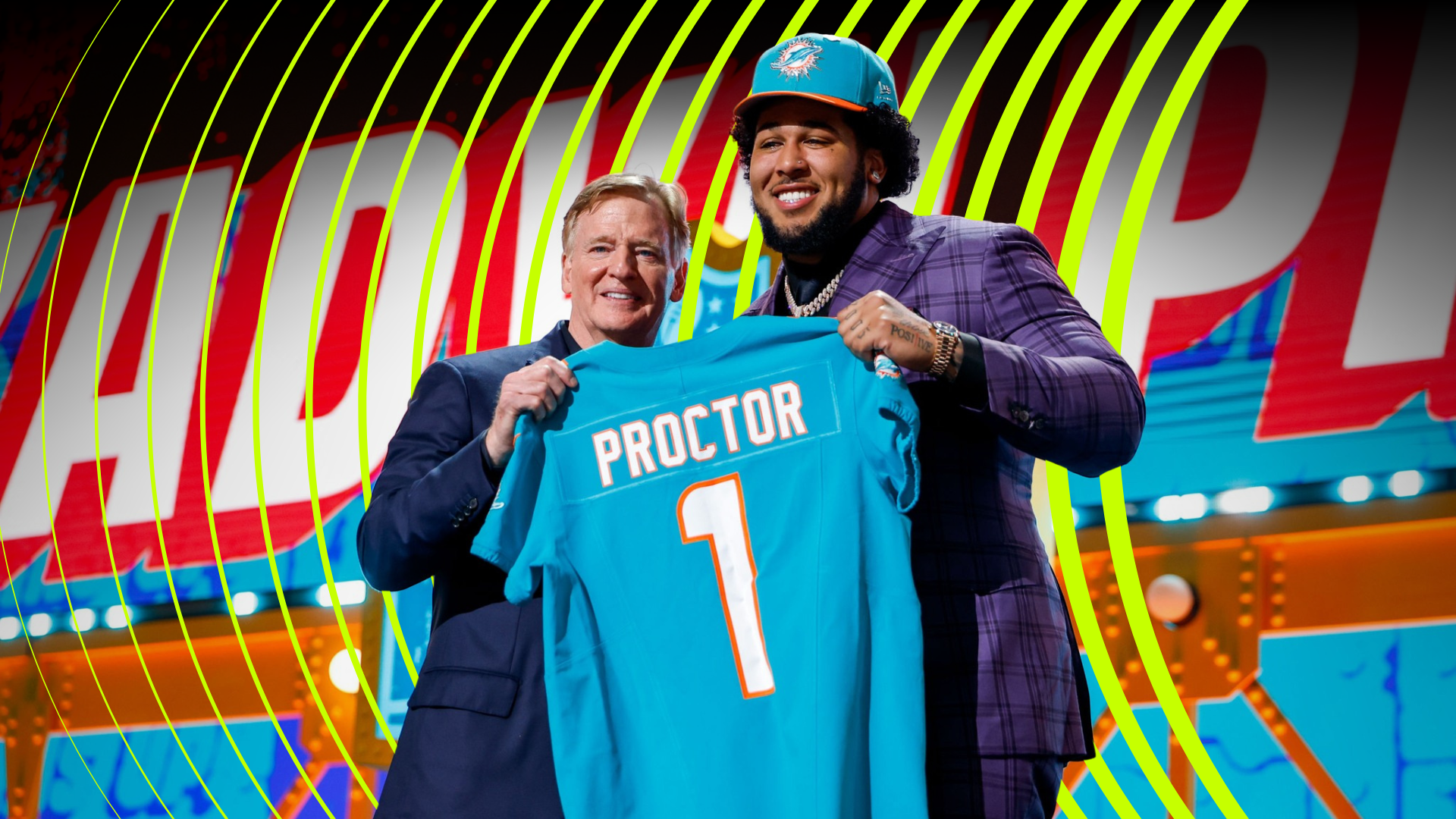
Let's start at the top, because Alabama's number is almost disrespectful to everyone else. With Kadyn Proctor going to the Miami Dolphins in the first round of the 2026 draft, the Crimson Tide extended their consecutive first-round pick streak to 18 years. Eighteen. That's nearly two full decades of uninterrupted first-round production — a run that has outlasted coaching staffs, conference alignments, and entire eras of college football. To put it in perspective, the last time Alabama didn't have a first-round pick, most current NFL rookies were still playing youth football. Nick Saban built something in Tuscaloosa that transcended individual players, and even in the post-Saban era, the machine keeps churning. Proctor, the offensive tackle who made the rounds through the transfer portal before landing in Miami, is the latest in an almost comically long line of Tide products to hear their name called on night one.
Ohio State: 11 Years and Counting
If Alabama is the gold standard, Ohio State is firmly entrenched as the silver. Wide receiver Carnell Tate, selected by the Tennessee Titans with the fourth overall pick, extended the Buckeyes' streak to 11 consecutive years with a first-round selection. Eleven years is not a fluke — it's a program identity. Ohio State has become the most reliable NFL factory in the Big Ten, a place where elite recruits know they'll get the spotlight, the development, and ultimately the draft stock to justify the hype. Tate going fourth overall is exactly the kind of validation OSU fans have come to expect. A rangy outside receiver with exceptional hands, he's the type of weapon offensive coordinators dream about, and his selection validates a wide receiver room in Columbus that has quietly become one of the best developmental programs in the sport.
Georgia: 9 Consecutive Years
Kirby Smart's Bulldogs didn't get the top-five pick, but Monroe Freeling's selection — an offensive tackle out of Georgia making his debut in the professional ranks — kept the streak alive at nine straight years with a first-round pick. Georgia's run is particularly impressive because it's been built on both sides of the ball, with the defensive production that powered back-to-back national championships now giving way to a new wave of offensive linemen and skill players graduating to Sundays. Freeling walked out to a crowd of screaming Georgia fans holding his name signs when his pick was announced, and it captured something real: Athens has become a place where the NFL is treated as a natural destination, not a dream.
Oregon: 7 Years, No Jersey Needed
The New York Jets' seventh first-round pick in as many years out of Oregon didn't walk across the stage in Pittsburgh clutching a jersey — just a quiet smile under a pair of oversized glasses and a fresh Jets hat. That image somehow captured exactly what Oregon's rise has represented: understated excellence. The Ducks have transformed into a legitimate NFL pipeline under the Pac-12 and now Big Ten banner, and seven consecutive first-round selections is the receipts. Oregon isn't just producing players anymore; it's producing first-round talent year after year, which means the recruiting narrative has fundamentally shifted in Eugene.
LSU and Penn State: 3 Years Together
Mansoor Delane's path to the Kansas City Chiefs ran through two different programs — LSU and Penn State — and the stat line on his graphic reflected that dual-school contribution. Both programs are now credited with maintaining three consecutive years of first-round production. LSU's ability to develop defensive backs into first-round commodities has become almost legendary, while Penn State's current run reflects James Franklin's ability to recruit and develop at an elite level. Delane is considered by many analysts to be the safest cornerback in the 2026 class, and his selection in the top ten is a testament to what the SEC and Big Ten can produce at the position.
Miami and Texas A&M: 2 Years
Francis Mauigoa, the massive offensive tackle who showed up to the draft stage in Pittsburgh wearing a traditional lei — a nod to his Polynesian heritage that brought one of the night's most electric moments — extended both Miami and Texas A&M's streaks to two consecutive years with first-round picks. Mauigoa transferred between the programs during his college career, meaning both schools share a piece of the credit. The New York Giants, who used multiple first-round picks on the offensive and defensive lines, got arguably their best value of the night with the decorated lineman. Two years isn't a dynasty, but for programs looking to establish themselves as consistent NFL feeders, building back-to-back first-round credibility is the foundation everything else gets built on.
The Wildcard: Jeremiyah Love's 12-School Recruitment
And then there's Jeremiyah Love — and his draft graphic might be the most chaotic thing produced in Pittsburgh all week. The caption listed over a dozen schools that had offered the Notre Dame running back at some point in his recruitment: Indiana, Notre Dame, Texas Tech, USC, UCF, Georgia Tech, San Diego State, Florida, Arizona State, Clemson, Auburn, and Utah. All of those programs get credited with exactly one year of consecutive first-round picks, because Love went to Notre Dame and stayed there. The point isn't to mock those schools — it's to illustrate how the recruiting process works in the modern era, where a player like Love, who won the Doak Walker Award and finished third in Heisman voting, drew interest from nearly every corner of the sport before settling in South Bend.
Love's selection by the Arizona Cardinals at No. 3 overall — the highest running back taken since Saquon Barkley went second to the Giants in 2018 — was the signature moment of the first round. He ran for 1,372 yards and 18 touchdowns in his final season at Notre Dame, averaged 6.9 yards per carry in back-to-back years, and did it all while carrying a limited workload that kept his mileage low heading into the pros. The Cardinals' decision to take him with a premium pick raised eyebrows in some corners, but the counterargument is simple: when the best player available happens to play the most fun position in football, you don't overthink it. Love's combination of speed, vision, and receiving ability out of the backfield drew comparisons to Barkley and Bijan Robinson from scouts, and at 6-foot, 212 pounds, he has the frame to absorb the punishment of an NFL workload.
What It All Means
What the consecutive-years graphic really tells us is that college football's hierarchy is real and it compounds over time. Alabama doesn't have 18 straight first-round picks because of luck — it's because of recruiting infrastructure, coaching development, and an institutional commitment to producing NFL-ready talent that most programs simply cannot match. Ohio State, Georgia, and Oregon are building toward the same permanence. The programs with one or two years on the board are fighting to establish it.
The 2026 draft class gave us stars in Jeremiyah Love, Carnell Tate, and David Bailey — a trio of difference-makers who will immediately command attention on Sundays. But the larger story is about the schools that made them. The pipeline is real, the production is consistent, and every April, Pittsburgh or Green Bay or Detroit or wherever the draft lands becomes a showcase for who's actually doing the work when the cameras aren't rolling. This year, the answer was the same as it's been for nearly two decades: Alabama, Ohio State, Georgia — and a growing list of programs determined to join them at the table.

Trusted By Programs Across The Country