
Edrees Farooq went down on a routine rep, no contact within five yards of him, and by the time trainers reached midfield at Anderson Training Center everybody already knew. A safety who tied for second in the SEC in forced fumbles a year ago was carted off, loaded into an ambulance, and driven away for further evaluation on what turned out to be a torn patellar tendon. Season over. Three weeks before Tennessee's opener against Furman, Josh Heupel's secondary just lost its best player to an injury nobody saw coming and nobody could've stopped.
The play, and the diagnosis that followed
Farooq's tendon tear happened during a preseason practice this week at Tennessee's facility, the kind of non-contact, freak-of-nature injury that's become a grim theme of fall camp nationally in 2026. He was carted off and transported by ambulance for imaging, and within a day the school confirmed what the sideline reaction had already suggested: he's done for the year. No redshirt scenario, no "week-to-week" hedge. Torn patellar tendons in football don't come with optimistic timelines, and Tennessee's medical staff didn't pretend otherwise.
It's the kind of injury that reads as a footnote in an August box score and actually reshapes a defense. Farooq wasn't a rotational piece. He was QB1 of the back end — the guy defensive coordinator Jim Knowles had quietly been raving about since spring ball, when Farooq picked off a scrimmage throw and returned it for a touchdown, then did it again in fall camp for good measure. Knowles, who built his reputation turning safeties into chess pieces at Oklahoma State and Ohio State, doesn't hand out praise for free. His read on Farooq entering this year: "Really liked what Edrees did. Didn't know that much about him. Liked what he did." That's about as effusive as Knowles gets in August, and it's exactly the kind of endorsement that makes this loss sting more than the stat line suggests.
Who Farooq actually was on this defense
Strip away the box score and Farooq's 2025 season tells you why Knowles trusted him with a hybrid role in a scheme that leans on three-safety packages more than almost anybody in the country. Thirteen starts. Seventy-six tackles, tied for third on the team. Two interceptions, three pass breakups, and four forced fumbles — a number that tied for second in the entire SEC and sixth nationally among all FBS players. Forced fumbles aren't a hustle stat. They're a disruption stat, the residue of a defender who shows up in run support with bad intentions and closes on the ball instead of just the man carrying it. That's the exact skill set Knowles needs from the safety spot in a scheme built to confuse quarterbacks with rotating coverage shells, and it's not a skill set that's easy to replace on three weeks' notice.
The Maryland native was one of the layers Tennessee had actually stacked at the position — the reason Farooq's injury matters more than a typical camp casualty is that it's not an isolated one. Cornerback Jadais Richard is also dealing with an upper-body injury, and linebacker Jaedon Harmon tore his ACL in a separate camp incident, meaning Heupel has now watched three defensive starters or projected contributors go down within roughly the same stretch of August. That's not bad luck as a talking point. That's a program having to rebuild a defensive identity on the fly, three weeks before it plays a game that counts.
The turning point: who fills the void, and why it's not simple
Tennessee's answer, at least on paper, is built-in. Penn State transfer Dejuan Lane, who has previous ties to Knowles' scheme, is the presumptive replacement at strong safety — a portal move that now looks less like a luxury and more like a necessity. Michigan transfer T.J. Metcalf holds down free safety, giving the back end at least two players with proven Power Four snaps even with Farooq out. Sophomore Dylan Lewis, who impressed enough in spring practice to be in the mix regardless, rounds out the competition.
The turning point here isn't really the injury itself — camp injuries happen everywhere, every August, to every roster in the country. The turning point is what it forces Knowles to decide in real time: does he simplify the defense to get less experienced or newly-inserted pieces playing fast and clean, or does he keep the multiple-safety, disguise-heavy answers he's built his career on and live with the growing pains of newcomers learning it live? Knowles has never been a coordinator who dumbs things down. That's both the promise and the risk here — Tennessee is banking on transfer continuity and scheme trust holding up against SEC receivers in September, with the guy who was supposed to be the steadying presence in street clothes.
What it means for a Tennessee team already threading a needle
Context matters here, and Tennessee's is complicated. This isn't a rebuilding program that can absorb a loss like this quietly — it's a team that enters 2026 ranked No. 18 nationally, carrying real if modest Playoff buzz (+380 to make the field, per oddsmakers) off the back of returning eight starters from the SEC's highest-scoring offense in 2025. But that offensive continuity is exactly why the defense was supposed to be the swing variable. Tennessee is handing the keys at quarterback to true freshman five-star Faizon Brandon, the No. 9 overall recruit in the 2026 class, after Joey Aguilar's tenure ended with a 30-28 bowl loss to Illinois that summed up a lot of what went wrong last season. A true freshman quarterback needs a defense that can bail him out on his bad Saturdays. Instead, that defense just lost the player who was supposed to be its most disruptive answer at the position that determines whether big plays become long touchdowns or just first downs.
None of this happens in a vacuum, either. Alabama comes to Neyland on October 17 for the Third Saturday in October rivalry game, Auburn brings former Vols offensive coordinator Alex Golesh back to Rocky Top, and Florida is on the docket as always. Those are the games Tennessee's Playoff math actually hinges on, and they're also exactly the games where losing your best safety to a non-contact injury in August starts to look less like bad luck and more like a real crack in the foundation. DeSean Bishop, the walk-on-turned-All-SEC running back who topped 1,000 yards and scored 16 touchdowns last year, gives Heupel's offense a floor. The defense, as of this week, doesn't have one of those anymore at safety.
The bigger picture: fall camp attrition as a 2026 storyline
Zoom out and Farooq's injury is one data point in what's shaping up to be an unusually brutal August across the sport — USC lost starting center Kilian O'Connor to a season-ending knee injury in a non-contact drill, Clemson has already ruled out a starting safety for the year, Florida State lost a corner to a torn ACL, and multiple Power Four programs are quietly rewriting their two-deeps before Labor Day even arrives. Whether that's a real trend or just the kind of pattern-matching that happens whenever three or four high-profile names go down in the same window is a fair debate. What isn't debatable is that Tennessee, specifically, now has to answer a question in September that it thought it had already answered in April: who is the closer on the back end of this defense?
Knowles built his reputation finding those answers under worse circumstances than this. But "trust the process" reads a lot better in July than it does three weeks before Furman comes to Neyland Stadium and the games start actually mattering. Tennessee's floor is still higher than most SEC rosters. Its ceiling, for now, got a little further away.
Edrees Farooq went down on a routine rep, no contact within five yards of him, and by the time trainers reached midfield at Anderson Training Center everybody already knew. A safety who tied for second in the SEC in forced fumbles a year ago was carted off, loaded into an ambulance, and driven away for further evaluation on what turned out to be a torn patellar tendon. Season over. Three weeks before Tennessee's opener against Furman, Josh Heupel's secondary just lost its best player to an injury nobody saw coming and nobody could've stopped.
The play, and the diagnosis that followed
Farooq's tendon tear happened during a preseason practice this week at Tennessee's facility, the kind of non-contact, freak-of-nature injury that's become a grim theme of fall camp nationally in 2026. He was carted off and transported by ambulance for imaging, and within a day the school confirmed what the sideline reaction had already suggested: he's done for the year. No redshirt scenario, no "week-to-week" hedge. Torn patellar tendons in football don't come with optimistic timelines, and Tennessee's medical staff didn't pretend otherwise.
It's the kind of injury that reads as a footnote in an August box score and actually reshapes a defense. Farooq wasn't a rotational piece. He was QB1 of the back end — the guy defensive coordinator Jim Knowles had quietly been raving about since spring ball, when Farooq picked off a scrimmage throw and returned it for a touchdown, then did it again in fall camp for good measure. Knowles, who built his reputation turning safeties into chess pieces at Oklahoma State and Ohio State, doesn't hand out praise for free. His read on Farooq entering this year: "Really liked what Edrees did. Didn't know that much about him. Liked what he did." That's about as effusive as Knowles gets in August, and it's exactly the kind of endorsement that makes this loss sting more than the stat line suggests.
Who Farooq actually was on this defense
Strip away the box score and Farooq's 2025 season tells you why Knowles trusted him with a hybrid role in a scheme that leans on three-safety packages more than almost anybody in the country. Thirteen starts. Seventy-six tackles, tied for third on the team. Two interceptions, three pass breakups, and four forced fumbles — a number that tied for second in the entire SEC and sixth nationally among all FBS players. Forced fumbles aren't a hustle stat. They're a disruption stat, the residue of a defender who shows up in run support with bad intentions and closes on the ball instead of just the man carrying it. That's the exact skill set Knowles needs from the safety spot in a scheme built to confuse quarterbacks with rotating coverage shells, and it's not a skill set that's easy to replace on three weeks' notice.
The Maryland native was one of the layers Tennessee had actually stacked at the position — the reason Farooq's injury matters more than a typical camp casualty is that it's not an isolated one. Cornerback Jadais Richard is also dealing with an upper-body injury, and linebacker Jaedon Harmon tore his ACL in a separate camp incident, meaning Heupel has now watched three defensive starters or projected contributors go down within roughly the same stretch of August. That's not bad luck as a talking point. That's a program having to rebuild a defensive identity on the fly, three weeks before it plays a game that counts.
The turning point: who fills the void, and why it's not simple
Tennessee's answer, at least on paper, is built-in. Penn State transfer Dejuan Lane, who has previous ties to Knowles' scheme, is the presumptive replacement at strong safety — a portal move that now looks less like a luxury and more like a necessity. Michigan transfer T.J. Metcalf holds down free safety, giving the back end at least two players with proven Power Four snaps even with Farooq out. Sophomore Dylan Lewis, who impressed enough in spring practice to be in the mix regardless, rounds out the competition.
The turning point here isn't really the injury itself — camp injuries happen everywhere, every August, to every roster in the country. The turning point is what it forces Knowles to decide in real time: does he simplify the defense to get less experienced or newly-inserted pieces playing fast and clean, or does he keep the multiple-safety, disguise-heavy answers he's built his career on and live with the growing pains of newcomers learning it live? Knowles has never been a coordinator who dumbs things down. That's both the promise and the risk here — Tennessee is banking on transfer continuity and scheme trust holding up against SEC receivers in September, with the guy who was supposed to be the steadying presence in street clothes.
What it means for a Tennessee team already threading a needle
Context matters here, and Tennessee's is complicated. This isn't a rebuilding program that can absorb a loss like this quietly — it's a team that enters 2026 ranked No. 18 nationally, carrying real if modest Playoff buzz (+380 to make the field, per oddsmakers) off the back of returning eight starters from the SEC's highest-scoring offense in 2025. But that offensive continuity is exactly why the defense was supposed to be the swing variable. Tennessee is handing the keys at quarterback to true freshman five-star Faizon Brandon, the No. 9 overall recruit in the 2026 class, after Joey Aguilar's tenure ended with a 30-28 bowl loss to Illinois that summed up a lot of what went wrong last season. A true freshman quarterback needs a defense that can bail him out on his bad Saturdays. Instead, that defense just lost the player who was supposed to be its most disruptive answer at the position that determines whether big plays become long touchdowns or just first downs.
None of this happens in a vacuum, either. Alabama comes to Neyland on October 17 for the Third Saturday in October rivalry game, Auburn brings former Vols offensive coordinator Alex Golesh back to Rocky Top, and Florida is on the docket as always. Those are the games Tennessee's Playoff math actually hinges on, and they're also exactly the games where losing your best safety to a non-contact injury in August starts to look less like bad luck and more like a real crack in the foundation. DeSean Bishop, the walk-on-turned-All-SEC running back who topped 1,000 yards and scored 16 touchdowns last year, gives Heupel's offense a floor. The defense, as of this week, doesn't have one of those anymore at safety.
The bigger picture: fall camp attrition as a 2026 storyline
Zoom out and Farooq's injury is one data point in what's shaping up to be an unusually brutal August across the sport — USC lost starting center Kilian O'Connor to a season-ending knee injury in a non-contact drill, Clemson has already ruled out a starting safety for the year, Florida State lost a corner to a torn ACL, and multiple Power Four programs are quietly rewriting their two-deeps before Labor Day even arrives. Whether that's a real trend or just the kind of pattern-matching that happens whenever three or four high-profile names go down in the same window is a fair debate. What isn't debatable is that Tennessee, specifically, now has to answer a question in September that it thought it had already answered in April: who is the closer on the back end of this defense?
Knowles built his reputation finding those answers under worse circumstances than this. But "trust the process" reads a lot better in July than it does three weeks before Furman comes to Neyland Stadium and the games start actually mattering. Tennessee's floor is still higher than most SEC rosters. Its ceiling, for now, got a little further away.
Share this story
C
CFB Team
CFB Team
The most trusted college football team.
The most trusted college football team.
More College Football Stories
More College Football Stories

College Football
Faizon Brandon's Ascension: Tennessee Hands Its Season to a True Freshman
Faizon Brandon's Ascension: Tennessee Hands Its Season to a True Freshman
CFB
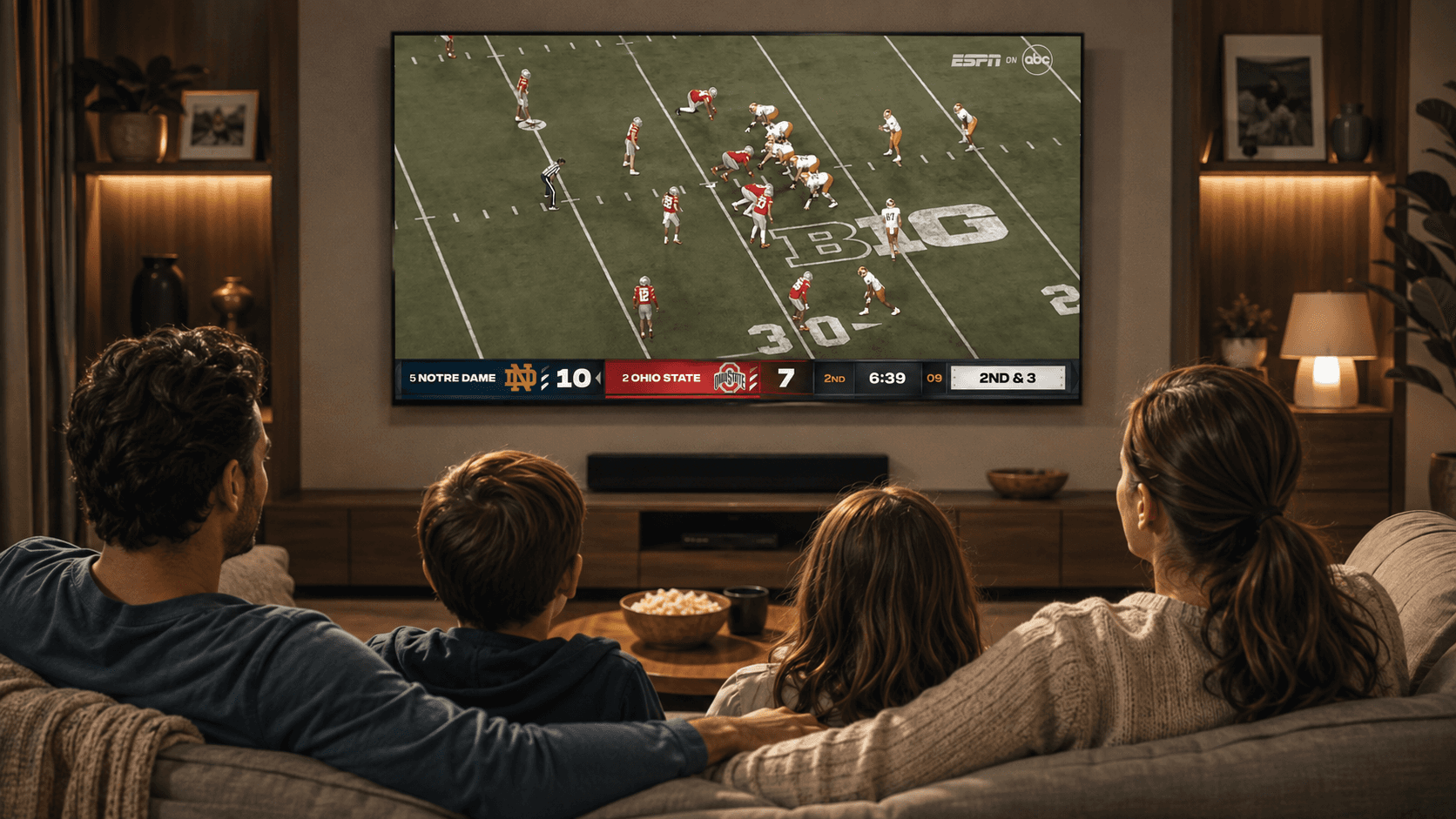
ESPN Is Killing the BottomLine Ticker for College Football, and Saturdays Will Never Look the Same
ESPN Is Killing the BottomLine Ticker for College Football, and Saturdays Will Never Look the Same

College Football
Alabama Hands the Keys to Keelon Russell, and DeBoer's Rebuild Gets Real
Alabama Hands the Keys to Keelon Russell, and DeBoer's Rebuild Gets Real
Keep Reading
Never Miss The Next Alert
Real-time college football news, NIL moves, and recruiting intel — delivered the moment it breaks.
Keep Reading
Never Miss The Next Alert
Real-time college football news, NIL moves, and recruiting intel — delivered the moment it breaks.
Coast To Coast
Trusted By Programs Across The Country


Coast To Coast
Trusted By Programs Across The Country

