Blog / Article
Jalen Brewster Tops Cross-Class Ranking of College Football’s 25 Best Recruits
Jalen Brewster Tops Cross-Class Ranking of College Football’s 25 Best Recruits
C
CFB Team
July 17, 2026
Sponsored by


College football recruiting rankings usually ask one simple question: Who is best in this class?
This list asks something more interesting. Who is best, period?
Texas Tech defensive tackle commit Jalen Brewster earned the No. 1 spot in a ranking that compares the country’s premier prospects regardless of graduation year, beating out players from the 2027, 2028, 2029 and even 2030 classes. The result is a glimpse not only at the next recruiting cycle, but at the players who could shape the sport several years from now.
Brewster’s placement over uncommitted 2028 wide receiver Brysen Wright came down to positional value and disruptive potential. At 310 pounds, Brewster moves like a player roughly 50 pounds lighter. His verified 4.86-second 40-yard dash would have compared favorably with defensive tackles at the 2026 NFL combine, but the appeal goes beyond a testing number. Brewster can penetrate against the pass, pursue plays laterally and absorb double-teams against the run.
That is the type of defender an entire front can be built around.
It also makes Brewster’s commitment a landmark win for Texas Tech coach Joey McGuire, who previously led Brewster’s Cedar Hill High School program to three state championships. Keeping the nation’s top-ranked prospect connected to that pipeline could help the Red Raiders turn recent momentum into something sustainable.
Texas Tech is not stopping with Brewster. Five-star edge rusher Anthony Sweeney ranks 13th, giving the Red Raiders two of the country’s most dangerous front-seven prospects. Sweeney brings length, bend and the ability to turn speed into power. Pairing him with Brewster sounds less like recruiting and more like creating a weekly protection problem for future Big 12 offenses.
Wright, meanwhile, may be the most fascinating athlete on the board.
The 6-foot-4, 212-pound receiver produced 983 yards on 46 receptions as a sophomore despite consistently drawing extra defensive attention. He also recorded 63 tackles and five interceptions at safety. Plenty of recruits are labeled “two-way athletes.” Wright is one of the rare prospects for whom the description does not feel like marketing copy.
He has the size to overwhelm defensive backs, the speed to threaten every level of the field and the fluidity to project at multiple positions. Every major program wants him because there are not many teenage players who already look physically capable of handling college football on either side of the ball.
The ranking also highlights how aggressively Ohio State continues to stockpile elite talent. The Buckeyes placed four commitments inside the top 25, more than any other program, with defensive end D.J. Jacobs leading the group at No. 5.
Jacobs has already collected 292 career tackles and 67 tackles for loss. His 6-foot-5 frame, quickness and competitiveness give Ohio State another potential centerpiece on the edge. Wide receiver Jamier Brown adds the type of speed that has become a familiar feature in Brian Hartline’s position room, while defensive lineman Marcus Fakatou and offensive lineman Caden Moss provide high-end size and versatility in the trenches.
Ohio State currently has 11 commitments ranked in the 2027 SC Next ESPN 300. At some point, calling the Buckeyes talented starts to feel like calling water wet.
The quarterback group may be even more notable because of how young several of its members are.
Miami commit Christian Cypher ranks fourth overall despite belonging to the 2029 class. Cypher has already demonstrated accuracy, anticipation and advanced pocket composure, drawing praise from Carrollton coach Joey King, who previously coached Trevor Lawrence. That does not mean Cypher is the next Lawrence, because putting that expectation on a teenager would be absurd. It does explain why Miami moved quickly to secure his commitment.
Alabama commit Elijah Haven is the highest-ranked 2027 quarterback at No. 8. His production borders on video-game territory: more than 9,000 career passing yards, 178 total touchdowns and a state-record 62 touchdown passes during his junior season. At 6-foot-5 and 220 pounds, Haven has the arm strength and frame programs chase, but his deep-ball placement and pocket poise separate him from quarterbacks who are impressive only during workouts.
Georgia commit Jayden Wade, ranked 21st, offers a different type of problem. Wade has repeatedly clocked a 4.49-second 40-yard dash and pairs that speed with legitimate arm talent. He is not simply an athlete taking snaps. He has the release, hand size and developmental background at IMG Academy to become a true dual-threat difference-maker.
The youngest player on the list is 2030 running back Caiden Rogers. He earned MVP honors at the Under Armour All-America Eighth Grade Game and received an LSU offer that same night. Ranking an eighth grader alongside future college freshmen requires some projection, but Rogers already shows vision, contact balance and receiving ability that are difficult to ignore.
The larger takeaway is how quickly the recruiting timeline continues to accelerate. Programs are no longer just evaluating rising seniors and juniors. They are identifying quarterbacks, offensive tackles and cornerbacks before those players have accumulated multiple full seasons of varsity football.
That makes development just as important as evaluation. A prospect such as 2029 offensive tackle Landon Ghea can look like a future college starter after one high school season, but four years is an eternity in football. Bodies change. Coaching staffs change. Depth charts change. The rankings measure current talent and projected upside, not guaranteed outcomes.
Still, several themes are already clear.
Elite speed is everywhere. Texas receiver commit Easton Royal has run a 10.17-second 100-meter dash. South Carolina cornerback commit Joshua Dobson has posted a 4.39-second 40. Oregon cornerback commit Hayden Stepp brings 6-foot-3 length with verified 4.45 speed. Georgia running back commit Kemon Spell has been clocked at 22.2 mph and is coming off a season with 32 total touchdowns.
The trenches are also loaded. Brewster, Florida offensive tackle commit Maxwell Hiller, Texas A&M tackles Kennedy Brown and Mark Matthews, and underclass defensive linemen Geraci Carson and Kellan Hall all rank among the top 20. Recruiting may be dominated by quarterback graphics and commitment edits, but championships still tend to belong to teams with frighteningly large humans who move much faster than frighteningly large humans should.
That is what makes this cross-class ranking valuable. It is not merely a list of names to remember. It is an early map of where college football’s power programs believe the sport is heading.
Ohio State has the deepest presence. Texas and Texas A&M are collecting premium athletes at premium positions. Georgia has secured explosive backfield talent. Miami has planted its flag on a potential star quarterback years before his arrival. Texas Tech may have assembled the foundation of a terrifying defensive line.
The players will move, develop, reclassify and occasionally surprise everyone. Recruiting is never as orderly as the rankings suggest.
For now, however, Brewster sits at the top, a 310-pound reminder that in modern college football, the most valuable player in the room might also be the one capable of running through its walls.
College football recruiting rankings usually ask one simple question: Who is best in this class?
This list asks something more interesting. Who is best, period?
Texas Tech defensive tackle commit Jalen Brewster earned the No. 1 spot in a ranking that compares the country’s premier prospects regardless of graduation year, beating out players from the 2027, 2028, 2029 and even 2030 classes. The result is a glimpse not only at the next recruiting cycle, but at the players who could shape the sport several years from now.
Brewster’s placement over uncommitted 2028 wide receiver Brysen Wright came down to positional value and disruptive potential. At 310 pounds, Brewster moves like a player roughly 50 pounds lighter. His verified 4.86-second 40-yard dash would have compared favorably with defensive tackles at the 2026 NFL combine, but the appeal goes beyond a testing number. Brewster can penetrate against the pass, pursue plays laterally and absorb double-teams against the run.
That is the type of defender an entire front can be built around.
It also makes Brewster’s commitment a landmark win for Texas Tech coach Joey McGuire, who previously led Brewster’s Cedar Hill High School program to three state championships. Keeping the nation’s top-ranked prospect connected to that pipeline could help the Red Raiders turn recent momentum into something sustainable.
Texas Tech is not stopping with Brewster. Five-star edge rusher Anthony Sweeney ranks 13th, giving the Red Raiders two of the country’s most dangerous front-seven prospects. Sweeney brings length, bend and the ability to turn speed into power. Pairing him with Brewster sounds less like recruiting and more like creating a weekly protection problem for future Big 12 offenses.
Wright, meanwhile, may be the most fascinating athlete on the board.
The 6-foot-4, 212-pound receiver produced 983 yards on 46 receptions as a sophomore despite consistently drawing extra defensive attention. He also recorded 63 tackles and five interceptions at safety. Plenty of recruits are labeled “two-way athletes.” Wright is one of the rare prospects for whom the description does not feel like marketing copy.
He has the size to overwhelm defensive backs, the speed to threaten every level of the field and the fluidity to project at multiple positions. Every major program wants him because there are not many teenage players who already look physically capable of handling college football on either side of the ball.
The ranking also highlights how aggressively Ohio State continues to stockpile elite talent. The Buckeyes placed four commitments inside the top 25, more than any other program, with defensive end D.J. Jacobs leading the group at No. 5.
Jacobs has already collected 292 career tackles and 67 tackles for loss. His 6-foot-5 frame, quickness and competitiveness give Ohio State another potential centerpiece on the edge. Wide receiver Jamier Brown adds the type of speed that has become a familiar feature in Brian Hartline’s position room, while defensive lineman Marcus Fakatou and offensive lineman Caden Moss provide high-end size and versatility in the trenches.
Ohio State currently has 11 commitments ranked in the 2027 SC Next ESPN 300. At some point, calling the Buckeyes talented starts to feel like calling water wet.
The quarterback group may be even more notable because of how young several of its members are.
Miami commit Christian Cypher ranks fourth overall despite belonging to the 2029 class. Cypher has already demonstrated accuracy, anticipation and advanced pocket composure, drawing praise from Carrollton coach Joey King, who previously coached Trevor Lawrence. That does not mean Cypher is the next Lawrence, because putting that expectation on a teenager would be absurd. It does explain why Miami moved quickly to secure his commitment.
Alabama commit Elijah Haven is the highest-ranked 2027 quarterback at No. 8. His production borders on video-game territory: more than 9,000 career passing yards, 178 total touchdowns and a state-record 62 touchdown passes during his junior season. At 6-foot-5 and 220 pounds, Haven has the arm strength and frame programs chase, but his deep-ball placement and pocket poise separate him from quarterbacks who are impressive only during workouts.
Georgia commit Jayden Wade, ranked 21st, offers a different type of problem. Wade has repeatedly clocked a 4.49-second 40-yard dash and pairs that speed with legitimate arm talent. He is not simply an athlete taking snaps. He has the release, hand size and developmental background at IMG Academy to become a true dual-threat difference-maker.
The youngest player on the list is 2030 running back Caiden Rogers. He earned MVP honors at the Under Armour All-America Eighth Grade Game and received an LSU offer that same night. Ranking an eighth grader alongside future college freshmen requires some projection, but Rogers already shows vision, contact balance and receiving ability that are difficult to ignore.
The larger takeaway is how quickly the recruiting timeline continues to accelerate. Programs are no longer just evaluating rising seniors and juniors. They are identifying quarterbacks, offensive tackles and cornerbacks before those players have accumulated multiple full seasons of varsity football.
That makes development just as important as evaluation. A prospect such as 2029 offensive tackle Landon Ghea can look like a future college starter after one high school season, but four years is an eternity in football. Bodies change. Coaching staffs change. Depth charts change. The rankings measure current talent and projected upside, not guaranteed outcomes.
Still, several themes are already clear.
Elite speed is everywhere. Texas receiver commit Easton Royal has run a 10.17-second 100-meter dash. South Carolina cornerback commit Joshua Dobson has posted a 4.39-second 40. Oregon cornerback commit Hayden Stepp brings 6-foot-3 length with verified 4.45 speed. Georgia running back commit Kemon Spell has been clocked at 22.2 mph and is coming off a season with 32 total touchdowns.
The trenches are also loaded. Brewster, Florida offensive tackle commit Maxwell Hiller, Texas A&M tackles Kennedy Brown and Mark Matthews, and underclass defensive linemen Geraci Carson and Kellan Hall all rank among the top 20. Recruiting may be dominated by quarterback graphics and commitment edits, but championships still tend to belong to teams with frighteningly large humans who move much faster than frighteningly large humans should.
That is what makes this cross-class ranking valuable. It is not merely a list of names to remember. It is an early map of where college football’s power programs believe the sport is heading.
Ohio State has the deepest presence. Texas and Texas A&M are collecting premium athletes at premium positions. Georgia has secured explosive backfield talent. Miami has planted its flag on a potential star quarterback years before his arrival. Texas Tech may have assembled the foundation of a terrifying defensive line.
The players will move, develop, reclassify and occasionally surprise everyone. Recruiting is never as orderly as the rankings suggest.
For now, however, Brewster sits at the top, a 310-pound reminder that in modern college football, the most valuable player in the room might also be the one capable of running through its walls.
Share this story
C
CFB Team
CFB Team
The most trusted college football team.
The most trusted college football team.
More College Football Stories
More College Football Stories

CFB
September 23, 2026
Judge Frees Indiana's Stephen Daley and Kellan Wyatt, Cole Hutson Wins Again: College Football's Eligibility War Moves to County Courthouses
Judge Frees Indiana's Stephen Daley and Kellan Wyatt, Cole Hutson Wins Again: College Football's Eligibility War Moves to County Courthouses

CFB
September 21, 2026
Dave Doeren Owns NC State's Intentional Safety Disaster as the 1,046-1 Fumble at Vanderbilt Refuses to Fade
Dave Doeren Owns NC State's Intentional Safety Disaster as the 1,046-1 Fumble at Vanderbilt Refuses to Fade
CFB
September 19, 2026
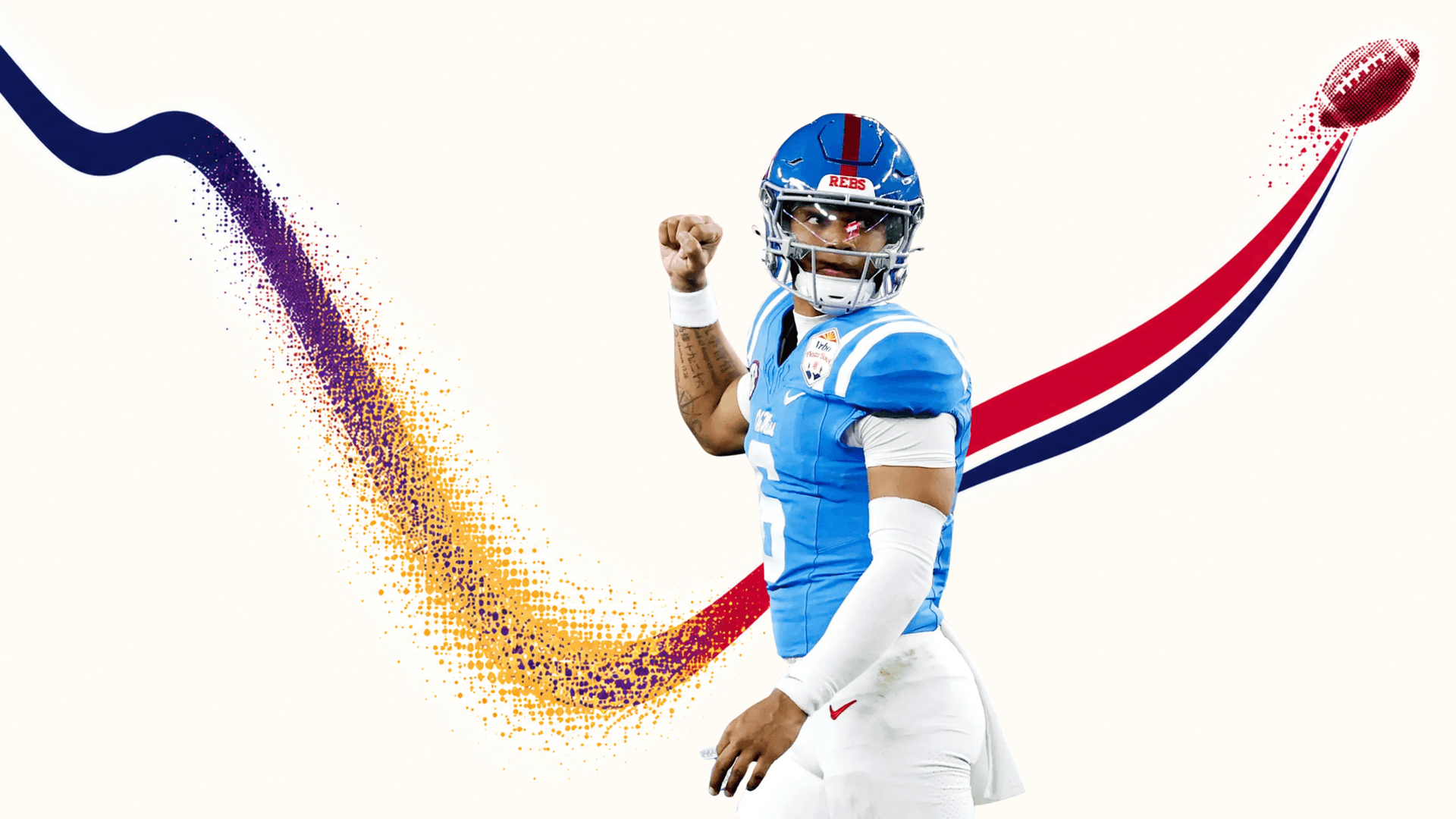
Trinidad Chambliss Spoils Lane Kiffin's Homecoming as No. 8 Ole Miss Holds Off No. 7 LSU 32-24
Trinidad Chambliss Spoils Lane Kiffin's Homecoming as No. 8 Ole Miss Holds Off No. 7 LSU 32-24
Keep Reading
Never Miss The Next Alert
Real-time college football news, NIL moves, and recruiting intel — delivered the moment it breaks.
Keep Reading
Never Miss The Next Alert
Real-time college football news, NIL moves, and recruiting intel — delivered the moment it breaks.
Coast To Coast
Trusted By Programs Across The Country


Coast To Coast
Trusted By Programs Across The Country

