Blog / Article
ESPN’s New College Football Show With Josh Pate, Will Compton and Taylor Lewan Signals a Major Shift
ESPN’s New College Football Show With Josh Pate, Will Compton and Taylor Lewan Signals a Major Shift
C
CFB Team
July 25, 2026
Sponsored by

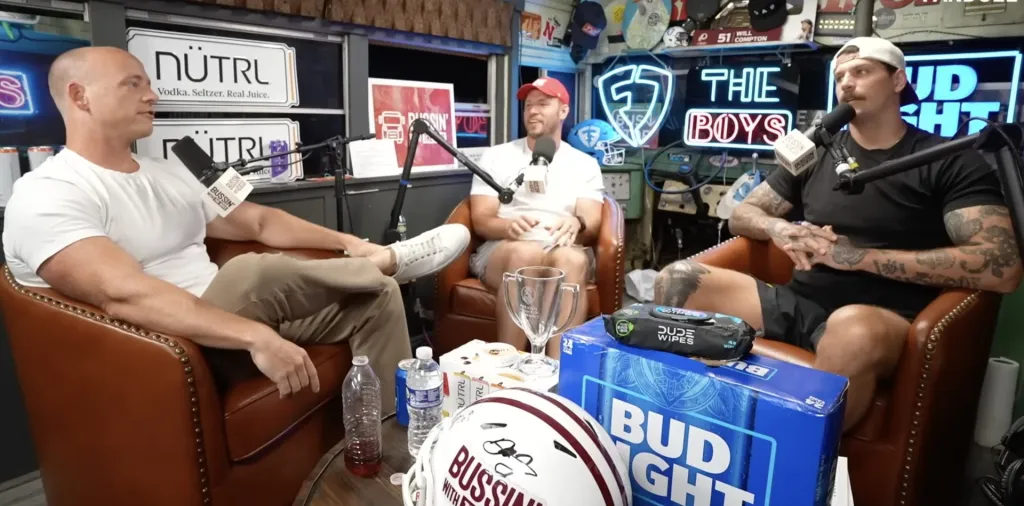
ESPN does not appear to be building another college football show where four analysts sit behind a polished desk, study the same teleprompter and spend nine minutes debating whether Alabama has “lost its edge.”
Thank God.
Instead, the network is reportedly preparing to put Josh Pate, Will Compton and Taylor Lewan together for a weekly Friday program that would originate from college campuses throughout the 2026 season. Sometimes the show would operate from the same location as College GameDay. Other weeks, it could travel somewhere else entirely. The exact airtime and official launch details remain unknown, and an ESPN spokesperson declined to comment on the report.
Even without those details, the concept is immediately understandable.
Take one of college football’s most influential independent analysts, add two former NFL players who helped turn locker-room storytelling into a legitimate media business, place them inside the traveling circus of a college football weekend, and see what happens.
It could be informative. It could be chaotic. It could occasionally sound like three men arguing beside a tailgate after someone brought out the second cooler.
Most importantly, it probably will not be boring.
ESPN is betting on chemistry it has already tested
On the surface, Pate, Compton and Lewan might look like three personalities pulled from different corners of the internet.
Pate is the film-room professor of the group, although he would probably object to being described as anything that sounds overly institutional. His appeal comes from treating college football as both a serious national sport and a collection of deeply irrational local religions. He can discuss roster construction, conference politics, recruiting, playoff paths and the emotional condition of a fan base without flattening everything into a television debate prompt.
Compton and Lewan bring a different energy. Their success with Bussin’ With The Boys has been built around player access, stories, humor and the kind of conversational unpredictability that traditional studio television often tries to remove during rehearsals.
That contrast is the entire point.
Pate can explain why a coordinator’s personnel package is creating problems. Lewan can explain what the offensive linemen are experiencing physically. Compton can turn the conversation toward leadership, locker-room dynamics or whatever mildly unhinged story has entered his brain during the previous 45 seconds.
ESPN is also not throwing the trio together without evidence that the combination works. Pate, Compton and Lewan appeared regularly across ESPN programming during the 2025 football season. The network then placed all three, along with Harry Douglas, on a Field Pass alternate presentation for the SEC Championship Game between Georgia and Alabama.
That alternate broadcast functioned as a useful proof of concept. ESPN could evaluate how the personalities translated to its audience, how their chemistry held up during a major event and whether they could retain the looseness of digital media without turning the broadcast into two hours of people talking over one another.
The reported new show suggests ESPN liked the answer.
Josh Pate has become too large for traditional television to ignore
Pate’s rise is one of the clearest examples of how college football media has changed.
He did not become relevant because a major network handed him a prime television slot and promoted him between bowl games. He built an audience first. The networks arrived later.
His multiplatform college football show now works with On3 and Yahoo Sports, while his YouTube channel has surpassed 500,000 subscribers. During the 2025 season, he appeared regularly on Get Up, SportsCenter and occasionally First Take. ESPN executives were already discussing a larger role for him months before this latest show was reported.
That order of operations matters.
For decades, working in sports television generally meant climbing through local radio, regional television and increasingly visible network assignments. The network created the star because the network owned the distribution.
Pate represents the reverse model. He developed the show, established the voice, cultivated the audience and proved that people would seek out his analysis. ESPN is not introducing Josh Pate to college football fans. It is trying to bring a successful Josh Pate product into its own ecosystem without sanding away everything that made it successful.
That is the same tightrope ESPN has walked with Pat McAfee.
The McAfee comparison is unavoidable because both men developed powerful shows outside the traditional network structure. They are not merely analysts hired to occupy a chair. They are operators with established formats, loyal communities and leverage.
Pate has openly recognized that path. He told Front Office Sports that McAfee’s ESPN run created an opportunity for others who built independent platforms, and that succeeding could make the road easier for future creators covering college football.
That does not mean Pate is becoming McAfee in a quarter-zip.
Their personalities and programs are different. McAfee’s show thrives on volume, comedy, breaking news and the sensation that anything could happen. Pate’s core audience expects long-form college football analysis, national travel, recruiting conversations and skepticism toward whatever narrative has become fashionable that morning.
The lesson ESPN appears to be taking from McAfee is not that every show needs tank tops and professional wrestlers. It is that independently created audiences have value, especially when those audiences do not need to be trained to care.
Compton and Lewan are building something larger than one podcast
The inclusion of Compton and Lewan also reflects the way Bussin’ With The Boys has evolved.
The podcast launched in 2019 and grew substantially through its relationship with Barstool Sports. But the pair left Barstool for a presenting partnership with FanDuel in 2025, a move that gave them more control over their business and the ability to build beyond a single flagship podcast.
Compton described the departure as bittersweet, acknowledging the platform and infrastructure Barstool provided while explaining that independence created more room to expand the brand, add talent and pursue new formats.
That expansion is already visible. The Bussin’ operation has moved into additional programming, including a NASCAR show produced in partnership with Omaha Productions. A weekly ESPN college football show would be another significant step toward turning the brand from a popular podcast into a wider sports-media company.
Lewan and Compton also offer ESPN something it cannot manufacture in a production meeting: credibility with athletes who may distrust traditional interviews.
Players and coaches often behave differently around former players. The answers become less polished. Stories become more detailed. Guests are more willing to discuss what actually happens inside meeting rooms, practices, team hotels and locker rooms.
That access can separate the new show from ESPN’s existing college football coverage.
The network already has analysts capable of breaking down coverages and debating playoff résumés. What it needs is programming that feels closer to the culture surrounding the sport, particularly as college football becomes more professionalized through revenue sharing, NIL structures, roster management and unlimited player movement.
Compton and Lewan understand the player’s perspective. Pate understands the national college football ecosystem. Put those things together correctly and ESPN could create a show that explains both what happened and what it felt like.
Friday afternoons are an opportunity, not a random time slot
The reported plan to air the show on Fridays from college campuses might be the smartest part of the concept.
Saturday morning belongs to College GameDay. Attempting to create a direct imitation would be redundant and probably doomed. That show has decades of history, established traditions and a weekly emotional connection to its host campus.
Friday offers open space.
By Friday afternoon, the week’s injury reports, coaching comments, travel developments and major storylines have largely taken shape. Fans are moving from analysis mode into game-weekend mode. Students are gathering. Tailgates are being assembled. Alumni are arriving in town. The atmosphere is beginning to shift from hypothetical to immediate.
A traveling Friday show can live inside that transition.
It can preview the weekend without copying GameDay. It can feature coaches, players, alumni and local personalities before the Saturday schedule becomes too restrictive. It can also visit campuses that might not receive the full GameDay production but still have a meaningful game, rivalry or national storyline.
The flexibility to appear at the GameDay site some weeks and choose another campus during others could prevent the program from becoming a sidecar attached permanently to ESPN’s flagship show.
That freedom matters in a sport where the most interesting story is not always attached to the largest television matchup.
Maybe GameDay is at Ohio State for a top-five showdown, but the stranger and more revealing story is happening at Nebraska, Virginia Tech or a Group of Five campus hosting its biggest home game in a decade.
Pate’s audience has always responded to the idea that college football is bigger than the handful of brands that dominate national television windows. A mobile Friday show could preserve that philosophy while still operating inside ESPN’s machine.
The timing creates uncomfortable optics for ESPN
The report arrived during a turbulent week for ESPN.
The network began a significant round of layoffs connected largely to its acquisition and integration of NFL Network and other NFL media assets. The reductions affected production employees and recognizable on-air personalities, including Ryan Clark, Karl Ravech and Tom Pelissero.
That timing guaranteed backlash.
When a company eliminates experienced employees and then, days later, news surfaces about a new program featuring outside creators, people are going to connect the two developments. Social media responded with both excitement and accusations that ESPN is becoming a cleaner, corporate version of Barstool.
The comparison is not entirely invented.
ESPN has clearly become more comfortable with louder, personality-driven programming. McAfee is one of the network’s defining stars. Stephen A. Smith has expanded far beyond a conventional analyst role. Compton and Lewan developed at Barstool. Pate built his influence through digital media rather than through ESPN’s traditional talent pipeline.
But it would be inaccurate to say that hiring three personalities for a college football show directly caused the recent layoffs. ESPN chairman Jimmy Pitaro said most of the job reductions were related to organizational overlap created by the NFL transaction, although other areas were also affected.
The better criticism is about what ESPN’s choices reveal.
The network appears increasingly willing to spend on personalities who bring their own distribution, sponsors, fans and cultural relevance while reducing investment elsewhere. It is a strategy built around fewer people with larger individual platforms.
That might be financially rational. It can also produce a colder, less stable media environment where experienced broadcasters, reporters and production staff are treated as interchangeable while outside stars receive increasingly prominent opportunities.
Both things can be true.
The new show can be a strong idea, and the timing can still feel brutal.
The biggest challenge will be protecting what made them successful
ESPN’s greatest risk is not that Pate, Compton and Lewan lack chemistry.
It is that the network will overproduce the chemistry they already have.
A show like this needs enough structure to avoid becoming a weekly podcast filmed near a stadium. It needs defined segments, reporting, preparation and a reason to exist beyond three recognizable people sitting together.
But too much structure would defeat the purpose.
Nobody needs to see Pate stare into Camera 2 and read a scripted teaser about the “three keys to victory.” Nobody needs Lewan forced into a suit so he can touch defensive statistics on a video wall. Nobody needs Compton waiting patiently for a producer to count down before making a joke.
The appeal is the tension between expertise and unpredictability.
Pate gives the show intellectual direction. Lewan brings offensive-line perspective, star power and a willingness to say almost anything. Compton can serve as the conversational connector, moving between analysis, humor, interviews and whatever emotional crisis currently occupies Nebraska football.
The show should feel prepared but not sanitized.
ESPN has learned through McAfee that a successful independent product cannot be treated exactly like an internal studio show. The network must provide reach, access and production resources without swallowing the host’s identity.
If it accomplishes that, this program could become a valuable bridge between ESPN’s traditional college football authority and the way younger audiences already consume the sport.
What the new show means for college football media
College football is an unusually fragmented sport.
The NFL has 32 teams, a central league structure and relatively standardized media coverage. College football has more than 130 major programs, multiple conferences, regional obsessions, recruiting cycles, transfer-portal drama, booster politics and fan bases capable of turning a backup-quarterback competition into a constitutional crisis.
No single show can cover all of it.
That is precisely why ESPN reportedly wants more college football discussion. Network executives have acknowledged that the sport has sometimes been underrepresented in studio programming relative to the enormous audiences its games attract. College football trails only the NFL in American sports viewership, yet much of ESPN’s weekday conversation has historically revolved around professional leagues.
Pate, Compton and Lewan give ESPN a way to address that imbalance without launching another generic debate panel.
They come with existing audiences. They understand digital distribution. They produce clips that travel across social platforms. They are comfortable in long conversations and short viral moments. They also appeal to overlapping but distinct groups of fans.
The show is therefore not just about filling a Friday time slot.
It is a test of whether ESPN can combine the authority of a legacy sports network with the intimacy and personality of independent media.
That balance will determine whether the program becomes required viewing or merely another expensive experiment.
The potential is obvious. Pate can bring the information. Lewan and Compton can bring the locker room. The campuses can supply the atmosphere. ESPN can supply a platform large enough to turn the combination into a national college football event before Saturday even begins.
There will be rough edges. There should be rough edges.
College football has never been a polished sport. It is marching bands, billion-dollar television contracts, message-board conspiracies, teenagers making business decisions, coaches pretending not to read social media and grown adults barking at one another before breakfast.
A college football show should probably feel a little dangerous.
ESPN’s reported trio has a chance to deliver exactly that. The network just has to resist the urge to put a tie on it.
ESPN does not appear to be building another college football show where four analysts sit behind a polished desk, study the same teleprompter and spend nine minutes debating whether Alabama has “lost its edge.”
Thank God.
Instead, the network is reportedly preparing to put Josh Pate, Will Compton and Taylor Lewan together for a weekly Friday program that would originate from college campuses throughout the 2026 season. Sometimes the show would operate from the same location as College GameDay. Other weeks, it could travel somewhere else entirely. The exact airtime and official launch details remain unknown, and an ESPN spokesperson declined to comment on the report.
Even without those details, the concept is immediately understandable.
Take one of college football’s most influential independent analysts, add two former NFL players who helped turn locker-room storytelling into a legitimate media business, place them inside the traveling circus of a college football weekend, and see what happens.
It could be informative. It could be chaotic. It could occasionally sound like three men arguing beside a tailgate after someone brought out the second cooler.
Most importantly, it probably will not be boring.
ESPN is betting on chemistry it has already tested
On the surface, Pate, Compton and Lewan might look like three personalities pulled from different corners of the internet.
Pate is the film-room professor of the group, although he would probably object to being described as anything that sounds overly institutional. His appeal comes from treating college football as both a serious national sport and a collection of deeply irrational local religions. He can discuss roster construction, conference politics, recruiting, playoff paths and the emotional condition of a fan base without flattening everything into a television debate prompt.
Compton and Lewan bring a different energy. Their success with Bussin’ With The Boys has been built around player access, stories, humor and the kind of conversational unpredictability that traditional studio television often tries to remove during rehearsals.
That contrast is the entire point.
Pate can explain why a coordinator’s personnel package is creating problems. Lewan can explain what the offensive linemen are experiencing physically. Compton can turn the conversation toward leadership, locker-room dynamics or whatever mildly unhinged story has entered his brain during the previous 45 seconds.
ESPN is also not throwing the trio together without evidence that the combination works. Pate, Compton and Lewan appeared regularly across ESPN programming during the 2025 football season. The network then placed all three, along with Harry Douglas, on a Field Pass alternate presentation for the SEC Championship Game between Georgia and Alabama.
That alternate broadcast functioned as a useful proof of concept. ESPN could evaluate how the personalities translated to its audience, how their chemistry held up during a major event and whether they could retain the looseness of digital media without turning the broadcast into two hours of people talking over one another.
The reported new show suggests ESPN liked the answer.
Josh Pate has become too large for traditional television to ignore
Pate’s rise is one of the clearest examples of how college football media has changed.
He did not become relevant because a major network handed him a prime television slot and promoted him between bowl games. He built an audience first. The networks arrived later.
His multiplatform college football show now works with On3 and Yahoo Sports, while his YouTube channel has surpassed 500,000 subscribers. During the 2025 season, he appeared regularly on Get Up, SportsCenter and occasionally First Take. ESPN executives were already discussing a larger role for him months before this latest show was reported.
That order of operations matters.
For decades, working in sports television generally meant climbing through local radio, regional television and increasingly visible network assignments. The network created the star because the network owned the distribution.
Pate represents the reverse model. He developed the show, established the voice, cultivated the audience and proved that people would seek out his analysis. ESPN is not introducing Josh Pate to college football fans. It is trying to bring a successful Josh Pate product into its own ecosystem without sanding away everything that made it successful.
That is the same tightrope ESPN has walked with Pat McAfee.
The McAfee comparison is unavoidable because both men developed powerful shows outside the traditional network structure. They are not merely analysts hired to occupy a chair. They are operators with established formats, loyal communities and leverage.
Pate has openly recognized that path. He told Front Office Sports that McAfee’s ESPN run created an opportunity for others who built independent platforms, and that succeeding could make the road easier for future creators covering college football.
That does not mean Pate is becoming McAfee in a quarter-zip.
Their personalities and programs are different. McAfee’s show thrives on volume, comedy, breaking news and the sensation that anything could happen. Pate’s core audience expects long-form college football analysis, national travel, recruiting conversations and skepticism toward whatever narrative has become fashionable that morning.
The lesson ESPN appears to be taking from McAfee is not that every show needs tank tops and professional wrestlers. It is that independently created audiences have value, especially when those audiences do not need to be trained to care.
Compton and Lewan are building something larger than one podcast
The inclusion of Compton and Lewan also reflects the way Bussin’ With The Boys has evolved.
The podcast launched in 2019 and grew substantially through its relationship with Barstool Sports. But the pair left Barstool for a presenting partnership with FanDuel in 2025, a move that gave them more control over their business and the ability to build beyond a single flagship podcast.
Compton described the departure as bittersweet, acknowledging the platform and infrastructure Barstool provided while explaining that independence created more room to expand the brand, add talent and pursue new formats.
That expansion is already visible. The Bussin’ operation has moved into additional programming, including a NASCAR show produced in partnership with Omaha Productions. A weekly ESPN college football show would be another significant step toward turning the brand from a popular podcast into a wider sports-media company.
Lewan and Compton also offer ESPN something it cannot manufacture in a production meeting: credibility with athletes who may distrust traditional interviews.
Players and coaches often behave differently around former players. The answers become less polished. Stories become more detailed. Guests are more willing to discuss what actually happens inside meeting rooms, practices, team hotels and locker rooms.
That access can separate the new show from ESPN’s existing college football coverage.
The network already has analysts capable of breaking down coverages and debating playoff résumés. What it needs is programming that feels closer to the culture surrounding the sport, particularly as college football becomes more professionalized through revenue sharing, NIL structures, roster management and unlimited player movement.
Compton and Lewan understand the player’s perspective. Pate understands the national college football ecosystem. Put those things together correctly and ESPN could create a show that explains both what happened and what it felt like.
Friday afternoons are an opportunity, not a random time slot
The reported plan to air the show on Fridays from college campuses might be the smartest part of the concept.
Saturday morning belongs to College GameDay. Attempting to create a direct imitation would be redundant and probably doomed. That show has decades of history, established traditions and a weekly emotional connection to its host campus.
Friday offers open space.
By Friday afternoon, the week’s injury reports, coaching comments, travel developments and major storylines have largely taken shape. Fans are moving from analysis mode into game-weekend mode. Students are gathering. Tailgates are being assembled. Alumni are arriving in town. The atmosphere is beginning to shift from hypothetical to immediate.
A traveling Friday show can live inside that transition.
It can preview the weekend without copying GameDay. It can feature coaches, players, alumni and local personalities before the Saturday schedule becomes too restrictive. It can also visit campuses that might not receive the full GameDay production but still have a meaningful game, rivalry or national storyline.
The flexibility to appear at the GameDay site some weeks and choose another campus during others could prevent the program from becoming a sidecar attached permanently to ESPN’s flagship show.
That freedom matters in a sport where the most interesting story is not always attached to the largest television matchup.
Maybe GameDay is at Ohio State for a top-five showdown, but the stranger and more revealing story is happening at Nebraska, Virginia Tech or a Group of Five campus hosting its biggest home game in a decade.
Pate’s audience has always responded to the idea that college football is bigger than the handful of brands that dominate national television windows. A mobile Friday show could preserve that philosophy while still operating inside ESPN’s machine.
The timing creates uncomfortable optics for ESPN
The report arrived during a turbulent week for ESPN.
The network began a significant round of layoffs connected largely to its acquisition and integration of NFL Network and other NFL media assets. The reductions affected production employees and recognizable on-air personalities, including Ryan Clark, Karl Ravech and Tom Pelissero.
That timing guaranteed backlash.
When a company eliminates experienced employees and then, days later, news surfaces about a new program featuring outside creators, people are going to connect the two developments. Social media responded with both excitement and accusations that ESPN is becoming a cleaner, corporate version of Barstool.
The comparison is not entirely invented.
ESPN has clearly become more comfortable with louder, personality-driven programming. McAfee is one of the network’s defining stars. Stephen A. Smith has expanded far beyond a conventional analyst role. Compton and Lewan developed at Barstool. Pate built his influence through digital media rather than through ESPN’s traditional talent pipeline.
But it would be inaccurate to say that hiring three personalities for a college football show directly caused the recent layoffs. ESPN chairman Jimmy Pitaro said most of the job reductions were related to organizational overlap created by the NFL transaction, although other areas were also affected.
The better criticism is about what ESPN’s choices reveal.
The network appears increasingly willing to spend on personalities who bring their own distribution, sponsors, fans and cultural relevance while reducing investment elsewhere. It is a strategy built around fewer people with larger individual platforms.
That might be financially rational. It can also produce a colder, less stable media environment where experienced broadcasters, reporters and production staff are treated as interchangeable while outside stars receive increasingly prominent opportunities.
Both things can be true.
The new show can be a strong idea, and the timing can still feel brutal.
The biggest challenge will be protecting what made them successful
ESPN’s greatest risk is not that Pate, Compton and Lewan lack chemistry.
It is that the network will overproduce the chemistry they already have.
A show like this needs enough structure to avoid becoming a weekly podcast filmed near a stadium. It needs defined segments, reporting, preparation and a reason to exist beyond three recognizable people sitting together.
But too much structure would defeat the purpose.
Nobody needs to see Pate stare into Camera 2 and read a scripted teaser about the “three keys to victory.” Nobody needs Lewan forced into a suit so he can touch defensive statistics on a video wall. Nobody needs Compton waiting patiently for a producer to count down before making a joke.
The appeal is the tension between expertise and unpredictability.
Pate gives the show intellectual direction. Lewan brings offensive-line perspective, star power and a willingness to say almost anything. Compton can serve as the conversational connector, moving between analysis, humor, interviews and whatever emotional crisis currently occupies Nebraska football.
The show should feel prepared but not sanitized.
ESPN has learned through McAfee that a successful independent product cannot be treated exactly like an internal studio show. The network must provide reach, access and production resources without swallowing the host’s identity.
If it accomplishes that, this program could become a valuable bridge between ESPN’s traditional college football authority and the way younger audiences already consume the sport.
What the new show means for college football media
College football is an unusually fragmented sport.
The NFL has 32 teams, a central league structure and relatively standardized media coverage. College football has more than 130 major programs, multiple conferences, regional obsessions, recruiting cycles, transfer-portal drama, booster politics and fan bases capable of turning a backup-quarterback competition into a constitutional crisis.
No single show can cover all of it.
That is precisely why ESPN reportedly wants more college football discussion. Network executives have acknowledged that the sport has sometimes been underrepresented in studio programming relative to the enormous audiences its games attract. College football trails only the NFL in American sports viewership, yet much of ESPN’s weekday conversation has historically revolved around professional leagues.
Pate, Compton and Lewan give ESPN a way to address that imbalance without launching another generic debate panel.
They come with existing audiences. They understand digital distribution. They produce clips that travel across social platforms. They are comfortable in long conversations and short viral moments. They also appeal to overlapping but distinct groups of fans.
The show is therefore not just about filling a Friday time slot.
It is a test of whether ESPN can combine the authority of a legacy sports network with the intimacy and personality of independent media.
That balance will determine whether the program becomes required viewing or merely another expensive experiment.
The potential is obvious. Pate can bring the information. Lewan and Compton can bring the locker room. The campuses can supply the atmosphere. ESPN can supply a platform large enough to turn the combination into a national college football event before Saturday even begins.
There will be rough edges. There should be rough edges.
College football has never been a polished sport. It is marching bands, billion-dollar television contracts, message-board conspiracies, teenagers making business decisions, coaches pretending not to read social media and grown adults barking at one another before breakfast.
A college football show should probably feel a little dangerous.
ESPN’s reported trio has a chance to deliver exactly that. The network just has to resist the urge to put a tie on it.
Share this story
C
CFB Team
CFB Team
The most trusted college football team.
The most trusted college football team.
More College Football Stories
More College Football Stories

CFB
September 23, 2026
Judge Frees Indiana's Stephen Daley and Kellan Wyatt, Cole Hutson Wins Again: College Football's Eligibility War Moves to County Courthouses
Judge Frees Indiana's Stephen Daley and Kellan Wyatt, Cole Hutson Wins Again: College Football's Eligibility War Moves to County Courthouses

CFB
September 21, 2026
Dave Doeren Owns NC State's Intentional Safety Disaster as the 1,046-1 Fumble at Vanderbilt Refuses to Fade
Dave Doeren Owns NC State's Intentional Safety Disaster as the 1,046-1 Fumble at Vanderbilt Refuses to Fade
CFB
September 19, 2026
Trinidad Chambliss Spoils Lane Kiffin's Homecoming as No. 8 Ole Miss Holds Off No. 7 LSU 32-24
Trinidad Chambliss Spoils Lane Kiffin's Homecoming as No. 8 Ole Miss Holds Off No. 7 LSU 32-24
Keep Reading
Never Miss The Next Alert
Real-time college football news, NIL moves, and recruiting intel — delivered the moment it breaks.
Keep Reading
Never Miss The Next Alert
Real-time college football news, NIL moves, and recruiting intel — delivered the moment it breaks.
Coast To Coast
Trusted By Programs Across The Country


Coast To Coast
Trusted By Programs Across The Country

